
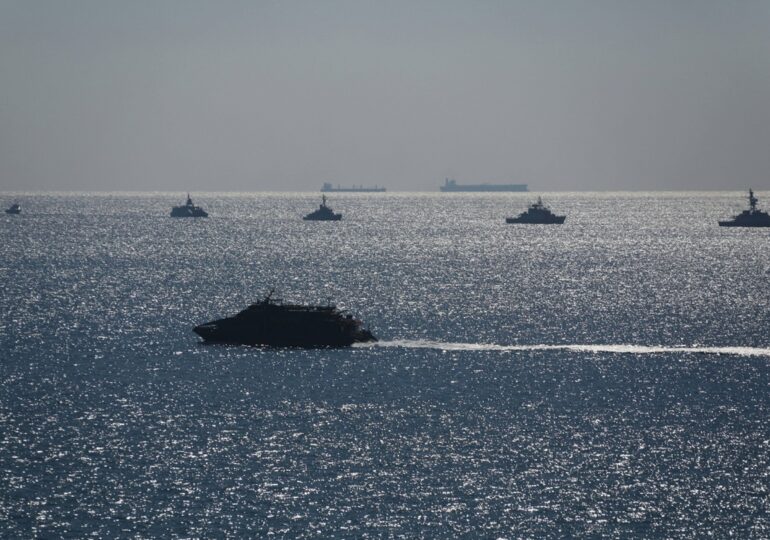
Approximately 20,000 sailors aboard about 3,000 commercial ships stranded in the Persian Gulf are at risk of running out of supplies amid the escalating conflict in the Middle East and the blockade in the Strait of Hormuz.
The warning comes from the main global union of shipowners, cited by AFP.
John Stawpert, a director at the International Chamber of Shipping (ICS), explained that the situation on board the ships is becoming critical. "There are 20,000 sailors aboard 3,000 different types of ships blocked in the Gulf," he said.
He points out that the impact of a prolonged conflict is already visible. "Our biggest concern at this moment is the impact of a continued war on the supplies on board the ships. Problems with fuel supply are already being reported. We are also concerned about the ability of some of these ships to produce drinking water," Stawpert warns.
Urgent needs: water, food, and fuel
According to the ICS representative, the basic needs of the crews are a priority.
The blockade in the area makes even emergency supply extremely complicated, given that maritime transport is practically paralyzed.
Call to states: common solution and safe corridor
Maritime industry representatives urge urgent involvement of states, both those under whose flag the ships sail and those in the region.
"We need to collaborate with the states where the ships are registered, but we also need to collaborate with the states in the region to find a solution that guarantees the supply of these ships," explained the ICS official.
He emphasized that it is not just about logistics, but also about access to security information that allows risk assessment: "These will ultimately decide whether the ships will weigh anchor or not."
Unclear rules and high risk for ships
One of the main obstacles remains the lack of clear criteria regarding the attacks in the area.
"The problem we have at present (...) is that the targeting criteria (by Iran) of ships passing through these waters are not clear," warned Stawpert, explaining why very few ships dare to cross the region.
In this context, escorting ships depends on who offers protection and for what type of transport, creating additional uncertainty.
Hopes for an international-level solution
The maritime industry calls for the creation of an international mechanism that allows for the safe evacuation of ships, regardless of the flag.
"We need a solution that meets the needs of all ships (...) if we could convince the states (...) to provide a channel that allows these ships to leave the region, this would be extremely beneficial," the official said.
The subject is set to be discussed at a meeting of the International Maritime Organization (IMO) in London, where solutions are being sought to resume traffic through the Strait of Hormuz.