
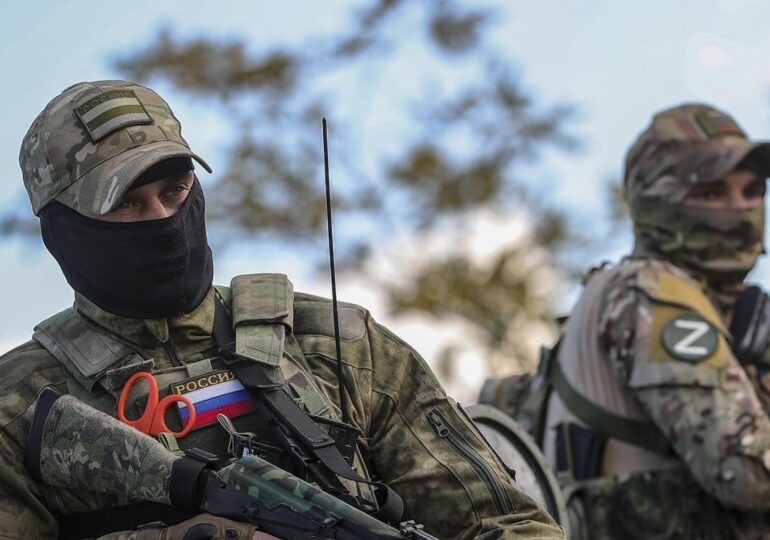
Leaders of eight EU countries, including Romanian President Nicușor Dan, are calling for the banning of entry into the Schengen area for individuals who have served in the Russian armed forces.
Lithuanian President Gitanas Nausėda announced that the leaders of the three Baltic states, as well as those of Romania, Poland, Finland, Sweden, and Germany, have written to the President of the European Council, António Costa, and the President of the European Commission, Ursula von der Leyen, expressing their concerns about the potential threat posed by the entry into Europe of former Russian military personnel.
"We believe that one of the most serious and persistent risks is the potential movement of former Russian combatants and those currently active within the Schengen area. The entry of such individuals could have serious consequences for the security of all EU member states. Therefore, urgent decisive and coordinated actions are needed to prevent negative consequences!" emphasized the President of Lithuania in a message posted on X.
In the letter addressed to EU leaders, consulted by European Pravda, the eight signatory countries argued that there is a serious risk of former Russian combatants getting involved in organized crime, extremist movements, or hostile activities against EU countries in the context of Russia's hybrid actions.
It is also noted that over 180,000 Russian soldiers had prior criminal convictions and were released early in exchange for signing military contracts.
The leaders warned of a noticeable increase in the number of Schengen visas issued to Russian citizens. Since there is free movement within the Schengen area, security issues do not depend on the country that issued a visa or residence permit. The lack of action could create long-term vulnerabilities that can still be avoided at this stage, emphasized the signatories.
The eight presidents and prime ministers also highlighted that the EU's new visa policy strategy already allows for the imposition of specific visa issuance restrictions in case of a serious deterioration of relations with a particular third country, including a category covering identified former or current combatants of an aggressor state.
They called on the European Commission to urgently examine this issue and propose specific options for EU-level decisions, including amendments to the Visa Code or the use of other appropriate tools. Given the importance of this issue, they proposed including a common position in the conclusions of the upcoming EU leaders' summit in March.
In January 2026, Estonia began advocating within the EU the idea of banning entry into the Schengen area for anyone who has served in the Russian armed forces and participated in combat operations in Ukraine. Officials in Tallinn argued that such former combatants could become valuable assets for Russian intelligence services and organized crime.
Estonia has started to introduce such a ban within its national competencies regarding individuals identified as Russian military personnel.
EU Foreign Policy Chief Kaja Kallas stated that the idea has the support of several countries and will continue to be discussed.
Lithuania is also preparing to ban the entry of members of the Russian armed forces who have fought against Ukraine, according to the publication LRT.
T.D.