
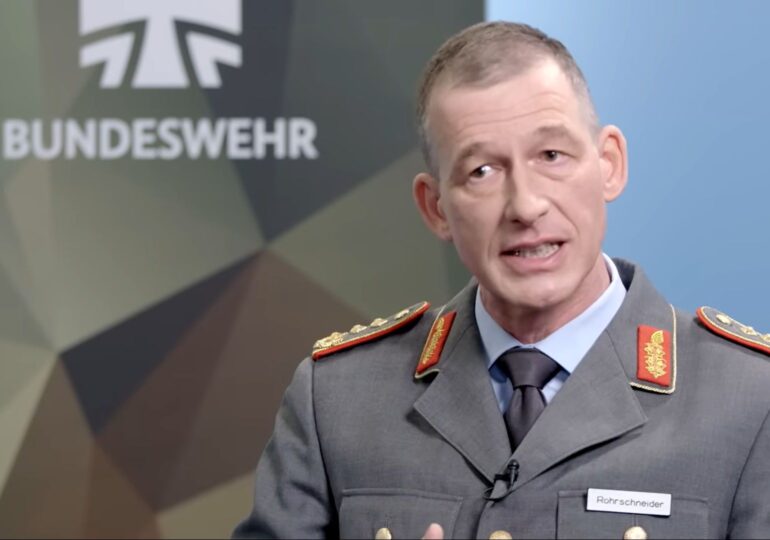
NATO is analyzing the massive expansion of its fuel pipeline network to the eastern flank, including reaching Romania, in an effort to strengthen its logistical capacity in the event of a conflict with Russia.
The initiative comes from a senior military official of the Alliance, who warns that fuel supply could become one of the biggest vulnerabilities in case of war.
NATO General: "Extending pipelines eastwards would make a lot of sense"
General Kai Rohrschneider, the head of the Joint Support and Activation Command of the Alliance (JSEC), argues that the current infrastructure no longer meets NATO's strategic needs.
"From a military operational perspective, it would make a lot of sense to extend the pipeline system further east," he said in an interview with Reuters.
The official emphasized that the network should clearly reach "into Poland" and that a solution is needed for the Baltic states. Additionally, the extension should target Finland in the north and Romania in the southeast.
Cold War infrastructure, insufficient for new risks
The NATO pipeline network, built during the Cold War, spans approximately 10,000 kilometers and is buried about 80 centimeters underground. It mainly serves Western air bases, including major hubs like Ramstein Air Base or Frankfurt Airport.
Currently, the system stops in western Germany, without covering the eastern flank where military pressure is increasing.
According to estimates, military aviation could consume up to 85% of the required fuel in a major conflict.
Fuel, "the biggest challenge" for NATO
Rohrschneider warns that transporting large volumes of fuel is already a critical issue for NATO.
"Fuel and ammunition are probably the two most important supply resources for conducting an operation. If you run out of ammunition or fuel, your operation comes to an end," he said.
In the scenario of a large-scale conflict, the demand could reach hundreds of thousands of cubic meters of fuel per day, quickly surpassing the current infrastructure's capacity.
Expansion would also solve the storage issue
In addition to transportation, NATO also faces a shortage of storage capacities. The current network includes fuel and lubricant depots with a total capacity of over 4 million cubic meters.
Extending the pipelines would indirectly contribute to increasing reserves, as the circulating fuel complements existing stocks.
The German general argues that the alliance needs "a network of resilient sites of various sizes for fuel storage, at least to some extent mobile, covering the entire NATO territory."
Political decision still pending. Cost: 21 billion euros
Although there is a military agreement on the need for expansion, the final political decision has not yet been made.
"I think nations have agreed with the military recommendation that something needs to be done, but the final decision is still pending," Rohrschneider said, mentioning that a decision could be made by the NATO summit in July, in Ankara.
However, the project is extremely costly: approximately 21 billion euros and an estimated implementation period of 20–25 years, according to Der Spiegel.