
Romania has been exposed, in the past two years, to „increasingly sophisticated forms of hybrid attacks,” and the judicial system has gone through one of the most complex stages in its post-December evolution, marked by internal vulnerabilities and external challenges „perhaps unprecedented.”
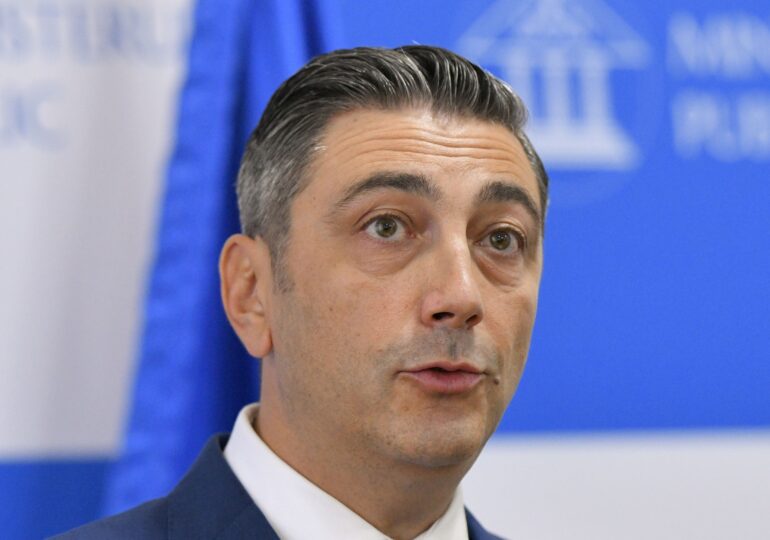
These are the conclusions presented on Tuesday by the Prosecutor General Alex Florenta, during the Public Ministry’s assessment.
"Campaigns of Disinformation" and Social Polarization
The Prosecutor General warned that Romania has faced hybrid attacks that directly targeted trust in the fundamental institutions of the state.
"In the past two years, Romania has been exposed to increasingly sophisticated forms of hybrid attacks: Disinformation campaigns, coordinated manipulation online, attempts to undermine trust in the fundamental institutions of the state. However, these techniques are not random. They exploit real or perceived vulnerabilities, speculate on latent social discontent, and amplify collective emotions to generate polarization and distrust," stated Alex Florenta.
He emphasized that, in this context, the judicial system has been subjected to significant pressures.
"In the past year, the judicial system has been subjected to significant pressures, some legitimate, others deliberate, sometimes part of delegitimization campaigns aimed at weakening public trust in judicial institutions. Criticism is natural in a democracy, it is even necessary. But when criticism generates systematic distrust, when individual cases are turned into generalizations about the entire system, and public dialogue is replaced by permanent suspicion, the risk is not only for a single institution, the risk is for the very functioning of the rule of law," stated the Prosecutor General.
2023–2026, "One of the Most Complex Stages" for the Public Ministry
Alex Florenta described the period of his mandate as one of the most challenging in the recent history of the institution.
"The period 2023-2026 represented for the Public Ministry one of the most complex stages in its post-December evolution, characterized by the overlap of internal structural vulnerabilities with external challenges, perhaps unprecedented," he stated.
In 2023, according to him, the High Court Prosecutor's Office faced "a profound operational crisis," generated by a historic personnel deficit, rigid and outdated organization, and the lack of internal regulations adapted to operational realities.
Reorganization, Digitalization, and Specialization
The 2023–2026 mandate was oriented, Florenta says, towards institutional stabilization and modernization.
"The measures aimed, in an integrated manner, at managing the personnel crisis and excessive caseload, structurally reorganizing the Prosecutor General's Office and the prosecutor's offices attached to the courts, as well as the vertical coordination mechanisms of the Public Ministry. Last but not least, developing a coherent internal regulatory framework, increasing the level of specialization in investigating complex crime, and implementing an extensive digitalization program," transmitted the Prosecutor General.
He argued that the results confirm the assumed directions. "Halting the increase in the backlog of cases for the first time in the past decade, increasing operational efficiency in resolving cases, constant improvement of quality indicators in criminal prosecution, reducing acquittal rates to a historic minimum, increasing the capacity to recover criminal proceeds, and finalizing cases of exceptional complexity practically demonstrate the functional consolidation of the Public Ministry," said Florenta.
Reaction to Extremism and Influencing Democratic Processes
The head of the Public Ministry also stated that the institution had to adapt to new types of criminal activity.
"Phenomena such as hybrid threats, attempts to influence democratic processes, the rise of extremism, and hate speech have necessitated a firm, coordinated, and professional institutional response, made possible precisely due to the structural measures adopted in the period 2023-2025," stated Alex Florenta.
He explained that the Prosecutor General's Office previously operated based on an outdated organizational chart, and prosecutors handled cases from all fields, regardless of complexity. Adopting a new internal order regulation allowed for restructuring based on specialization criteria and prioritizing areas of action.