
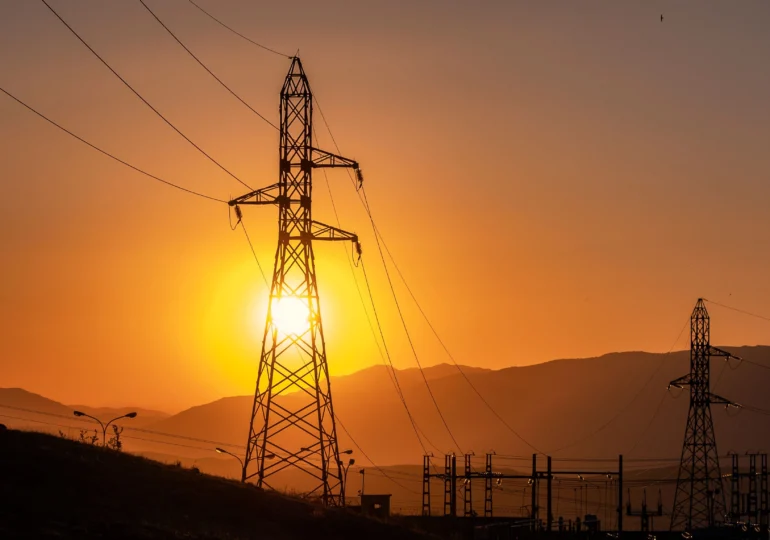
Europe is going through the third major heatwave of the year, and the extreme temperatures are affecting not only the population’s health and transportation but also putting increasing pressure on energy systems as millions of people turn on their air conditioning units. Specialists warn that in some countries, the risk of power outages is significantly increasing.
This week, temperatures could reach 43 degrees Celsius in the Mediterranean region, while several Western European countries are facing a heatwave threatening to break historical records.
According to an analysis published by Euronews, the high electricity consumption generated by the need for cooling homes and commercial spaces can strain the capacity of electrical grids, especially in countries where air conditioning usage is widespread.
– The day the lights go out: Everything you need to know about blackouts. Why they occur and how to prepare.
### Europe suffocates under extreme temperatures
France has already placed over half of its administrative units under a red heatwave alert, the highest level of warning. Authorities recommend people to avoid direct sun exposure and exercise „absolute vigilance.”
Meteorologists in the UK warn that temperatures in the southern part of the country could rise to 38 degrees, with tropical nights expected when temperatures do not drop below 20 degrees even at night.
Germany, Spain, Portugal, and Switzerland are also preparing for very high temperatures. In many regions, school activities have been reduced or suspended, and some rail services have been limited to avoid failures caused by excessive heat.
– 70% of electricity consumption covered by photovoltaics. Is this good news?
### Air conditioning pushes energy consumption to the maximum
During heatwaves, electricity consumption increases significantly due to air conditioning units and cooling systems. The International Energy Agency stated as early as 2023 that space cooling is one of the sectors with the fastest-growing energy consumption globally.
Experts warn of a potential vicious circle: high temperatures increase energy consumption for cooling, leading to additional greenhouse gas emissions and, consequently, further climate warming.
An example is France, where during last summer’s heatwave, evening electricity consumption was about 25% higher than the seasonal average, even though the use of air conditioning is lower than in other European countries.
– The EU wants households to reduce energy consumption during peak hours. What is the reason?
### Greece and Southern Europe, the most vulnerable
A study by Compare the Market, analyzing 85 countries representing about 90% of global electricity consumption, shows that Greece is the country where energy demand increases the most during extreme heat periods.
According to the research, Greece’s electricity consumption is 38.6% higher during heatwaves than in normal temperature periods.
Following Greece are Montenegro with a 22.5% increase, Turkey (21.9%), Croatia (17.8%), Italy (14.2%), and Spain (8.9%).
The data suggest that Southern European countries are the most exposed to sudden increases in energy consumption during extreme temperature periods.
– Check in 10 minutes if you have „energy vampires” in your home.
### Where power outages last the longest
When energy demand exceeds production capacity or technical limits of the grid, the system can become unstable and cause power supply interruptions.
Compare the Market analysis, based on the last five years’ data, shows that Hungary records the longest average annual duration of power outages among the analyzed European countries: almost three hours per year.
Slovenia follows with 2.16 hours, and Greece with 1.63 hours annually.
In terms of economic impact, Italy ranks first. Despite shorter interruptions than in Greece, the large number of households results in estimated losses of nearly 155 million euros annually. Poland ranks second, with estimated losses exceeding 152 million euros.
The calculations include costs associated with power outages, from spoiled food in refrigerators and freezers to lack of home cooling, internet interruptions, and other issues caused by electricity shortages.
– RO-Alert for electricity: Romanians will be warned when consumption approaches the contract limit.
### Solar energy has already helped Europe avoid bigger problems
Europe faced a similar situation last summer when temperatures locally reached 40 degrees Celsius, and daily energy consumption increased by up to 14%.
During that period, the shutdown of some thermal power plants and high demand drove energy prices to levels two to three times higher than normal.
However, according to the Ember organization, record solar energy production in the European Union played a crucial role in maintaining the stability of the energy system.
In Germany, on the hottest days, solar panels provided up to 50 GW of energy, covering between a third and almost 40% of the country’s electricity consumption. Battery storage capacities and pumped hydroelectric plants allowed the use of energy produced during the day and after sunset.
Experts say that the development of renewable sources and storage systems will become increasingly important as heatwaves become more frequent and intense in Europe.
G.P.