

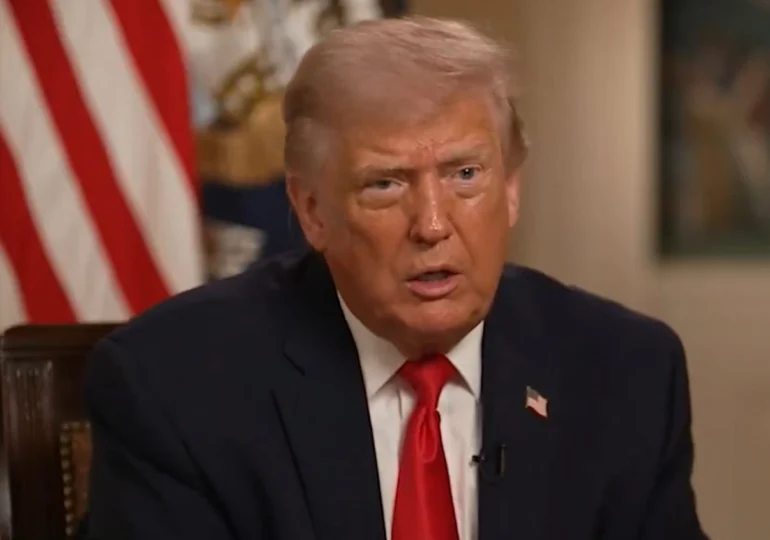
We are on day 47 of the Middle East war, and early in the morning, an important but hard-to-believe message came: Donald Trump says the end of the conflict is „very close.”
The statement triggered rapid reactions in the markets. The price of oil plummeted early in the morning, only to quickly bounce back.
However, it is a morning where political optimism clashes with the reality on the ground. Alongside messages about negotiations, the US continues its naval blockade, an unprecedented measure aimed at forcing the reopening of the Strait of Hormuz. The first oil tankers have already been intercepted, and Washington claims to have halted Iran's maritime trade flows.
On the other hand, ground data and independent monitoring indicate that some ships continue to transit the area, a sign that the effectiveness of the blockade is not as declared.
At the same time, there are other fronts: Israel continues its attacks on Hezbollah in Lebanon, and the group responds with rocket salvos towards northern Israel.
Diplomacy is trying to keep pace. Trump talks about resuming negotiations "in the next two days," and Vice President JD Vance says that, although there is "a lot of distrust," "much progress" has been made.
Sources discuss extending the ceasefire by another two weeks; otherwise, it would expire on April 22. The Prime Minister of Pakistan has embarked on a tour of Saudi Arabia, Qatar, and Turkey, in a concentrated effort to support peace negotiations between the US and Iran.
Europeans are urgently calling for a halt to Israel's attacks in Lebanon, where even Romania has sent aid from state reserves.
In this context, the global economy reacts to every signal. Some countries, such as South Korea, are already securing their oil supply from alternative routes, preparing for a prolonged conflict.
Spotmedia.ro keeps you updated daily with the latest information from the Middle East. Today is day 47:
- Diplomatic Tour - Pakistani Prime Minister Shehbaz Sharif embarked on a diplomatic tour to Saudi Arabia, Qatar, and Turkey on Wednesday, in Islamabad's intense effort to support peace negotiations between the US and Iran, writes The Guardian. The visit includes high-level meetings with regional leaders, including Turkish President Recep Tayyip Erdoğan. Meanwhile, Pakistan announced that Saudi Arabia will provide $3 billion in financial support to bolster its foreign exchange reserves amid regional tensions stemming from the conflict.
- Iran Has a Chinese Satellite - An investigation published by Financial Times claims that Iranian forces have used Chinese technology to monitor US military bases in the Middle East. The Revolutionary Guards reportedly acquired a satellite launched in 2024 by a Chinese company, using the data to obtain high-resolution images of military targets in the region. Details HERE
- Romania Sends Aid to Lebanon - Romania is sending 15 tons of humanitarian aid to the civilian population in Lebanon. The transport departed Wednesday morning, with two military aircraft, set to reach its destination through an international convoy. Details HERE
- Ceasefire Extension?- Mediation efforts to extend the ceasefire between the US and Iran have made progress, and the two parties are expected to return to negotiations soon. According to regional officials cited by AP, there is a "principle agreement" to extend the ceasefire, expiring on April 22, by at least another two weeks, to provide a new chance for diplomacy. The negotiations aim to find a compromise on three major issues: Iran's nuclear program, the situation in the Strait of Hormuz, and war compensations.
- Trump: War is "Very Close to Ending" - US President Donald Trump states that the war in the Middle East is "very close to ending" and that Iran "very much wants an agreement," according to a promo aired by Fox News. The statement precedes the full broadcast of an extensive interview and suggests a swift resumption of negotiations between Washington and Tehran.
- Negotiations, "Very Likely" in the Coming Days - Trump says that discussions with Iran could resume "in the next two days," possibly again in Islamabad, as reported by Sky News. Vice President JD Vance confirms that there is "a lot of distrust," but claims "much progress" has been made and is optimistic about reaching an agreement.
- Oil Reacts Immediately - Trump's statements had an immediate market reaction: oil prices dropped sharply below $92 per barrel, only to bounce back above $95. Investors seem to bet on a possible de-escalation, but volatility remains high.
- Hezbollah Launches Rockets towards Israel - Hezbollah has launched approximately 20 rockets from Lebanon towards northern Israel. Some were intercepted, while the rest fell in open areas. No casualties have been reported so far.
- Israel Continues Strikes in Lebanon - The Israeli Defense Forces announce that they have continued recent attacks on "Hezbollah terrorists and military infrastructure" in Lebanon, despite the first diplomatic discussions between Israel and Lebanon in decades, reported by BBC. The Israeli army states that operations targeting armed groups supported by Iran for disarmament will continue.
- First Sea Interceptions - An American destroyer intercepted two tankers attempting to leave Iran and forced them to turn back. This is the first concrete evidence of the blockade's enforcement, an unprecedented measure aimed at compelling Tehran to reopen the Strait of Hormuz.
- US Blockade: Contested Effects - The US Command claims that the naval blockade has completely halted Iran's maritime trade. "In less than 36 hours of instituting the blockade, US forces have completely halted the economic trade entering and exiting Iran by sea," stated US Central Command commander Brad Cooper. However, independent data shows that several ships have continued to transit the Strait of Hormuz, including tankers linked to Iran. The actual effectiveness of the measure remains uncertain.
- International Pressure for Ceasefire - Several Western states, including the UK, are calling for an "urgent halt to hostilities" in Lebanon, amid escalating airstrikes and rapidly deteriorating humanitarian conditions. In a joint statement, they express "deep concern" about the increasingly severe crisis and the growing number of displaced persons.
- South Korea Secures Oil Supply - South Korea announces that it has secured over 270 million barrels of oil from alternative routes, enough for over three months. This is one of the first signs that countries are seeking to avoid risks from the Strait of Hormuz.