

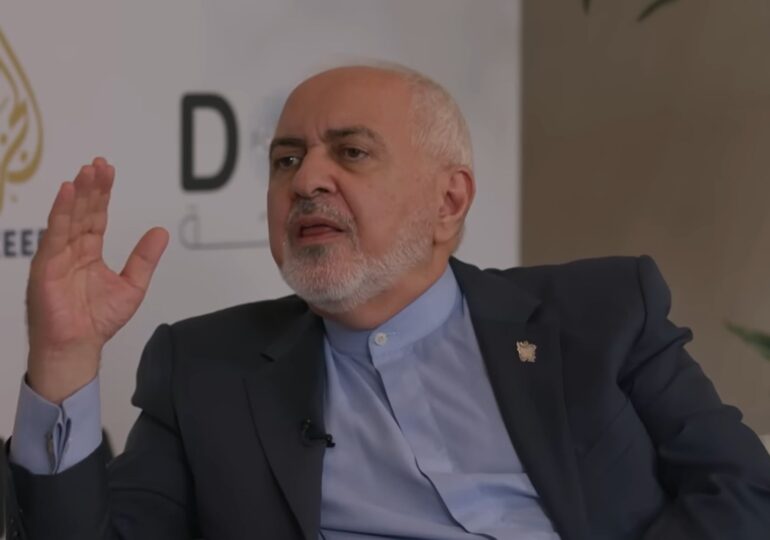
A former chief of Iranian diplomacy proposes a plan to exit the war that relies on a pragmatic calculation: Iran would be in a good enough position to declare victory and negotiate.
In exchange for limiting the nuclear program and reopening the Strait of Hormuz, Tehran would demand the lifting of Western economic sanctions and a non-aggression pact with the USA.
In an article published by Foreign Affairs, former Iranian Foreign Minister Mohammad Javad Zarif warns that prolonging the conflict risks causing massive civilian casualties and expanding the war globally.
Iran "wins" the war, says Zarif
Zarif argues that over a month since the conflict began, Iran has managed to withstand intense bombardments and defend its interests.
"Iran did not start the war with the United States and Israel. But, over a month later, the Islamic Republic is clearly 'winning' it," says Zarif.
The former diplomat claims that although the USA and Israel have consistently targeted Iranian infrastructure and killed thousands of people, their objective - regime collapse - has not been achieved.
"The Americans and Israelis who started the conflict, convinced they would force a surrender, find themselves in a deadlock without an exit strategy. Iranians, on the other hand, have achieved a historic feat of resistance," writes the former Iranian minister.
Internal pressure for continuing the war
Zarif also describes a state of internal mobilization in Iran, where a portion of the population demands the continuation of the conflict until the "punishment" of adversaries: "Without surrender, without compromise, we fight with America."
In this logic, he writes, Tehran should continue attacks on American bases and maintain the commercial blockade in the Strait of Hormuz until Washington radically changes its policy in the region.
However, the former minister warns that prolonging the war would have serious consequences, especially for civilians.
He accuses the USA and Israel of targeting essential infrastructures and innocent civilians in the absence of military results.
"These states, frustrated by not achieving their objectives, increasingly resort to targeting vital objectives and random attacks on innocent civilians," says Zarif.
He warns that violence is drawing more countries into the conflict and risks turning the war into a global one.
Plan: limiting the nuclear program against lifting sanctions
The solution proposed by Zarif is a negotiated one, based on reciprocal concessions.
Iran should accept limiting its nuclear program and reopening the Strait of Hormuz in exchange for lifting all sanctions imposed by the USA.
"Tehran should use its advantage not to continue the war but to declare victory and reach an agreement," the diplomat emphasizes.
He suggests that such an agreement, previously rejected by Washington, could now be accepted in the current context.
A non-aggression pact and resuming economic relations
Zarif goes further and proposes a non-aggression pact between Iran and the USA, in which the two states commit not to attack each other.
He also talks about resuming bilateral economic relations as a basis for stability.
"It could offer economic interactions with the United States, which would be a gain for both peoples," the former minister further states.
The former Iranian minister believes that Tehran has the opportunity to end the conflict from a position of strength. "Tehran could secure the new and promising future that Iranians deserve," concludes Zarif.