
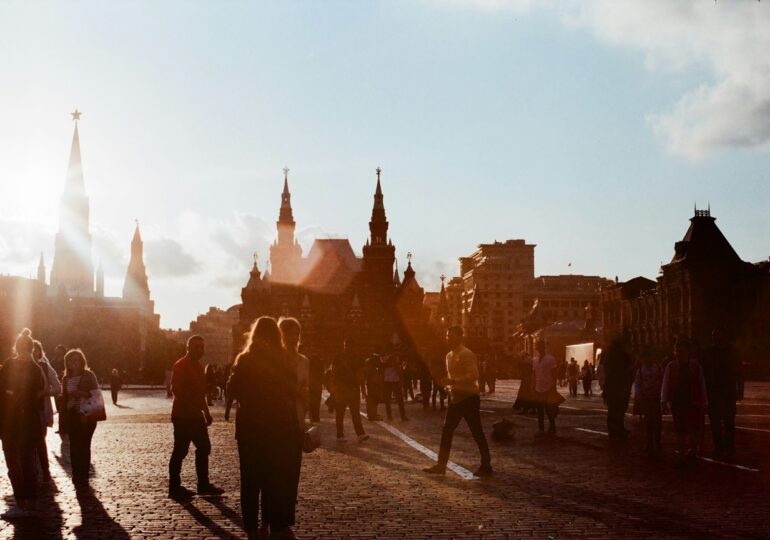
Since the invasion of Ukraine on February 24, 2022, Russia has undergone significant internal changes, with the Kremlin regime strengthening its control over power. However, the economy, which initially thrived due to massive government contracts and high oil prices, has started to falter. And the lives of Russians are being turned upside down every day by the effects of the never-ending war.
Many Russians try to ignore the war that started four years ago, but it’s becoming increasingly difficult to do so. There is no sign of an imminent political or economic collapse. But even Vladimir Putin’s repressive regime cannot hide the numerous ways in which the war affects daily life, writes The Economist.
A Plethora of Troubles Befall Russians
Defense systems designed to thwart Ukrainian drone attacks disrupt satellite navigation for cars in Moscow and other cities.
Air travel has become highly complicated. Due to fears of drone attacks, Russian airports were closed 500 times last year.
Sanctions hinder the import of spare parts for Airbus and Boeing aircraft, which account for 90% of passenger flights. In 2025, there were 800 malfunctions - more than triple the number from the previous year. Some airlines refurbish old planes made in Russia, though these also often experience malfunctions.
Even taking the elevator in apartment buildings can be a problem for Russians, for similar reasons - many elevators are made abroad, and spare parts are hard to find. Sustainable repairs are impossible as long as authorities prioritize war over everyday issues.
Communications are becoming increasingly difficult with each passing day. After months of restrictions, YouTube and WhatsApp are now completely blocked. Telegram, a messaging app and one of the main sources of information not controlled by the state, is stifled, leading to complaints even from members of the Duma, Russia's subservient parliament.
Russians are pressured to use a state-supported rival, Max, preinstalled on all new smartphones and tablets, purportedly facilitating government surveillance. Top10VPN, a VPN review service, counted 58 regional or national internet shutdowns imposed last year, averaging 25 days each.
The Economy Begins to Waver
Nevertheless, the Russian economy has surprisingly held up well. At the end of 2021, before the war began, economists estimated that Russia would grow by around 2% annually from 2022 to 2024. Ultimately, it grew slightly faster than this, despite the conflict and severe Western sanctions, as oil exports surged and the government opened the fiscal taps. In 2025, growth abruptly slowed to around 0.6%.
However, unemployment remains extremely low, at 2%. Meanwhile, consumer confidence remains close to a historic high, according to data from the independent polling house Levada.
Aggregate figures, however, mask the fact that the economy has fundamentally changed. Unemployment is so low largely because Russia's war machine has absorbed the workforce, and hundreds of thousands of Russians have fled the country. Economic growth in 2023 and 2024 depended largely on state largesse, not just in terms of military spending but also for infrastructure and social assistance.
Cities like Izhevsk, in the Ural Mountains, where the Kalashnikov Group is located, are booming. Property prices are rising, and new restaurants are opening. However, other parts of the economy are faring worse.
The civilian sector of the economy shows signs of malaise. The number of new businesses opened in 2025 was the lowest in the past 14 years and 20% lower than in 2024. Wage arrears doubled in the last year, reaching 2.2 billion rubles ($29 million), largely in the construction industry. Samolet, a giant real estate developer, struggles to pay off its debt and has sought government aid. Avtovaz factories, Russia's largest car manufacturer, operate only four days a week.
Where Crime Is Legal and Sacred
The war has distorted the legal system in many ways. Criminals enlisting in the army are routinely absolved of past crimes, regardless of their severity. Verstka, an online media publication, counted 1,112 court cases, including criminal prosecutions for murder and rape, that were suspended or dropped because the accused signed military contracts. Putin has granted soldiers immunity from criminal prosecution during military service for relatively serious crimes, including theft and bodily harm.
Some soldiers remain violent upon returning home. In the past four years, approximately 1,000 people have been killed or injured by war participants, according to Verstka. Half of the crimes were committed by former inmates recruited into the army from prisons. Although these criminals are usually tried and returned to prison, they often receive lenient sentences.
Crimes have also been sanctioned by the Russian Orthodox Church, which has declared the invasion of Ukraine a holy war and sent thousands of priests to the front, both to mobilize troops and, in some cases, to fight themselves. At least 300 priests are believed to have signed contracts with the Ministry of Defense, receiving the same privileges as veterans.
From the start of the war, Kirill, the patriarch of the Russian Orthodox Church, said that sacrificing life for Moscow's war would absolve any sin, even for the unrepentant. In contrast, an anti-war protester who displayed a sign reading "Thou Shalt Not Kill" was detained and fined for "discrediting the Russian army."
Izvestia, a pro-Kremlin publication, justified the war as a salutary test for Moscow, applauding Russia's isolation: "The most important result of these four difficult years has been the achievement of genuine sovereignty. ... We managed to survive with dignity the sanctions imposed by the world's most powerful and developed economies. We have become a kind of ark in which traditional spiritual and moral values are preserved and protected. Above all, our desire to live as we see fit is what arouses the anger of the globalist elite. Russia has broken all the chains that tied us to this world of mindless consumption and neocolonialism."
Labor Market Disturbances
Despite the church's enthusiasm, recruiting new soldiers is becoming increasingly difficult. Many are men aged 30 to 40, from small towns or villages in remote areas of the country, with few skills or prospects.
A recruitment bonus, which reached 2.5 million rubles in 2024 in some parts of Russia (regions competed to please Putin by offering many recruits), could be used as a down payment for a mortgage. Salaries of 200,000 rubles per month were five times higher than their average wage. It seemed like a rational choice, often made within families.
Information on the number of deaths on the front and the impact on the labor market is hard to obtain, as the government has become extremely secretive about demographic data. In 2024, Putin suspended official government surveys on the population until 2029.
Losses in Ukraine and the flight of many Russians abroad to escape military service have exacerbated the labor force decline over the decades. The government is now recruiting foreign workers to alleviate the labor shortage in Russia.
Fewer Children in Russia
It is also expected that the war will accelerate the decline in Russia's birth rate. In 2023, before Putin halted the publication of data, the fertility rate (the number of children an average woman would have in her lifetime) had dropped to 1.3 - the lowest level since 2006.
According to a survey conducted by the Higher School of Economics in Russia that year, nearly a third of Russians decided to postpone or completely abandon plans to have a child due to the war in Ukraine and worsening economic conditions.
To help maintain the birth rate, the Duma banned the promotion of a childless life in 2024. A zealous regional governor, eager to respond to Putin's call for more children, offered money to school-age girls if they became pregnant.
Several regions are restricting abortions in private clinics. Public forums sponsored by schools on VK, Russia's main social network, are inundated with natalist slogans such as "Do you want to start a new life? Have a child!" and "Student years are a window for reproduction." As the church blessed the war, priests, along with bureaucrats, have been urged to denounce abortion and promote pregnancy.
A Country Sinking into Depression
Ordinary Russians are not passive in the face of this war. Many use VPNs, for example, to evade digital censorship. But they are becoming increasingly bleak: about 60% expect this year to be harder than the last, according to surveys. According to Russia's official statistics, cases diagnosed with anxiety and depression increased by 21% between 2020 and 2024. Prescriptions for antidepressants rose by 18% compared to the previous year in January.