

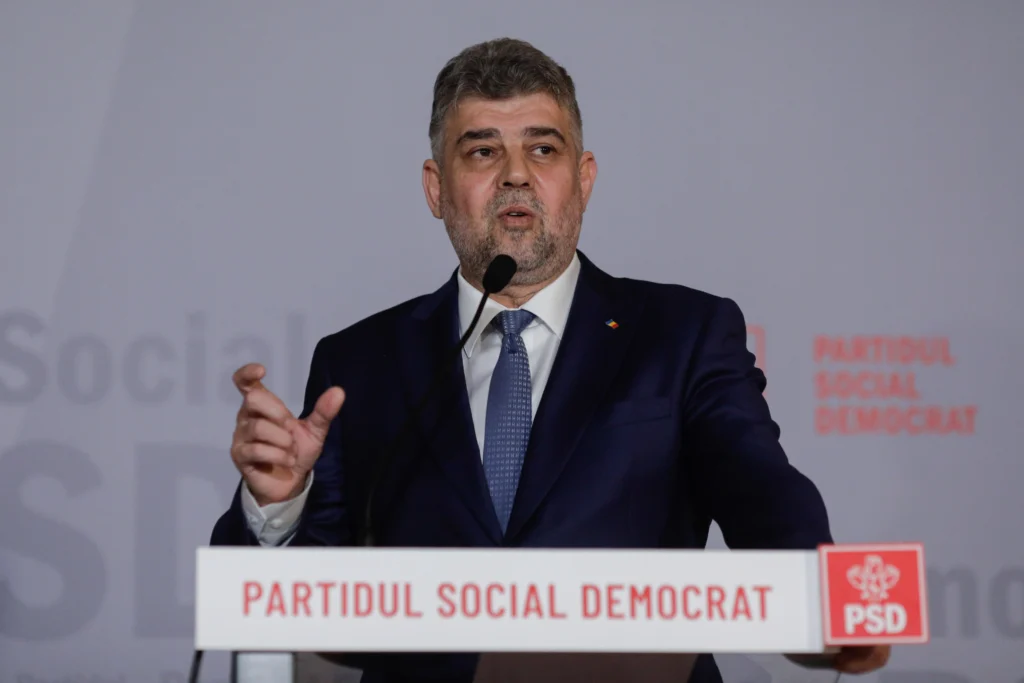
When PSD conspiracy theorists throw Marcel Ciolacu into the fight, it means that the „operation” they had underway has collapsed.
There is no character that provokes a more negative reaction on social media and towards their own party than the former prime minister, now president of the Buzău County Council.
Sorin Grindeanu is gaining ground.
On July 3, at 3:08 PM, the former PSD leader posts a text and a photo on Facebook, associating the DIICOT raid at Dumbrava with an alleged "octopus" Bolojan, who exploited the elderly without assistance.
The respective image was circulated by social-democratic communicators on social networks, provoking people's anger.
"Gabriela Firea left due to an unproven fault. Ilie Bolojan remains with all his signatures on reports. That's the difference between dignity and defiance. And Romania sees it," Marcel Ciolacu wrote.
In that post, the former prime minister gathered around 11,000 reactions and 7,000 comments, predominantly negative, making it clear to the PSD leadership that the "Dumbrava operation" had politically turned against the party.
It will be interesting to see what will happen from a legal perspective. However, the entire country witnessed a rare display of force involving prosecutors, police officers, healthcare personnel, and other officials.
Lately, an association between the President of Romania, PSD, the new leadership team of the prosecutor's offices, and some judges, controlled by Lia Savonea, the president of the High Court of Cassation and Justice, has launched an assault on the leaders of the PNL and USR parties, as well as on several journalists, political influencers, and non-governmental organizations opposing a USL-type restoration - an association between PSD and the "putschists" from PNL. Goal: creating a parliamentary majority subservient to the Cotroceni Palace and taking control of public resources, with consequences that are hard to imagine for the economy and society.
The major obstacle to this restoration is the people's anger, who, regardless of their political preferences, have united against PSD due to the association of this party with grand corruption, as well as against the political, military, and judicial elite in Romania, a privileged class connected to budgetary resources.
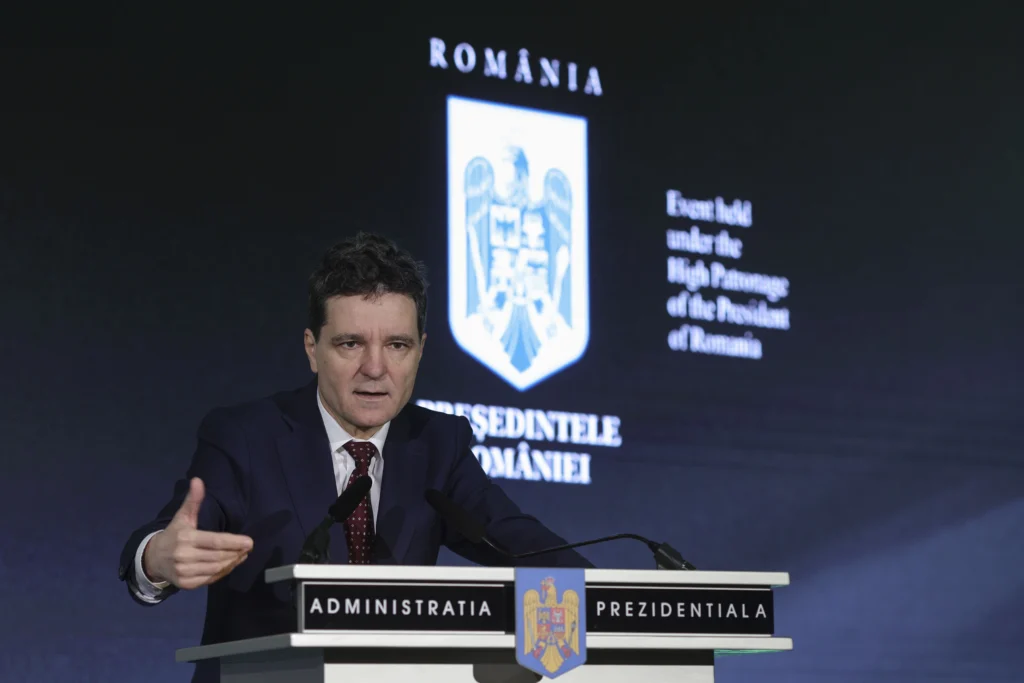
Out of pride, lack of experience, and stubbornness, caught in a war with Ilie Bolojan, whom he himself created, Nicușor Dan, the President of Romania, has become the "head of this system" aiming for restoration.
Two obstacles
The "Dumbrava operation" was meticulously planned behind closed doors, based on information from Florin Manole, the Minister of Labor, and Alexandru Rogobete, the Minister of Health, both PSD members, who were certain that the "asylums" run by Viorel Pașca did not have authorization.
For two decades, institutions under the jurisdiction of the two ministries, as well as the Romanian Police, had transported thousands of homeless, elderly, sick people to Dumbrava, without support that the Romanian state wanted to get rid of.
In addition, Dumbrava was in Bihor, where Ilie Bolojan was the President of the County Council, and the PSD leaders knew it was impossible for the Good Samaritan Association, which had been operating for years, not to have been rewarded, supported, or praised by the county leaders, especially since it was validated by the public system that collaborated intensively with it through the continuous transfer of residents.
Thus, the whole plan aimed to create a spectacular action that would cause fear, an emotional shock, and reactions of revolt in society, following which Ilie Bolojan would be compromised, possibly investigated, and public support for the PNL leader would evaporate.
Nicușor Dan, the President of Romania, who, according to political sources, only has 12% of voters on his side, is terrified that Bolojan has exceeded 30%, being the most popular political leader in the non-sovereignist area.
The head of state has lost the war he initiated himself, and his mandate now depends exclusively on the will of Sorin Grindeanu and Lia Olguța Vasilescu, who control PSD.
The major problem with the plan, implemented on the last day of June, was represented by two things that overturned it, although initially the operation achieved its goal, causing an emotional shock nationwide:
- The local community, which showed solidarity and reacted promptly and decisively, demonstrating that there are dozens of volunteers and donors involved in caring for the people abandoned by the Romanian state;
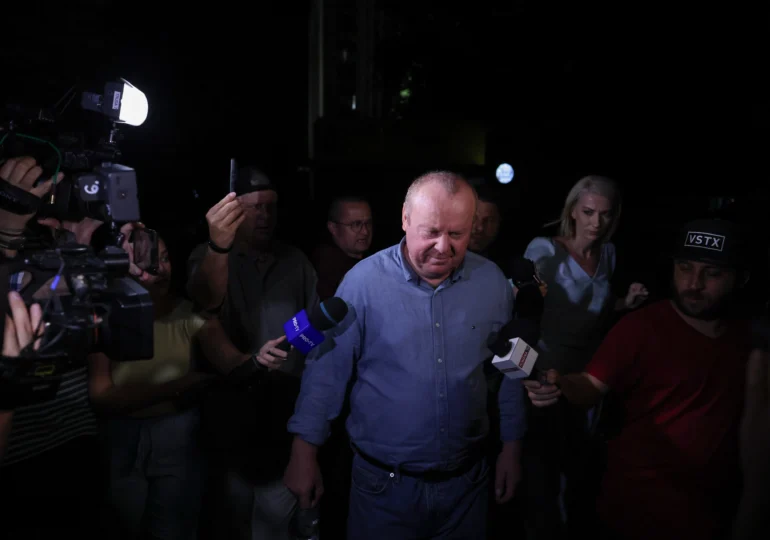
- Viorel Pașca, a 55-year-old man, religious, gentle, and at peace with himself, convinced that he has a mission to fulfill, and what is happening to him is just a small obstacle he will overcome calmly, as he has done many times before.
Association with the "azilele" from Voluntari did not work
I repeat, the elderly care centers in the Tinca commune area did not have accreditations and apparently did not operate legally. There are well-founded suspicions, formulated by social activists who tried to inspect the centers, that the residents did not receive qualified medical assistance, that the financing of these asylums was not transparent, and that there were possible cases of abuse against the vulnerable individuals there.
However, Viorel Pașca, from his perspective, published a detailed report at least once a week about what was happening there, a report accompanied by dozens of images from his centers.
From donations, he built houses and expanded the capacity to accommodate the underprivileged, and in response to many of the accusations against him, he claimed that he tried to comply with the law, but the authorities did not offer him support.
What they offered him instead was an endless number of destitute individuals whom state institutions wanted to get rid of.
PSD leaders were confident that they would get a reaction of horror and revolt, just like in the case of the "horror asylums" in Voluntari, coordinated by people from Gabriela Firea's circle.
If it worked in the case of the former mayor of Bucharest, why wouldn't it work in the case of Ilie Bolojan? Indeed, why wouldn't it work?
To answer this question, just look at the photos from the two places. A second major difference is that no matter how illegal the asylum in Dumbrava is, a large part of the local community was involved in caring for those people there.
In Voluntari, the elderly were hidden, isolated, while in Dumbrava, they were taken to the swimming pool.
Unifying the revolt
Unfortunately, DIICOT has once again become a tool in the hands of political leaders, just as it happened in the case of the August 10 File, destroyed by the prosecutors of this institution, just as with the NORDIS File, which has been under investigation for three years with no effect, or in the case of Călin Georgescu, another file hidden in the bureaucratic maze of the anti-mafia prosecution.
The actions of the alliance between Nicușor Dan, PSD, and Lia Savonea will continue in the coming months with effects that are hard to predict at this moment. The only thing that can be observed now, in the heat of the moment, after the "Dumbrava Operation," is that the polarization in society has faded, uniting opposing tendencies - sovereigntists vs. progressives - against the President of Romania and the social democrats, seen as responsible for the privileges of a corrupt political, military, and judicial elite that control the country's budgetary resources and hinder reform.