

Since the invasion of Ukraine, Europe has been heavily investing in defense, producing more ammunition, and significantly increasing military budgets. However, the European Union’s ability to handle a high-intensity conflict without the support of the United States remains in question.
A new report from the European Court of Auditors warns that the EU’s objective to reach an adequate level of military preparedness by 2030 will be challenging to achieve. Among the issues are fragmented national defense systems, obstacles in the military industry, insufficient coordination between states, and continued high dependence on American suppliers.
"Achieving a level of defense preparedness in the EU by 2030 remains a challenge," says Marek Opioła, a member of the European Court of Auditors who led the analysis.
"There are still major difficulties, such as fragmented national systems or industrial bottlenecks. We also still depend on the United States," he told The Guardian.
The report does not state that Europe has not made progress. On the contrary, the situation is considerably better than before the large-scale Russian invasion of Ukraine.
The issue is whether the current pace will be sufficient for what the EU aims to achieve in just a few years.
What Does "Prepared for Defense" Actually Mean
The target for 2030 is not just about allocating more money to the armies or buying a greater number of weapons.
A senior official from the European Court of Auditors explained to The Guardian that preparedness also involves achieving "strategic autonomy" and Europe's ability to independently support high-intensity military operations.
In other words, European states should have sufficient weapons, ammunition, industrial and logistical capabilities, and coordination mechanisms that allow them to engage in a major conflict without depending on an ally outside the EU in essential areas.
However, problems arise precisely here.
European military planning still largely starts from needs established separately by each state. In the absence of an efficient European planning system and better coordination of funding, auditors warn that there is a risk of duplicating some investments while leaving other essential capacities underdeveloped.
Money Has Increased Significantly
Europe has started to recover some of the gap. Between 2020 and 2025, defense spending of EU states increased by almost 80%. Just between 2022 and 2025, cumulative annual military budgets rose from 262 billion euros to 418 billion euros.
The increase came after years of insufficient investments, leaving behind low stocks of ammunition and missiles, limited industrial capacities, and long production times.
The war in Ukraine quickly revealed the extent of the problem. The EU promised Kiev a million artillery shells, but only achieved the target in November 2024, eight months later than planned.
However, auditors believe that Europe can still make significant progress if investments increase and, especially, if the industry rapidly expands its ammunition production capacity.
Poland is building the largest army in Europe and is moving towards internal arms production
78% of Acquisitions Came from Outside the EU
One of the most sensitive issues is the origin of the arms purchased by European states. According to a study cited by the European Court of Auditors, between February 2022 and June 2023, 78% of defense acquisitions by EU governments came from outside the Union. The United States alone represented 63% of the total.
The explanation is largely practical: after the invasion of Ukraine, European governments urgently needed weapons that could be delivered quickly. The increase in acquisitions from the US was, under these circumstances, "understandable," said the European official cited by The Guardian.
However, in the long term, dependence creates exactly the problem that European plans are trying to solve.
The EU has introduced rules whereby a significant portion of the money spent collectively on defense must go to the European industry or companies from states closely associated with the Union, such as Ukraine and Norway.
The Patriot Dilemma
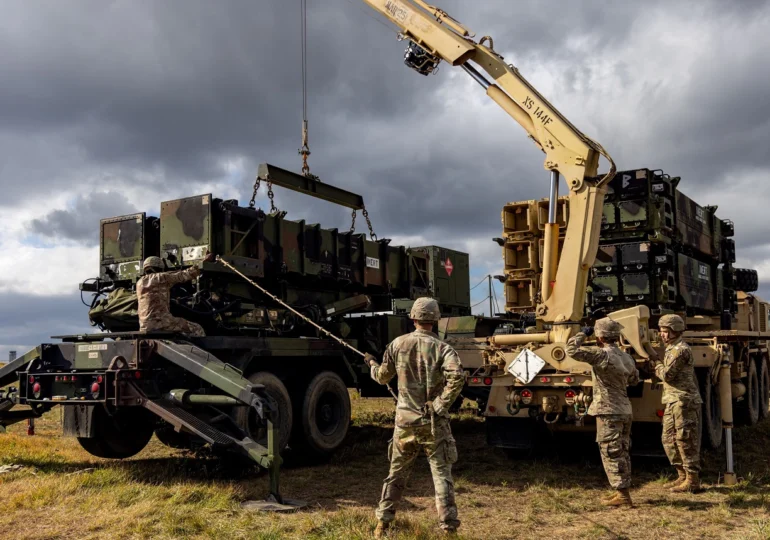
An example is Ukraine itself. After a summer marked by Russian missile and drone attacks, Kiev requested to be able to use funds from the European loan of 90 billion euros for the purchase of American Patriot interceptors.
Ursula von der Leyen stated on Wednesday that Ukraine is seeking funding of "several billion euros" for air defense, including for Patriot systems.
However, a derogation from the rules requiring that the majority of components purchased with this money be European would be necessary for such acquisitions.
The final decision lies with the member states, and the European Commission hopes that the exception will be approved quickly.
Auditors admit that in an urgent situation, it can be perfectly justified to buy armaments from outside the EU. But there is an important condition: if Europe finds that it lacks a critical military capability, it must also have a plan to be able to produce it on its own in the long term.
More Money Doesn't Automatically Mean Common Defense
Another issue is the fragmentation of the European industry and the difficulty for states to pool major military projects.
The Guardian recalls the case of the Franco-German project to build a new fighter jet, estimated at around 100 billion euros, abandoned after the companies involved failed to reach an agreement on the program's leadership and control. This case is not mentioned in the Court of Auditors' report, but it is an example of the difficulties European defense cooperation can face.
Auditors warn that lack of coordination can lead to a situation where Europe spends a lot but not necessarily efficiently: multiple states may invest separately in the same types of equipment, while other essential capabilities remain uncovered.
Hence the less comfortable conclusion of the report. Europe is considerably better prepared today than before the war in Ukraine. Budgets have increased, the industry is expanding its production, and military cooperation is much more present on the EU's agenda.
However, for the Union to truly speak of strategic autonomy and the ability to independently support a high-intensity war by 2030, it will not be enough to just spend more. It will need to produce more in Europe, bridge the gaps between national armies, and, above all, reduce dependencies that in a major crisis, it may not be able to afford.