
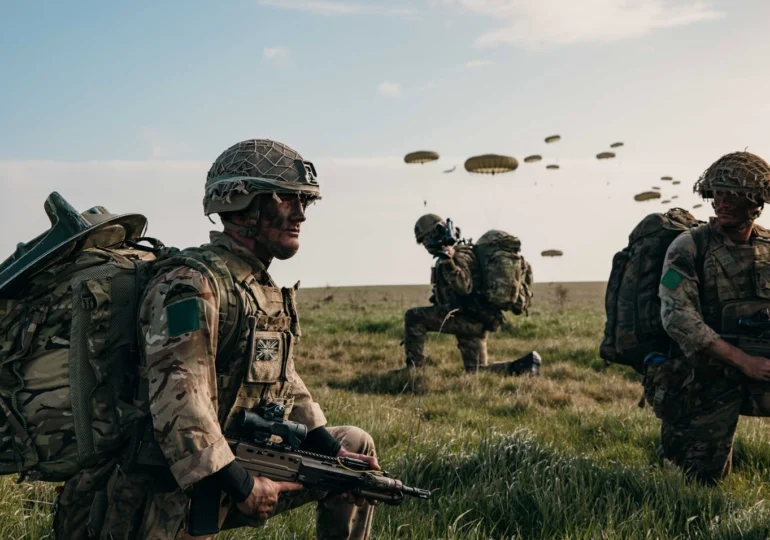
Collective training exercises for units stationed in the United Kingdom will be suspended for most of this year due to budget constraints.
British military personnel preparing for deployment or already on missions, as well as those on standby or with a rapid reaction role, will continue their training as usual.
However, collective training exercises for units stationed in the United Kingdom are suspended for most of this year due to budget constraints, as reported by The Guardian.
Among the canceled exercises are those involving tanks and Apache helicopters, according to information published by The Times and BBC.
The army has not denied these reductions and has stated that priority is given to a training program based on lessons learned from the conflict in Ukraine, such as those regarding the use of drones in combat and modernization.
"Our training continues, and we prioritize activities that contribute most directly to combat capability, troop deployment capability, and operational effectiveness. Additionally, we are investing two billion pounds to transform the British Army's training system over the next 15 years," said an army spokesperson.
The Army Budget Will Increase, But Where Will the Money Come From?
British Prime Minister Andy Burnham is under pressure to increase defense spending to 3% of national income by 2030 and to 3.5% by 2035.
During Wednesday's Prime Minister's Questions session, Burnham was urged by the Chair of the Commons Defence Committee, Labour MP Tan Singh Dhesi, "to urgently commit to a path to reach a defense spending level of 3% of GDP by 2030. Dhesi told the Prime Minister that 'mere intentions will not be enough' when it comes to funding the UK Armed Forces.
The plans outlined in the Defense Investment Plan (DIP) foresee an increase in defense spending to 2.7% of GDP by 2027-2028, but there are no concrete details on how further increases will be achieved after that date.
The Treasury has repeatedly stated that the government will present plans to reach the 3% and 3.5% thresholds in the public spending review scheduled for next year.
Former Defense Minister to Follow Plan He Criticized
Finance Minister John Healey resigned in June from the position of Defense Minister in Keir Starmer's government, in protest against what he deemed the former Prime Minister's failure to adequately fund the defense sector.
However, from his new role at 11 Downing Street, Healey made it clear that he would wait until next year's spending review before presenting a plan to fulfill the Labour Party's commitment to allocate 3.5% of GDP for defense by 2035.
Healey will present his first budget on October 28 and needs to find approximately £1.4 billion annually over the next three years to fund Starmer's defense investment plan. A plan that, in his previous role, Healey criticized as inadequate.
T.D.