
When US Treasury Secretary Scott Bessent announced Operation „Economic Outcast,” threatening with new harsh sanctions against countries that refuse to cease commercial relations with Iran, he did not mention the country that could decide the success or failure of this operation: China.
The world’s second-largest economy has long been a vital source of economic support for Tehran, buying most of its oil exports – estimated at tens of billions of dollars last year – along with other products and services traded between the two countries.
However, convincing China to join the latest White House effort to pressure the defiant Iranian leadership, which has remained defiant after nearly six months of war, is an extremely difficult mission, commented CNN.
Beijing categorically rejects what it calls unilateral American sanctions and has long defended its right to trade with partners such as Iran and Russia. It also believes that Washington would be reluctant to trigger a broader economic confrontation that would affect both countries, especially ahead of the halfway point of the US parliamentary elections.
Following Bessent's press conference on Tuesday, the Chinese Foreign Ministry promised to "take all necessary measures" to protect its "own legitimate rights and interests" in the face of US threats of sanctions.
"Economic war and maximum pressure policy will not contribute to solving the problem; they will only lead to an intensification of tensions and conflicts, create risks of escalation, disrupt the global economic and financial order," said the ministry's spokesperson, Lin Jian.
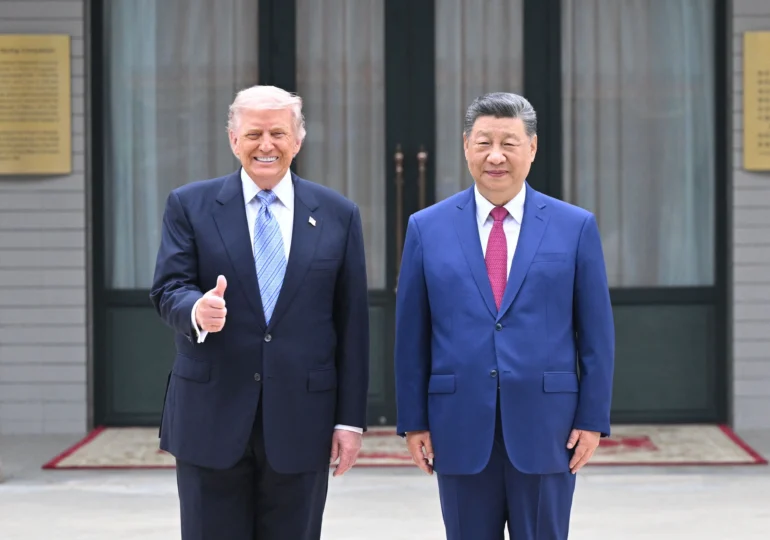
Bessent's threat also comes ahead of a highly anticipated visit by Chinese leader Xi Jinping to the US next month, where the two parties could make progress in extending a significant trade truce set to expire later this fall.
US President Donald Trump previously stated that he did not ask Xi for "any favors" regarding Iran during a meeting between the two in May - a statement that, if correct, is likely to be interpreted in Beijing as a sign of America's desperation to end the conflict.
What remains now is a careful calculation for both countries on how they will manage what Bessent described as a period of "discreet diplomacy" - or, more precisely, the private transmission of ultimatums to Iran's economic partners, whom the Treasury chief did not explicitly name during the press conference.
Chinese analysts believe that Washington's room for maneuvering is limited. "It is unlikely that China will accept a situation where Washington sets what Chinese companies can legally trade with third countries," said Zhao Long, director of the Institute for Strategic and International Security Studies at the Shanghai Institute for International Studies.
What Washington could do
China imports Iranian oil using an opaque system designed specifically to be isolated from the US dollar-dominated system - and, implicitly, from sanctions.
Private refineries, known as "teapot refineries," buy and process US-sanctioned Iranian crude oil, relying on a network of ports, financial institutions, and oil companies that are often shielded from international exposure.
China has not officially recorded these purchases for years, since the US re-imposed sanctions on Iran after the first Trump administration withdrew from the nuclear deal with Iran negotiated during the Obama era.
However, there are vulnerable points on which pressure can be exerted, analysts say.
"When you analyze the upstream ownership structure of these entities, you will find that many are directly or indirectly owned by large Chinese state-owned companies, which are heavily integrated into the US dollar system," said Max Meizlish, an analyst at the Foundation for Defense of Democracies think tank in Washington.
"By sanctioning their subsidiaries, the US can exert pressure on parent companies to divest these assets if they do not want to risk being seen as providing direct or indirect support to sanctioned entities," he said.
Earlier this year, Bessent stated that Washington had issued warnings to two Chinese banks, whose names were not disclosed, regarding their role in transactions related to Iran.
When asked on Monday during the press conference what measures the US would take against Chinese banks and shipping companies that do not comply, he said that "no one is above" American sanctions.
Despite the tough tone, Beijing has seen the US threatening with extensive sanctions and then backing down from them. At the same time, China knows that Washington is acutely aware of the significant economic influence Beijing holds over the US, especially through controlling a substantial portion of the global supply of strategic rare earth minerals.
"If Washington crosses that threshold (of sanctioning major Chinese banks), Beijing would almost certainly react, and the political atmosphere for a summit (between Trump and Xi) would deteriorate significantly," said Sun Chenghao, a senior researcher at the Tsinghua University Center for International Security and Strategy in Beijing.
Such a move would not automatically cancel the meeting, but it would "turn the summit from a stabilization effort into a damage limitation one," he said.
Considerations regarding the summit
Both sides will analyze the impact of an escalation on the summit, expected to be Xi's first state visit to the US in the past 11 years.
While Beijing will not want to give the impression of cooperating with a sanctions regime it rejects, there are certain cautious maneuvers it could make - such as discreetly reducing oil purchases or intensifying political messages to Tehran.
Chinese purchases of Iranian oil have already significantly decreased compared to last year, as the American blockade has limited Iran's oil exports.
In recent weeks, Chinese analysts have also suggested that there are certain common interests between Washington and Beijing, especially in terms of restoring trade flows through the Strait of Hormuz, severely affected by conflict, as well as restoring broader regional stability conducive to trade.
In recent days, Beijing has once again intensified its messages calling for restraint and resumption of normal operations around the strait.
In a joint statement issued after meeting with King Abdullah II of Jordan in Beijing on Monday, Xi called for the restoration of "normal passage" through the strait and a "comprehensive solution" to the conflict.
Chinese Deputy Foreign Minister Miao Deyu said last week, during a meeting with Iranian officials in Beijing, that China is "firmly committed to promoting peace negotiations."
Even so, Beijing has been reluctant to play a direct mediating role in the conflict, preferring a position to protect its own economic interests and consolidate its image as a stable power that supports regional peace, in contrast to Washington's shifts in direction.
Any cooperation with the US to restore regional peace "should not be reduced to the idea of 'doing a favor for Trump'," Zhao said in Shanghai.
"Beijing is willing to contribute to ending the crisis, but it is not willing to become a tool of Washington's maximum pressure strategy."