
„War is the great auditor of institutions,” wrote British military historian Correlli Barnett. So, what does the war with Iran reveal about the military power of the USA?
The first and most obvious lesson is the USA’s capacity for attack. Since the beginning of Operation Epic Fury on February 28, American and Israeli forces have hit over 15,000 targets without losing any aircraft, writes Washington Post in an analysis.
These attacks were made possible by the American and Israeli intelligence services, allowing the killing of Ayatollah Ali Khamenei and other senior Iranian leaders. The tragic exception was an erroneous American airstrike that, according to Iranian state media, hit a girls' school, killing at least 175 people, many of them children.
The United States has maximized its technological advantage against Iran, albeit a second-tier adversary. But even in such a unilateral conflict, there are clear limits to what air power alone can achieve.
Despite American airstrikes, the clerical regime has maintained its power, with Mojtaba Khamenei succeeding his father as the supreme leader.
The most effective way to overthrow the government and confiscate Iranian nuclear material would be to send American ground troops. The Pentagon has ordered the deployment of over 2,200 Marines to the Middle East, but although they could be used to seize control of the oil transit hub on Kharg Island, an invasion of Iran is unlikely because the USA does not want casualties.
US Army runs out of missiles
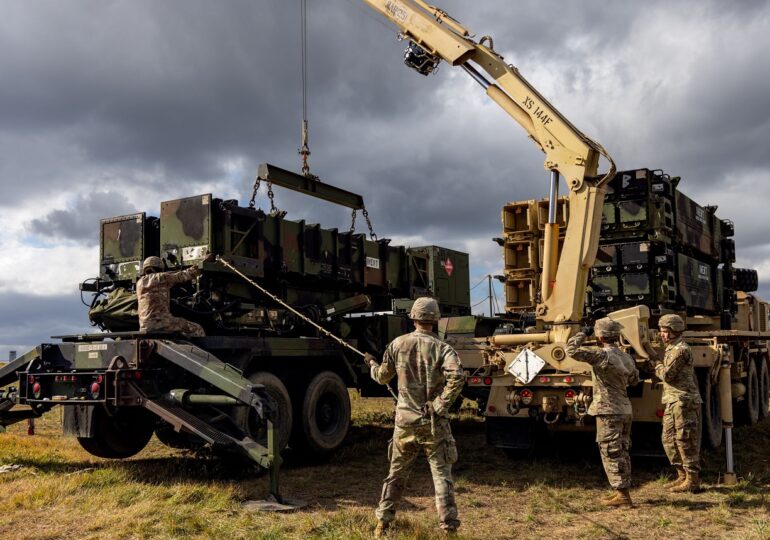
Another vulnerability of the USA is its "carrier gap." The military has top-guided missiles but acquires few. Last year, the USA reportedly produced only 96 THAAD air defense missiles, 54 Precision Strike missiles, and 57 Tomahawk cruise missiles. It will take years and billions of dollars to replenish stocks.
America's difficulty in managing asymmetric warfare is another major issue. Iran knows it cannot win in open combat. Instead, it has sought to raise the economic and political costs of the war for President Donald Trump by closing the Strait of Hormuz and targeting civilian infrastructure and American bases in the Persian Gulf.
In this process, Iranians have demonstrated a talent for identifying and exploiting weaknesses. They have targeted US early warning radars and used drones that can evade conventional air defenses.
The calculation of using $3.7 million Patriot missiles to shoot down Shahed drones, which cost between $20,000 and $50,000, is unsustainable. In the past year, Ukraine has developed interceptors costing only $1,000, but Washington has not bothered to buy them. The US military and Gulf states are now rushing to do so.
Advantage in the Strait of Hormuz
Iran's asymmetric advantage is particularly pronounced in the Strait of Hormuz. The regime has used mines, missiles, and drones - including maritime drones similar to those used by Ukraine against the Russian Black Sea Fleet - to close the waterway. It has struck at least 18 commercial vessels in two weeks.
This has brought traffic through the strait to a standstill, leading to what the International Energy Agency described as the "largest disruption of supply in the history of the global oil market." Global oil prices have surged, and the US stock market has been thrown into turmoil, putting pressure on Trump to end the war as soon as possible.
Shipping companies have pleaded with the US Navy to escort tankers. When they did so during the "Tanker War" of 1987 and 1988, an American warship was hit by an Iranian mine, and another by an air-launched missile from Iraq. Since then, Iran has significantly expanded its anti-ship capabilities.
It's no wonder that shipping companies have been reluctant to "show courage," as Trump demanded, when the USA hesitated to risk its own ships. The President is now imploring US allies to help, but few nations will go where the US Navy won't.
Possible Humiliating Defeat for the USA
If Iran's ability to close the Strait of Hormuz persists, it would represent a humiliating defeat for the USA. The only way to end the threat is either through diplomacy or by sending a large number of troops to occupy the Iranian shore. Additionally, Iran has actually managed to increase its own oil exports since the conflict began.
Although the US military is the best in the world, America's political leadership leaves much to be desired. Since the end of the Gulf War in 1991, when President George H.W. Bush wisely refrained from marching on Baghdad, American presidents have assigned tasks to the armed forces that they could not fulfill - the most famous being transforming Iraq and Afghanistan into democracies. Now, the military has been given the almost impossible task of regime change from the air.
Furthermore, Trump and his national security team seem surprised that the Iranian regime did not collapse after the death of its leader and that it responded to American attacks by targeting the Strait of Hormuz. Both unforeseen situations were foreseeable, yet Trump's handling of this conflict has been lamentable and predictably deficient.
Many of America's military weaknesses exposed in the war can be remedied through smarter procurement decisions: the USA must expand ammunition production lines and acquire more drones and drone defense systems.
But there is no easy solution to the problem of incompetent political leaders who recklessly squander America's overwhelming military advantages in futile "excursions" based on whims. This deficiency can only be remedied at the ballot box.