
When the military operation by the United States and Israel against Iran began in February, CNN global affairs analyst Brett McGurk invoked a principle of classical military theory. If a leader – in this case, President Donald Trump – does not have clear objectives in mind before launching a military operation, then the objectives will be set for him, and not in a way he would have anticipated.
This idea belongs to Carl von Clausewitz, a military theorist from the 19th century, who would probably turn in his grave seeing the events unfolding in the Middle East, writes Brett McGurk in an extensive analysis for CNN.
Neither Israel nor the United States defined precisely the objectives they sought to achieve when they launched the attack on Iran, nearly five months ago. Trump spoke of regime change, as well as reducing Iran's military capabilities and eliminating the remaining nuclear material from the airstrikes he had ordered last summer. Iran responded by attacking countries throughout the Middle East and commercial ships transiting the Strait of Hormuz, the maritime corridor through which about 20% of global energy trade passes.
Today, the main objective of the United States is to reopen the Strait of Hormuz — an objective that, as Clausewitz would have warned, was not even taken into account when the war began.
Back to the future
The United States and Iran are about to reach the halfway point (30 days) of a 60-day memorandum of understanding (MOU) signed by Trump and Iranian President Masoud Pezeshkian. The document was supposed to offer Iran concessions in the form of easing sanctions, in exchange for ensuring the safe passage of commercial ships through the Strait of Hormuz. However, according to its terms, the document seems to grant Iran the right to determine the management of traffic through the strait during this period.
Tehran interprets the document strictly literally, while the United States invokes complementary agreements that go beyond the actual text of the agreement.
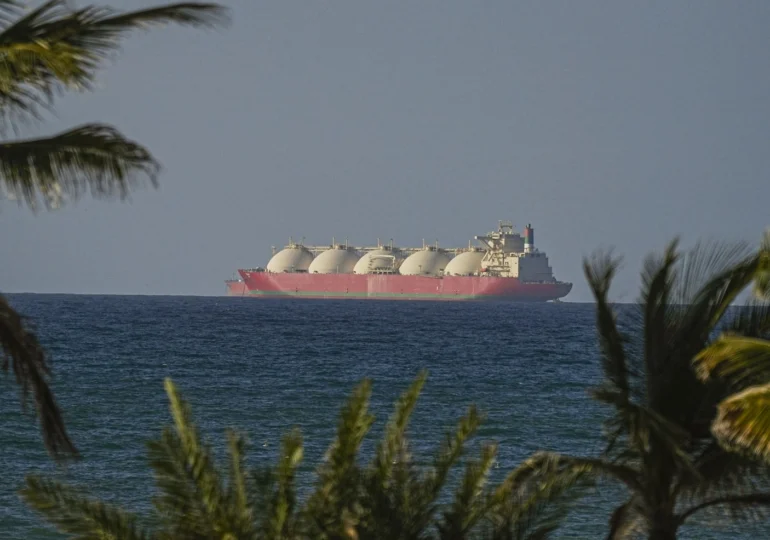
Last week, Iranian drones attacked two ships: one from Qatar, carrying liquefied natural gas, and another from Saudi Arabia, loaded with oil. According to reports, Iran conveyed through intermediaries that the attacks were the result of an error. Some even argued that they reflected an internal power struggle in Tehran between those who wanted to uphold the memorandum and those willing to risk a new escalation of the conflict with the United States.
Trump quickly ordered retaliatory airstrikes to impose the American interpretation of the memorandum, following other Iranian attacks on ships. Then, the agreement completely collapsed.
On Monday, Trump announced that he is reinstating the blockade on Iranian ports and declared that the United States is prepared to become the "guarantor" of the security of the Strait of Hormuz in exchange for a form of payment. On Tuesday, he changed his mind and announced that he will no longer tax ships passing through the strait by 20%.
The United States has launched a new wave of airstrikes inside Iran, and Iran has attacked two more commercial ships off the coast of the United Arab Emirates, killing an Indian crew member.
Until the situation stabilizes, few ships may be willing to take the risk of crossing the Strait of Hormuz, which could lead to a gradual increase in oil prices. This could increase pressure on the White House to once again attempt to revive the memorandum of understanding.
Thus, the United States and Iran have returned, step by step, exactly to the situation they were in before the memorandum of understanding was signed.
The balance of advantages
Iran seems to calculate that the pressure on the Strait of Hormuz will compel the United States to completely back down, thereby conceding a new power configuration in the Middle East, where Tehran would effectively control one of the most important strategic points of global trade. In turn, the United States seems to rely on the fact that a new round of pressure on Iran will force it to give in and allow the uninterrupted resumption of commercial flow that existed before the war.
In this equation, Iran has two advantages: one old and one modern.
Its traditional advantage is represented by terrain — a factor that has often been the most important resource for the defender throughout history. Iran uses its geographic position to force the United States into an asymmetric conflict, thus neutralizing Washington's conventional military advantages.
The modern advantage is drone warfare, especially Iranian Shahed drones, which are cheap to produce and can travel over 1,600 kilometers to strike, in the darkness of night, a slow-moving tanker. Drones can be intercepted or diverted, but a single strike — or even the mere threat of a strike — is enough to halt commercial traffic.
Together, these two advantages — one traditional and one modern — tilt the balance in favor of Iran, at least in the short term. They also offer the United States limited options if the objective is to effectively guarantee the safe passage of commercial ships.
Brett McGurk was responsible for Middle East affairs at the White House in 2023 and 2024, when the Houthi group, supported by Iran, practically managed to block the Red Sea using drones and anti-ship missiles. Despite the formation of an international coalition and the launch of a prolonged aerial campaign against the Houthis, it was nearly impossible to prevent every launch, let alone restore the confidence of shipping companies to assume the risk of crossing again.
In the longer term, however, the advantages could shift in favor of Washington, for four reasons.
First, the Gulf states are united in rejecting Iran's claims over the Strait of Hormuz and are cooperating more closely with the United States to ensure that this conflict does not end with Iran controlling the maritime route.
Second, Iran's economy continues to be in a difficult state, and a prolonged blockade will increase pressure on decision-makers in Tehran as well as on the Iranian population, which is demanding change.
Third, Iran's airspace remains poorly defended, and U.S. military forces can strike almost at will, with the only limitation being the number of known targets.
Finally, with each passing week, progress is being made in developing alternative export routes, reducing the world economy's dependence on the Strait of Hormuz. This week, the United Arab Emirates announced new plans for developing ports and infrastructure to bypass the strait, continuing projects already underway. Reducing Iran's ability to hold the global economy "hostage" through control of the Strait of Hormuz would diminish its primary pressure tool.
No easy path through the strait
Whether the United States will be able to sustain a prolonged campaign of military and economic pressure will ultimately depend on the global price of oil and other products transiting the Strait of Hormuz weekly — such as fertilizers and liquefied natural gas.
Shortly before the signing of the memorandum of understanding (MOU), Trump stated that he did not want to be a new Herbert Hoover and lead the country into a new major economic crisis, implicitly acknowledging that the pressure exerted by Iran through control of the strait had achieved its goal.
After the memorandum was signed, energy prices dropped significantly, but they are now rising again, recording a nearly 10% jump on Monday.
What's next?
Brett McGurk expects a hot summer marked by reciprocal military strikes, informal diplomatic channels kept open, temporary periods of détente, and then new escalations. Indeed, this has been the pattern of relations with Iran for many decades, especially regarding attacks on American troops in Iraq, Syria, or other regions.
Washington has used military force to deter such attacks, diplomacy to limit them, and a combination of the two to reduce tensions when necessary. As long as the Islamic Revolutionary Guard Corps remains the dominant force in Tehran, diplomacy can, at best, produce limited and tactical agreements.
The same pattern is now evident in the Strait of Hormuz, but with much broader implications.
Unforeseeable factors
The situation could deteriorate even further. The Houthi rebels retain the ability to block traffic through the Red Sea, and on Monday, they exchanged fire with Saudi Arabia, testing the fragile truce in the Arabian Peninsula. Losing access both through the Red Sea and the Strait of Hormuz would exert even greater pressure on the global economy and, consequently, on Washington.
At the same time, Iran's capacity and willingness to attack civilian ships with drones and missiles in two of the most important strategic points of international navigation highlight the fundamental nature of the problem posed by the current Iranian regime. It has been preparing for such scenarios for years, and its new leaders are convinced that ultimately, the United States will back down.
Up to this point, Trump has shown that this prediction is wrong.