

Today, as a political crisis intertwines painfully with an energy and climate crisis, it is most evident how high the price is for the fact that, after 1990, no elected political leader wanted, and even if they did want, they did not truly manage to detach Romania from Russia.
Following the collapse of Ceaușescu’s dictatorship, a wave of popular enthusiasm emerged demanding a rapid connection with Western civilization, economy, and culture, but that wave was brutally interrupted by the political maneuvers of the Iliescu, Brucan, Militaru trio, under the Kremlin’s tutelage, and those who revolved around them.
The decisions made at that time, the way in which the intelligence and influence networks of Moscow were saved and perpetuated, which operated within the country, access to resources, privatization, all were arranged in such a way as to avoid a brutal rupture from Russia.
In a changing world, the population still bears the heavy burden of the political incapacity demonstrated in the last three decades to create a destiny for Romania that no longer depends on that of the colossus from the east.
Today, when a driver stops at a gas station and fills up the tank, they do not know that, to the extent of 77%, that fuel depends on the will and actions of the Kremlin.
The price of diesel and gasoline in our country has a weaker connection to that on global markets, being less affected, for example, by what happens in the Middle East, but deeply impacted by what happens in the Black Sea.
And there has been a war in the Black Sea for four and a half years. Throughout this long period, those at the top of the Romanian state have done nothing to reduce the economic dependence of the Romanian economy on the oil coming from the former Soviet Union.
We Have Diesel and Gasoline, but Very Expensive
63% of the oil that reaches Romania comes from Kazakhstan, a former Soviet republic still in complicated relations with Moscow.
Furthermore, the oil extracted from Kazakhstan is transported through pipelines crossing Russian territory, loaded onto ships in Novorossisk, a Russian port located in the eastern Black Sea.
Ukrainian forces have intensified attacks on Novorossisk recently, destroying several Russian oil tankers as they transported oil products to the Crimean Peninsula, supplying the occupying military troops.
At least two tankers transporting "oil from Kazakhstan," loaded in Novorossisk and brought to the Port of Midia in Romania, have carried oil products to Crimea. These were on Ukraine's sanctions list, considered military targets.
Following the intensification of operations in the Black Sea, oil from Kazakhstan no longer reached Romania, and the price of fuel at the pump skyrocketed.
"We have analyzed… the fuel supply situation. The data shows that the situation has improved. OMV refinery is operating at full capacity, and Petromidia is operating at approximately 85% capacity and is expected to return to normal operation by the end of the week. At this moment, we do not anticipate problems regarding fuel supply for the population, agriculture, and transporters," announced Ilie Bolojan, Prime Minister of Romania, in a statement released on August 4.
It is good that the current energy crisis caused by drought is not associated with a fuel crisis, but that does not mean that the price of gasoline and diesel will decrease soon.
There is hope that the law passed in Parliament and promulgated two days ago by President Nicușor Dan, which imposes a dynamic excise tax, meaning associating the taxation of petroleum products inversely proportional to the price of oil on the international market, will lead to a reduction, but it may take a long time until we see a liter of diesel below 8 lei at gas stations.
Strategic Privatizations Made in the Interest of Other States
Those who experienced the 1990s and had a car know that the fuel market looked very different from what it is now. There were Shell, Agip gas stations, which gradually left, making room for Lukoil and Gazprom, which now, in the context of the war and sanctions imposed on Russia, are also disappearing from the market.
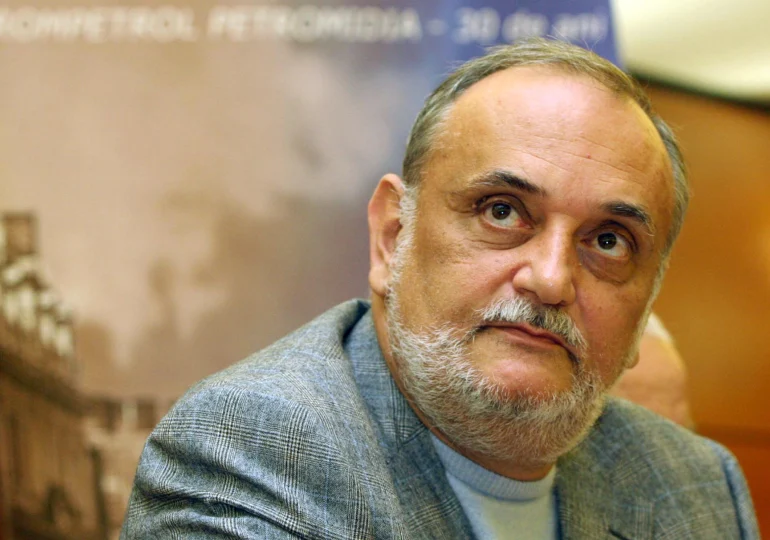
Petromidia, a state-owned refinery, a real economic black hole at the beginning of the 2000s, was handed over by the Romanian state to Dinu Patriciu, a controversial Romanian businessman, for 50 million dollars in 2003.
It was privatized with a historic debt to the state budget of 600 million dollars, which Patriciu, although committed to paying, did not do so.
In 2009, he sold the refinery to KazMunaiGaz, a state company from Kazakhstan, and in 2014, Victor Ponta (PSD), the prime minister at that time, wiped out the historic debt of 600 million dollars through a government decision.
In 1998, during Emil Constantinescu's presidency (CDR), the Romanian state sold 51% of the shares of the Petrotel refinery to LukOil. The operation took place shortly before Vladimir Putin took control of the Kremlin, exactly when Russia's liberalization was nearing its end in corruption scandals and impoverishment of the population.
"What was asked of us was to check, at that time, some potential investors who wanted to come to invest or buy, to enter a privatization process. Lukoil was a big company, as it is now… the interests were to buy… probably there were other competitors…," stated Cătălin Harnagea, SIE director at that time, to Digi24, in an investigation conducted by the television station a decade ago.
After the controversial privatization, Prime Minister Adrian Năstase came and granted a series of facilities to the refinery and Lukoil company.
"Many times, we privatized these companies not knowing to whom we privatized them… and, in reality, we privatized them for companies backed by states and not private operators…," said economics professor Cristian Păun at that time, according to the cited source.
The Socialist Camp, Controlled with Cheap Oil
The mistakes of that time, many generated by corruption, both the privatization of Petromidia and Petrotel, have been investigated by prosecutors, with no effect in the courts, have dramatic effects today, reflected in the price of gasoline and diesel.
Political indecision, the deliberate avoidance by Ion Iliescu and his associates to create a favorable context for achieving Romania's energy independence have made it so that, 36 years after the Revolution, we are still dependent on the resources of the Kremlin, which has thus managed to maintain its influence in Eastern Europe.
It must be said that not only Romania is affected by the dependence on Russian oil and gas. Hungary, Slovakia, Bulgaria, Germany, and other European countries have problems due to an energy policy that took advantage of Russia's attractive low prices for oil and gas in the first two decades of this century. For this reason, no one bothered too much to create an energy infrastructure based on renewable sources.
At the eleventh hour, the authorities in Romania have initiated several projects, some funded by the European Union, to develop energy production and distribution and reduce dependence on petroleum products.
But there is still much to be done, corruption and bureaucracy being obstacles difficult to overcome by investors, but also by citizens who want to optimize their consumption by installing solar panels and batteries in their own households.