
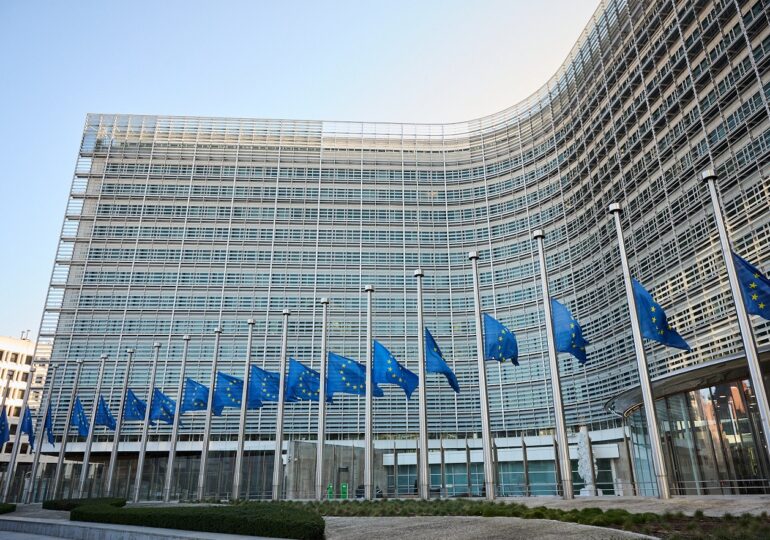
Hundreds of thousands of Europeans dream of obtaining one of the highly coveted positions in the public service of the European Commission. At the beginning of this year, approximately 170,000 individuals applied for just 1,500 positions.
However, for many who end up working in the European executive, the reality is far from the envisioned dream.
Politico spoke with several officials from various commissioners’ cabinets and directorates-general, of different ages, nationalities, and levels of experience. They described an institution where the extended hours, cumbersome bureaucracy, and, in some cases, toxic management have left them exhausted and questioning whether the salary and prestige are truly worth it.
Their experiences varied considerably among the approximately 30,000 Commission employees, yet the same grievances repeatedly surfaced. Some of the interviewees were granted anonymity to speak openly about their workplace experiences.
„The conditions are becoming increasingly challenging,” stated Nicolas Mavraganis, President of the Federal Trade Union, a federation that brings together about 20 staff unions from EU institutions and other international organizations. A Commission official since 1994, he has led the federation since 2019, coordinating the representation of member unions in their relationships with the institutions. „The workload is increasing, which also means increasing pressure,” he said.
As Brussels assumes a more significant geopolitical role – responding to Russia’s war against Ukraine, managing tensions with China, and the relationship with an increasingly unpredictable America – officials say there is a growing sense that every file matters.
Few of the issues highlighted by Politico – from stressful projects and difficult bosses to endless bureaucracy and aging buildings – are specific to the Commission alone. Similar situations can be found in ministries, law firms, and consulting firms across Europe. However, officials say that the combination of prestige, political pressure, and the institution’s vast size makes the experience unique and often challenging.
„It’s the executive of the European Union, so some people think they’re almighty,” said one official.
A Commission spokesperson stated that the institution is „committed to being a modern, respectful, and attractive workplace,” referring to the operational analysis launched by President Ursula von der Leyen. An internal survey showed that 74% of employees consider the Commission an attractive employer, six percentage points higher than in 2023.
Comparable public data is scarce. A 2025 survey among European Central Bank staff showed that 85% are proud to work there, although less than half believe their workload is manageable. These figures illustrate a broader paradox: loyalty to an institution can remain strong even when daily working conditions frustrate employees. In the case of the Commission, this difference explains why disillusionment does not necessarily prompt people to leave.
### A „Pressure Cooker”
Positions within the Commission, where employees contribute to shaping policies affecting over 450 million Europeans, remain among the most sought-after jobs in the public sector. Moreover, Brussels is still relatively affordable in terms of cost of living compared to many Western European capitals, especially for someone earning a Commission salary.
„And the financial incentives are considerable,” reads the passage. Candidates who secure an AD5 position – the entry level for administrators with higher education – earn approximately between 6,000 and 7,000 euros per month before allowances. Additionally, Commission officials pay European tax, not national income tax, which generally means lower tax burdens and higher net income.
Family allowances, diplomatic discounts on car purchases, and job security further enhance the attractiveness of positions. Some officials interviewed by Politico even rent an apartment in Brussels while their families remain in another country, where they return almost every weekend.
However, several officials say that „the prestige of working at the Commission generates pressures.” According to them, this atmosphere is reflected in their daily work. Every briefing note, policy document, or press release goes through multiple approval levels. Decisions pass through endless email chains and successive rounds of reviews, and officials feel the pressure to treat even routine tasks as if they were a geopolitical crisis.
An official from a commissioner’s cabinet said his days often start at 7 or 8 in the morning and end around 7 p.m., spending very little time away from the office, except for official travels with the commissioner. Another employee, from the communications field, recalled bursting into tears late at night due to the overwhelming workload.
Several officials even blamed bureaucracy. Cabinet teams and directorates-general (DGs) often face communication difficulties.
„DGs expect tidbits of information from cabinets, which are so overwhelmed that they are unable to provide them,” said a commissioner’s cabinet official. „It’s a structural problem. Everyone is trying to extract information from others.”
Another official agreed. „Sometimes I feel like shooting myself.”
The sheer size of the institution makes many feel anonymous. „There are thousands of people in the Commission, so even if you’ve worked there for 20 years, most haven’t even seen you,” said another official not working in a commissioner’s cabinet. „You’re just a tiny molecule in a huge organism.”
### A Very Different Experience from Case to Case
Whether one enjoys working at the Commission often depends on luck. First and foremost, on the boss.
Officials emphasized that „experiences differ dramatically depending on the commissioner they work for.” The cabinet of the climate commissioner, Wopke Hoekstra, is widely considered within the institution to be one that supports employees, several officials stated. In contrast, other commissioners have a reputation for tolerating the development of toxic organizational cultures marked by internal conflicts and power struggles.
„A senior official in a commissioner’s cabinet became known in the Berlaymont building for ‘shouting’ at employees,” according to two officials. An employee of DG ECHO, the directorate-general coordinating the EU’s humanitarian program, said that shouting was commonplace in their unit.
Another former official recalled how „a high-ranking colleague was humiliated in front of other managers because of a document that ended up in the press.” An official even reported that „their boss hit them during a dispute after hours, in a bar near the Berlaymont building.”
Several said they had little confidence that any complaints would have an impact.
In 2024, the Commission hired a senior confidential adviser to manage harassment complaints and has a network of 40 advisers within the Commission and executive agencies as part of an „informal” approach to resolving workplace conflicts.
Since September 2024, the chief adviser, who reports to Budget Commissioner Piotr Serafin, has received „960 reports from ‘colleagues feeling harassed, alleged harassers, witnesses, managers, and correspondents from human resources departments,'” according to a Commission spokesperson.
The Commission states that 14,000 employees have attended anti-harassment policy presentations, and 2,400 managers have taken mandatory courses in the past two years. According to the institution, this increased awareness of how to seek support has led to a relatively high number of reports.
However, the chief adviser „does not have the mandate to investigate or the legal competence to determine whether behavior constitutes harassment under the Staff Regulations,” the spokesperson explained. For an official complaint, employees must turn to the Investigation and Disciplinary Office (IDOC) or the European Anti-Fraud Office (OLAF). The Commission receives around 20-25 such complaints annually.
### Aging Buildings
There is also the issue of facilities. While the Berlaymont building has undergone extensive renovations, other Commission buildings show their age. During the June heatwave, employees in the DG AGRI building complained about working without adequate air conditioning, according to internal communications reviewed by Politico.
At the DG COMP headquarters in the Madou Tower, „officials were advised not to drink water from certain water fountains due to possible contamination,” and the heating and plumbing systems „were not functioning at the level we would expect,” as acknowledged by the interim director-general in an email seen by Politico.
In the Berlaymont building, employees on lower floors revolted after „the air conditioning was turned off during a heatwave,” while on the eighth and upper floors, where commissioners and senior officials have their offices, the air remained on. An official told Politico at the time that „the situation was reminiscent of feudalism.”
Experiences vary significantly within the institution, yet „many officials describe the same contradiction: they continue to be drawn to the substance of their work, even if the conditions in which they work are more frustrating and demanding than expected.”
At a lunch break in a Commission canteen, an official was asked if they were happy.
They shrugged. „It’s an interesting job.”
For many within the Commission, that is reason enough to stay.