
Europe, as well as the traditional partners of the United States in Asia and the Middle East, are increasingly trying to reduce their dependence on Washington. States are investing in their own defense, diversifying their trade relationships, and seeking alternatives to American technology, amidst the unpredictability of the Trump administration’s second term.
According to an analysis published by The New York Times, this trend is already starting to impact the economy, industry, and global influence of the United States. The publication argues that the change is profound and could have long-term effects.
Europe no longer just protecting from China
In March 2023, the President of the European Commission, Ursula von der Leyen, spoke about the need for Europe to reduce its dependence on China and develop its own alternatives.
Three years later, the same strategy is increasingly applied in the relationship with the United States, as stated by the New York Times.
While European leaders publicly try to avoid open conflict with Donald Trump, behind the scenes, they are preparing measures to reduce dependence on Washington. They are investing more in European defense, energy, and technology industries and seeking new trade partnerships.
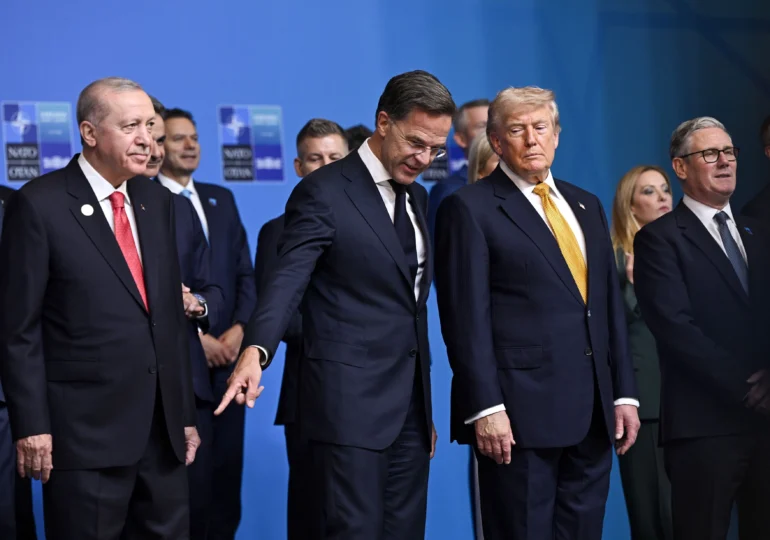
According to the American publication, this shift was also evident at the NATO summit held last week in Ankara, where Donald Trump reiterated threats against allies such as Denmark and Spain.
Trend not limited to Europe
However, the phenomenon is not limited to the European continent. Leaders of some states in Asia and the Middle East are also starting to rethink their relationships with Washington.
The author of the analysis believes that the policies promoted by Donald Trump - from trade conflicts and immigration policies to military interventions and the unpredictable regulation of artificial intelligence-based technologies - have led many countries to develop strategies to depend less on the United States.
“Indispensable Nation” at risk of losing advantages
For decades, the United States has been considered the main guarantor of Western security and the global leader in technology and economy.
This status has brought them significant economic and strategic benefits.
However, the New York Times warns that weakening relationships with allies diminishes the US military advantage, affects its dominant position in advanced technologies, and limits Washington's ability to compete with China.
Costs already visible
The publication provides several examples of the effects this change is already producing.
The author uses the war with Iran as an example, stating that it highlighted the costs of US diplomatic isolation. According to Moody's, the conflict led to rising fuel and fertilizer prices, resulting in estimated losses of $132 billion for American consumers.
At the same time, although Europe increased defense spending by 14% to $864 billion in 2025, arms purchases from American companies nearly halved.
The author argues that immigration policies also have economic effects. In 2025, the US received four million fewer tourists than the previous year, resulting in estimated losses of over eight billion dollars.
Additionally, international student enrollments at American universities decreased by 17%, impacting both the revenues of educational institutions and the future market of highly skilled labor.
Canada, Japan, and India seeking alternatives
The New York Times indicates that this trend is visible in more and more regions.
Canada has initiated a new strategic partnership with China, opened its market to Chinese electric vehicles, and joined the European defense fund created to reduce dependence on American military industry.
In Asia, Japan is developing its own offensive capabilities, and South Korean companies are gaining ground in the global arms market at the expense of American firms.
India, in turn, is expanding its trade relationships with Europe and the Middle East and is also considering Chinese or domestically developed alternatives for artificial intelligence models.
“People here say we need to look again towards China or maybe even build our own solutions,” a senior Indian official told the analysis author.
Europe preparing for trade confrontation scenarios
According to the New York Times, European capitals are already discussing scenarios that until recently seemed impossible.
Officials quoted by the publication state that plans are being developed in case of a total trade war with the United States.
These could include limiting American technology companies' access to the European market or restricting access to essential equipment for semiconductor manufacturing.
A trend started before Trump's return
In fact, tensions did not start with Trump's return to the White House, as emphasized in the analysis. Several governments were already dissatisfied with US sanctions, the advantages offered to American companies through the Inflation Reduction Act, and restrictions on the export of cutting-edge semiconductors.
However, the author believes that Trump's return significantly accelerated this process.
“The world has already changed”
The NYT warns that not all effects will be immediate, but the direction is clear. States will not abruptly sever ties with Washington, but will gradually try to become less dependent on the United States.
The author quotes Ursula von der Leyen, who said about the relationship with China: “Our relationships are not black or white, and our response cannot be black or white either.”
In conclusion, the New York Times warns that the future American president will inherit leadership of a country in an unprecedented situation.
“Whoever succeeds Donald Trump will be the first American president to start his term in a world where states will no longer wonder what America can do for them, but how they can do as much as possible without America.”
G.P.