

Just a few days ago, in a conference hosted by Ian Bremmer, an American political scientist and journalist specializing in political risk analysis on financial markets, a discussion took place with Rahm Emanuel, an influential political figure, member of the Democratic Party, former mayor of Chicago, and former counselor to President Barack Obama, among others.
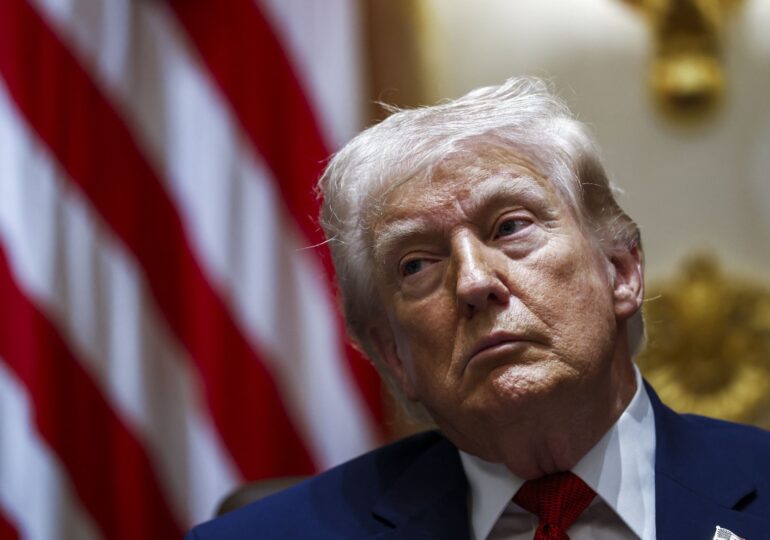
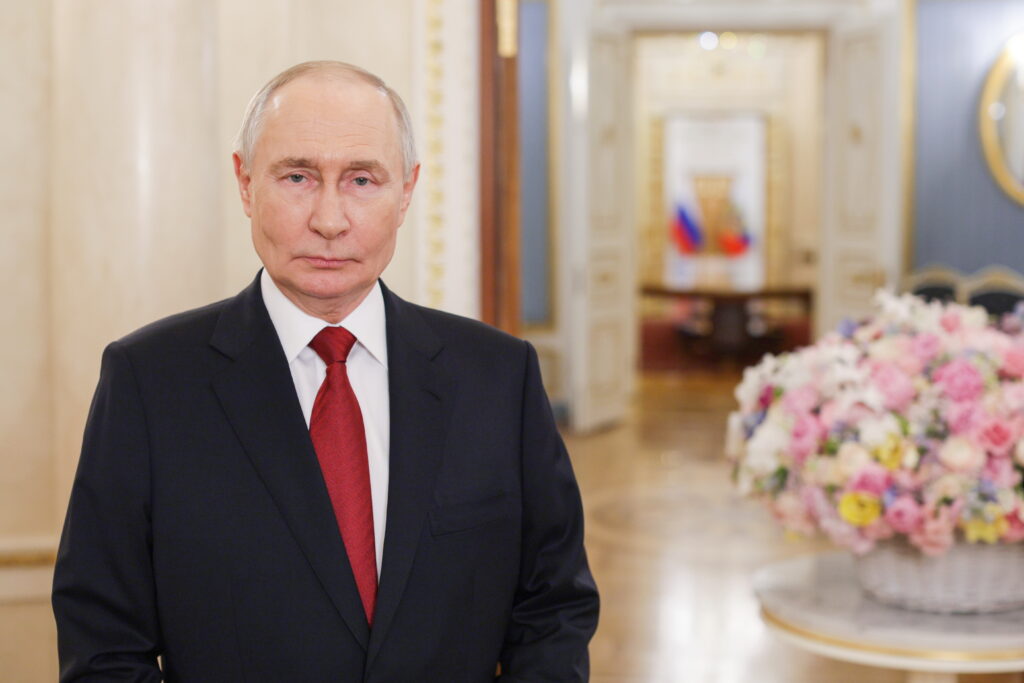
Setting aside the political affiliation, at one point, Rahm Emanuel brought up Donald Trump’s relationship with Vladimir Putin, reiterating that the American president visibly acts in the interest of the Russian leader.
„This president doesn’t know how to differentiate between friends and enemies,” said Rahm Emanuel in a discussion with Ian Bremmer that took place on March 20.
"...there are two Russian oil tankers en route to Cuba. This will be a test for Donald Trump. The first one will arrive on Monday. Will he stop these ships or not? Dear friend, are you going to be Putin's lapdog or are you going to stop the tankers?"
Setting aside individual positions, whether we are for or against quarantine and embargo against Cuba, Trump, so far, has stopped Venezuelan oil. He stopped Mexican oil. Now the Russians are sending two oil tankers. Two tankers to Cuba," said Rahm Emanuel, an experienced diplomat and former U.S. ambassador to Japan.
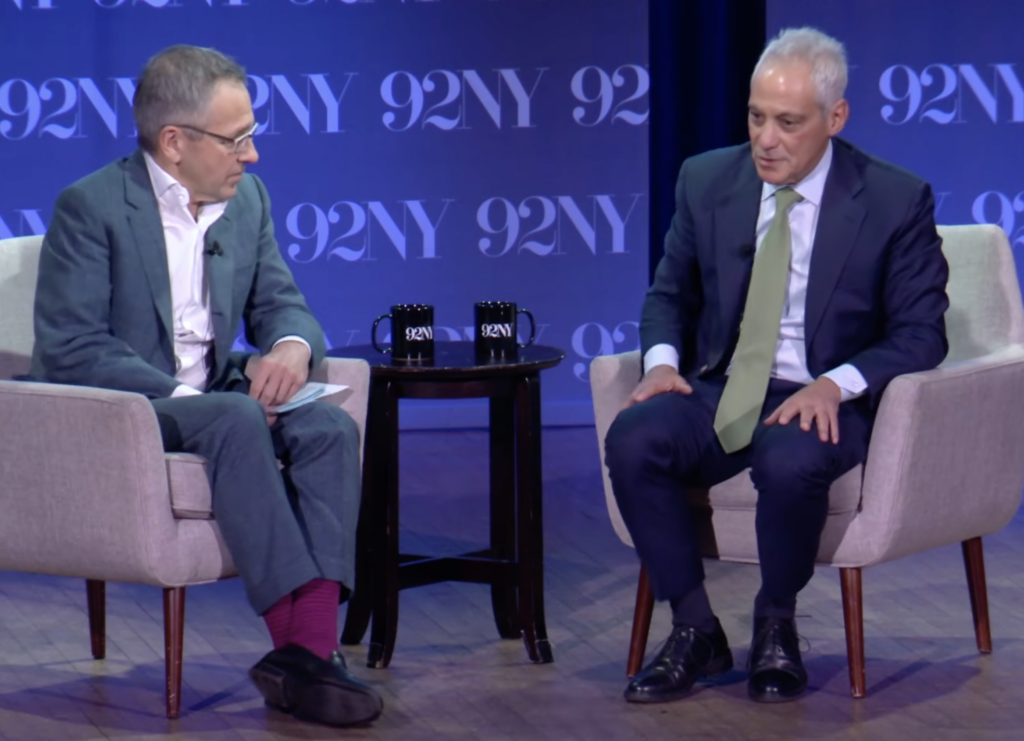
In the conference on March 20, the Democratic politician bet that Donald Trump would not stop the Russian tankers heading towards Cuba, even though the White House had imposed a total embargo on the island.
"The U.S. Coast Guard allows a Russian oil tanker loaded with oil to reach Cuba, ensuring an essential energy delivery for the island after months of oil blockade imposed by the Trump administration…," as reported in an article published by the New York Times on March 30.
"The ship, carrying approximately 730,000 barrels of oil and owned by the Russian government, was a few miles from Cuban territorial waters on Sunday evening, according to MarineTraffic, a ship data provider. At a speed of 12 knots, it could reach its intended destination, Matanzas, Cuba, on Monday evening," the American publication further specified.
Rahm Emanuel's prediction made in a public conference ten days ago has proven to be accurate, once again demonstrating how deep, toxic, and globally destabilizing the relationship between Trump and Putin is.
Involuntary Influence Agent
The behavior of the American president seems chaotic when viewed from outside the White House. When analyzing the situation from his perspective and that of those around him, one discovers a common theme among political leaders - a continuous struggle for power.
Donald Trump's actions and decisions must be interpreted through the lens of major threats to him, his family, and the wealth he has amassed, legally and illegally.
"I think the security services have exerted a certain influence on him or, at the very least, have created the necessary channels to obtain information about him through Ivana, his former wife. I believe that in the '90s, the KGB/FSB continued to compile a dossier on him, simply to keep him under observation. Most likely, it contains a lot of interesting information, both financial and personal…
Vladimir Milov, former official in the Russian government, for the publication Medium, July 2018
Over time, the current American president has been in many situations where he ran out of liquidity, and his companies were on the brink of bankruptcy, but, as if by miracle, a benefactor would appear from the shadows, with visible or less visible ties to Russia, pulling him out of the financial crisis.
Trump was not recruited by Russian intelligence services, there is no evidence to support that, but he has become an "involuntary influence agent," stated a former deputy director of the CIA in 2016.
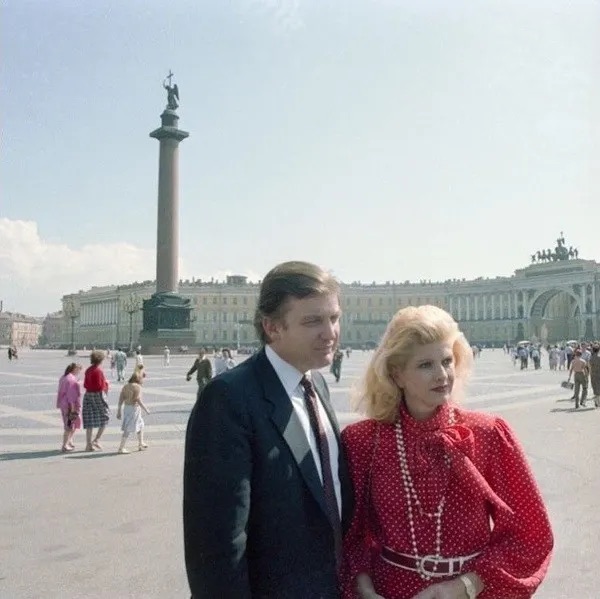
"Since the 1980s, Trump has been on the KGB's radar as an opportunistic businessman who could be useful in promoting Soviet interests in America. I have no doubt that this is why he was invited to the Soviet Union," stated Vladimir Milov, a former secretary of state in the Russian Ministry of Energy, in 2017, in an interview for the publication Medium.
Money Flow
There have been many journalistic investigations into how Russia financed Donald Trump, starting in the '80s, but political complicity has been so great that American authorities have never managed to secure a significant court decision against the current American president.
"A Russian government-controlled bank deposited at least half a billion dollars into the American branch of Deutsche Bank during the period when the bank granted Trump its most controversial loans, according to confidential bank documents obtained exclusively," as reported in an article published by "Byline Times" in 2020.
"In the confidential bank documents investigated by Forensic News and also consulted by Byline Times, Gazprombank sent $511 million in cash to the Deutsche Bank branch in the U.S. in October 2013, to be distributed according to the Russian bank's instructions, precisely when Trump received loans from that branch totaling over $360 million. The end of 2013 was the period when Donald Trump was visiting Moscow for the Miss Universe contest and beginning discussions about building a Trump Tower in the Russian capital," the article further states.
Many major global publications have written about how Russia financed Donald Trump: Business Standard, New York Times, Foreign Policy, ProPublica, National Public Radio (NPR).
Generally, newspapers, websites, magazines, and TV shows that Donald Trump is currently suing or demanding prosecutors to investigate the journalists working there, or trying to ban the broadcast of certain programs.
Russians Assisting Iranians
Since the outbreak of the war in Iran, multiple sources, some official, have announced that Moscow is transferring information to Tehran indicating the location of military aircraft, soldiers, and American units stationed there, involved in the confrontations.
"Russia is providing Iran with information on targets to attack American forces in the Middle East, this being the first indication that another major adversary of the United States is participating — even indirectly — in this war, according to three officials familiar with the classified information," announced an article published by the Washington Post on March 6.
No American official has disputed the data presented by the American daily. Furthermore, in the following days, confirmations came through various diplomatic channels, as well as from Volodymyr Zelensky, the President of Ukraine.
"I believe it is in Russia's interest to help Iran. And I don't think, I know that Russia and Iran share information. Do the Russians help the Iranians? Of course. To what extent? One hundred percent!" stated Zelensky in an interview for NBC News on March 29, while on a diplomatic tour in the Arab states of the Persian Gulf.
In the same interview, the Ukrainian president mentioned receiving a report from his intelligence services containing clear evidence that the Russians had scanned an American base in Saudi Arabia three times using satellites in the days leading up to an Iranian attack on it.
President's Error
So far, 15 American soldiers have lost their lives in the Iran conflict, and 300 have been injured, with 10 in critical condition, and another 30 rendered unable to fight.
Donald Trump downplayed the information that emerged in the public sphere about Russia's involvement in the Iran conflict, but many others reacted with anger, recalling that "this is not the first time the American president sacrifices U.S. intelligence services and aligns with Russia," stated Rahm Emanuel, a representative of the Democratic Party, who had bet that Donald Trump would not block the Russian tankers from reaching Cuba, even though the president himself had imposed a total blockade on the island.
Thus, it can be said that Donald Trump's actions and decisions have as main objectives to help Vladimir Putin and to shift Americans' attention away from the Epstein File, ICE (Immigration Police) crimes, and the rising consumer prices towards a larger and more frightening crisis, such as war.
The American president's mistake was his belief that intense airstrikes on Iran would quickly lead to the collapse of the political regime in Tehran, and the conflict in the Middle East would end with a swift and resounding victory, which would overshadow the dissatisfaction of American voters, with him being seen as a hero.
But as a Romanian proverb says, "the math at home doesn't match the one at the market," while everyone suffers due to the chaotic behavior of the American president.