
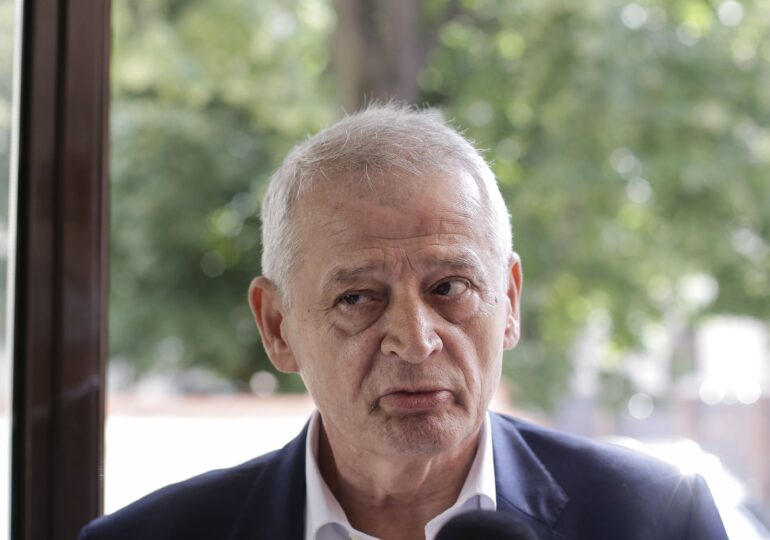
Former mayor of Bucharest, Sorin Oprescu, once again escapes extradition. The Court of Appeal in Thessaloniki decided on Thursday not only to reject the request of the Romanian authorities but also to lift all restrictions imposed after his arrest in October.
Definitively sentenced in Romania to 10 years and 8 months for corruption, the 74-year-old Oprescu remains free in Greece. He has been living here since 2019, invoking „political persecution” and improper conditions in Romanian prisons, arguments also reiterated by his lawyers before the court in Thessaloniki.
The former mayor and senator was arrested in Thessaloniki at the beginning of October under a European warrant issued by the Romanian authorities. After his arrest, he was released under restrictive conditions: he had to report to the police station three times a month, was prohibited from leaving the country, and had to pay a bail of 5,000 euros.
Considers Himself a Victim of Political Persecution
Since the moment of his arrest, Oprescu has stated that he does not agree with his extradition and has spoken about a "political persecution" against him, as mentioned by the Greek publication.
According to Protothema, the former mayor was not present at the Court of Appeal's decision and was represented by his lawyers. They raised the issue of detention conditions in Romanian prisons, considering his health condition, and argued that Oprescu did not receive a fair trial in his country.
Sorin Oprescu has been living in Greece since 2019, and his extradition, based on a European warrant, was requested by the Romanian authorities in 2022 as well. However, the Court of Appeal in Athens decided not to extradite him then either. At that time, he cited serious health reasons, claiming that his potential isolation detention would worsen his condition.
The former mayor was definitively sentenced in Romania for receiving the sum of 25,000 euros at his home from the former director of the Bucharest Cemeteries, Bogdan Popa. According to the indictment, Popa had set up a criminal organization with accomplices, collecting illegal commissions from works and contracts of the municipality, with the former mayor being accused of knowing about the organization's existence and benefiting from a portion of the money. This case, which came to light in 2013, became one of the biggest corruption trials that shocked public opinion in Romania, bringing to the forefront the image of a politician who had managed to build a reputation above partisan lines and who ultimately collapsed under the weight of revelations, as reported by Protothema.