
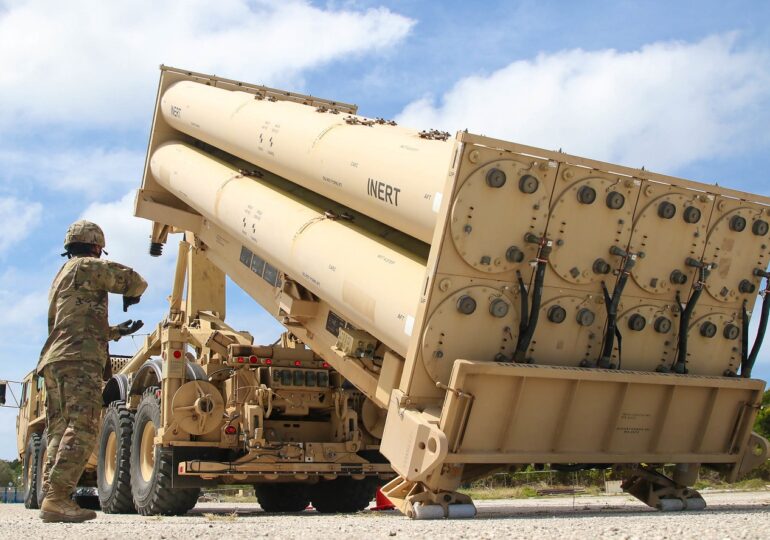
The United States has warned European allies, including the United Kingdom, Poland, Lithuania, and Estonia, to expect greater delays in the delivery of American weaponry, amid efforts to replenish depleted stocks due to the war with Iran.
Several sources familiar with the matter told the Financial Times (FT) that the Pentagon has informed these countries to anticipate significant delays for multiple missile systems.
The information comes as the U.S. military has already had to transfer arms from other regions, including the Indo-Pacific area, to support ongoing efforts in the war with Iran.
According to the Financial Times, the delays will affect ammunition for Himars, Nasams, and other missile systems.
The Pentagon emphasized that it "carefully evaluates new equipment requests from partners, as well as existing cases of arms transfers, to ensure alignment with operational needs."
Several sources cited by FT specified that the delays in American arms deliveries are not intended to punish Europe but reflect U.S. concerns about its own stocks.
On the other hand, U.S. President Donald Trump dismissed concerns about stocks. "We have stocks all over the world, and we can use them if needed," he said.
The publication also notes that security experts have stated that U.S. allies in Asia should be prepared for such delays in American arms deliveries. Japan and South Korea rely on various American weapons, including Patriot interceptor missiles.
"Asian allies probably underestimate the impact that the U.S. ammunition shortage will have on them and the duration of this impact. (...) This reality will prompt Japan, South Korea, and other allies to focus more on indigenous and non-American options, even in areas where American equipment is clearly superior," said Christopher Johnstone, a former senior Pentagon official at The Asia Group, as cited by the source.
During former U.S. President Joe Biden's term, Washington postponed the delivery of weapons to allies. In 2024, Biden suspended the delivery of interceptor missiles for Patriot and NASAMS systems to other countries to accelerate their delivery to Kiev.
However, as noted by the Financial Times, the most recent warning issued to European allies is more serious, considering the current geopolitical context and the greater magnitude of the issue.