

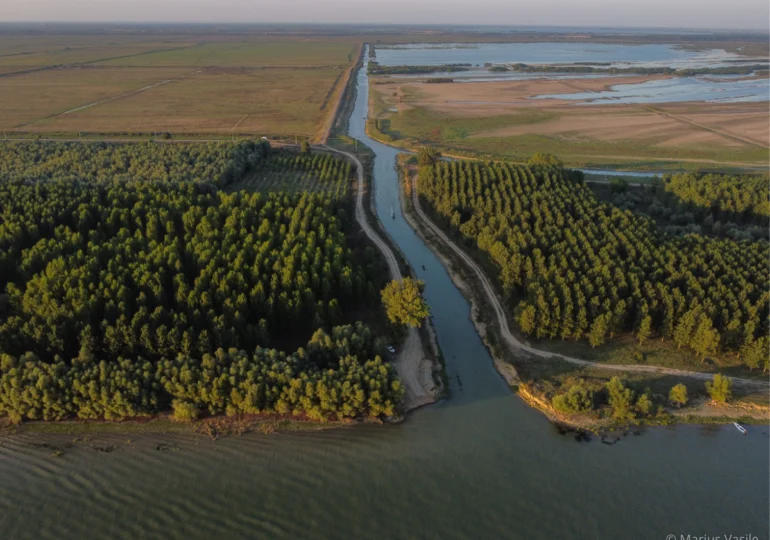
Romania still has natural forests, unaltered rivers, meadows with remarkable biodiversity, and some of the most important populations of wild animals in Europe. But the fact that we have such rich nature does not mean it is healthy. And part of the problem is that we do not know well enough how quickly we are losing it.
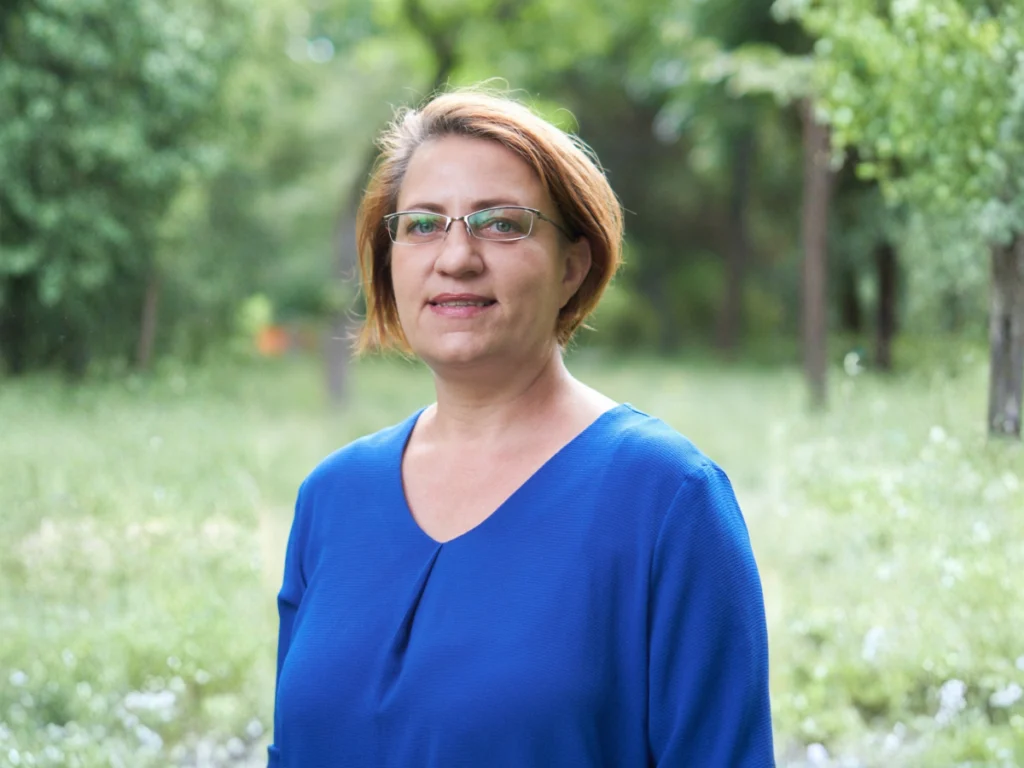
Our country does not have a continuous and transparent biodiversity monitoring system, warns Orieta Hulea, general director of WWF-Romania, part of one of the largest international nature conservation organizations.
However, the available data are worrying: 83% of the evaluated freshwater habitats are in an unfavorable conservation status, and among the species of community interest, other than birds, only 39% are in a favorable status.
Biodiversity loss means the disappearance of certain animals or plants, but also poorer soils, less water, agriculture more vulnerable to drought and floods, and food that can become more expensive. “Biodiversity is, in fact, the living infrastructure that supports our economy and well-being,” explains Orieta Hulea.
But there is also good news. In Mahmudia, in the Danube Delta, 924 hectares of wetland were restored, and birds, fish, and tourists have returned. In Băile Tușnad, prevention measures have significantly reduced conflicts with bears. And in Brașov, changing the way food is purchased for schools has encouraged more sustainable practices.
Our discussion with Orieta Hulea started from the Living Planet Report 2026, published by WWF, which shows that globally, the average size of monitored wild animal populations decreased by 73% between 1970 and 2022.
However, we especially wanted to find out what is happening in Romania, what we risk losing, how nature degradation affects us, and why solutions that have already yielded results are not applied on a larger scale.
We have nature, but we do not know well enough what condition it is in
The Living Planet Report, published every two years by WWF, tracks the evolution of vertebrate populations: mammals, birds, fish, amphibians, and reptiles.
The average decline of 73% does not mean that 73% of the planet’s wild animals have disappeared, nor that 73% of species have disappeared. The index measures the relative change in the size of monitored populations. The 2026 edition is based on 35,803 data series regarding populations of 5,790 species.
However, global figures cannot be directly applied to Romania. “We know partially, and here we have a deficiency. Even if monitoring is done, and data exist, there is no continuous and transparent biodiversity monitoring system in Romania,” says the director of WWF-Romania.
There are monitoring efforts carried out for mandatory reporting to the European Union, but these cover certain species and habitats and do not provide a complete picture.
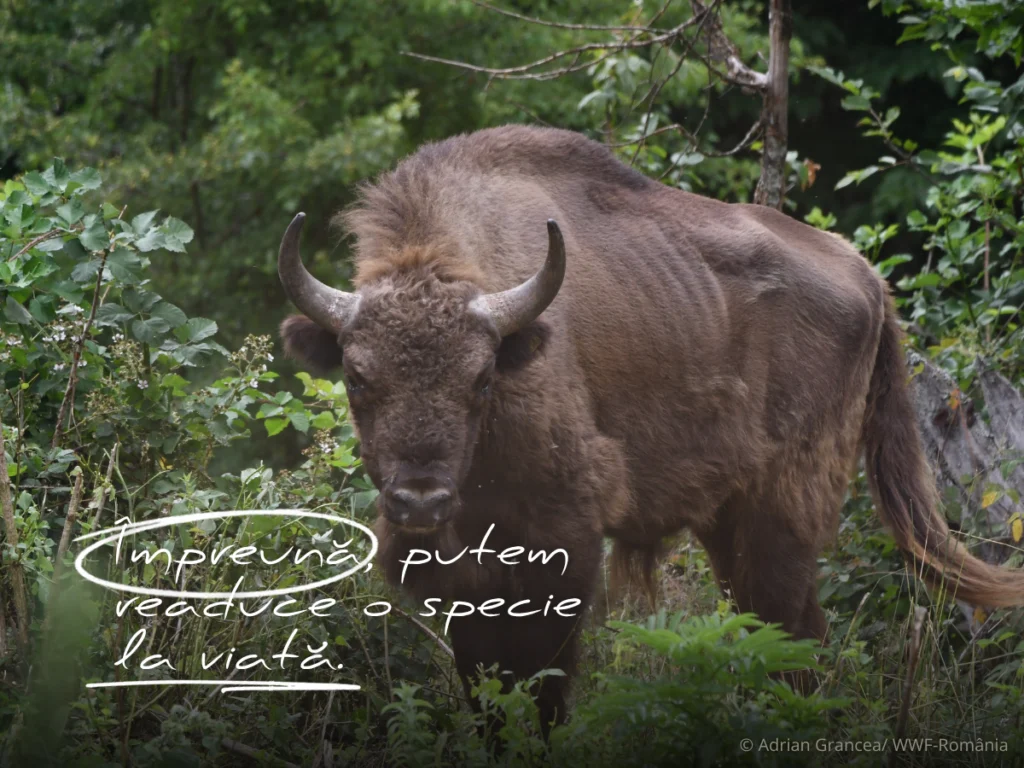
Romania does have an important natural heritage: the Carpathians, the Danube, the Danube Delta, the Black Sea, natural forests, meadows, and rivers that still retain their natural characteristics. Here live bears, wolves, lynxes, European bisons, sturgeons, and numerous bird species.
It is precisely this richness that can create the impression that things are fine.
“People say: ‘But we have nature!’ However, this should not be confused with a good conservation status, because we can have nature but at the same time be losing it. And lose it at a worrying pace, because there are degraded or degrading ecosystems as a result of anthropogenic pressures. We have vulnerable ecosystems,” warns Hulea.
The data she presents show that approximately 46% of the evaluated bird species are in a favorable conservation status. For another 25%, the status is unknown.
For the other species of community interest, including plants and other animals, only 39% are in a favorable status. Among the most affected are amphibians, reptiles, and fish.
Rivers and wetlands among the most vulnerable
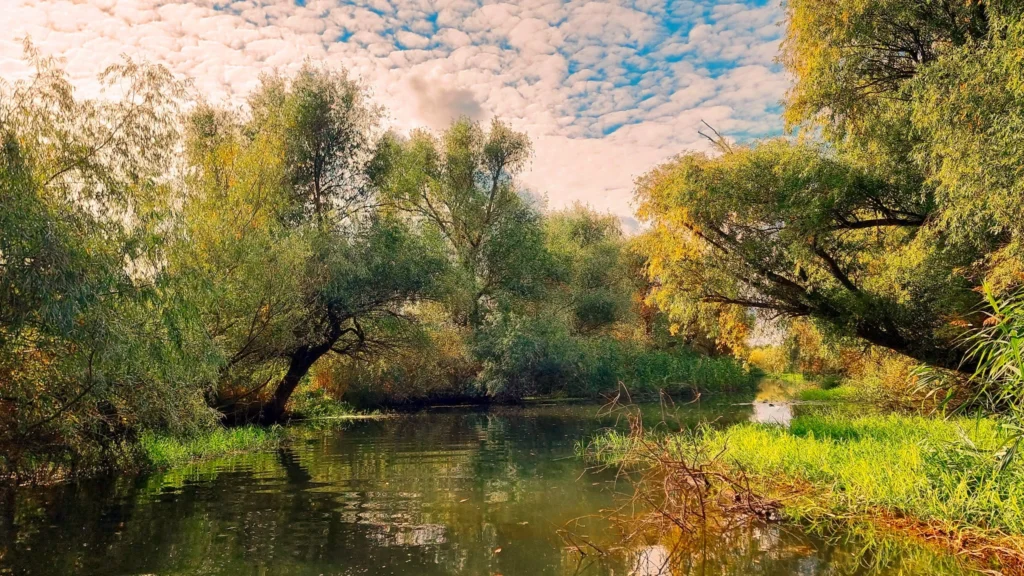
A particularly worrying situation is that of freshwater habitats. According to data presented by Orieta Hulea, 83% of these are in an unfavorable conservation status. These are precisely the ecosystems on which both biodiversity and water availability, flood mitigation, and drought resilience depend.
“If we look at a river, it is not only affected by what happens in its bed, but by what happens in the entire basin: agriculture, pollution, forestry exploitation, water withdrawals, dams, embankments, infrastructure development. All these are cumulative effects that affect rivers,” explains the WWF director.
Globally, the Living Planet Report shows that populations monitored in freshwater ecosystems have recorded the steepest decline, 85%, compared to 69% in terrestrial ecosystems and 59% in marine ones.
The Danube Delta, one of Romania’s richest natural areas, is also one of the most fragile. Changes in water circulation, infrastructure built without regard to the ecosystem, and uncontrolled tourism can affect both wild species and fishing and tourism on which local communities depend.
Meadows are also not free from dangers. Some of the most diverse in Europe are found in Romania, but they are affected both by agricultural intensification and by the abandonment of traditional practices that maintained them.
In the case of forests, the problem is not only how much forested area we have, but also its quality: the presence of old trees, species diversity, and connections between habitats.
In the mountains, climate warming pushes species adapted to low temperatures to ever higher altitudes. But at some point, they have nowhere else to go up.
And in southern and southeastern Romania, drought and aridification degrade soils, reduce water availability, and affect both natural habitats and agriculture.
What we humans lose along with nature
If current pressures continue, Romania risks losing both populations of rare or vulnerable species and the functions that ecosystems perform for people.
Forests and floodplains help filter water and replenish underground reserves. Fertile soils, pollinators, and natural pest control support agricultural production. Wetlands can retain some of the excess water during rainy periods and help maintain water during droughts.
When these mechanisms are affected, the consequences do not remain in nature. “If natural ecosystems degrade, this also means the loss of pollinators, soil degradation, which impacts agricultural productivity,” says Orieta Hulea.
And the effects can be seen in food prices and availability, which becomes less predictable.
The effects do not stop at food. In cities, large trees, green spaces, and soils that allow water infiltration help reduce high temperatures and pollution effects.
And when nature can no longer sufficiently mitigate the effects of extreme events, public and private expenses also increase. “Floods, drought, soil erosion, deterioration of natural resources — all these generate public and private costs, which are paid through compensations, emergency works, possibly infrastructure, and generate income losses and even higher prices,” explains the director of WWF-Romania.
Nature can come back. What examples from Romania show
However, there are examples showing that nature degradation is not irreversible.
- Mahmudia: nature returns, the community wins
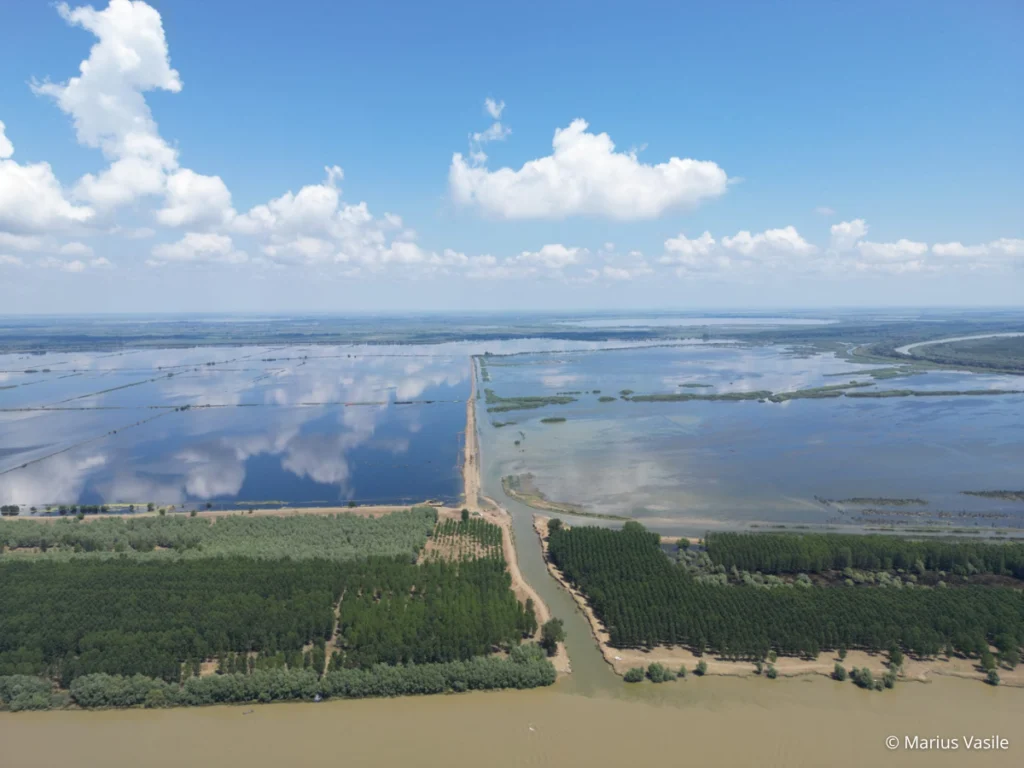
One of the most spectacular is that of Mahmudia, in the Danube Delta. There, 924 hectares of the Carasuhat area, embanked and drained in the past for agriculture, were restored to wetland status by reconnecting to the Danube.
A breach was made in the embankment, water re-entered the land, and nature began to recover. “Immediately, the following year, birds appeared, vegetation specific to such an area began to develop. We also intervened with planting species characteristic of that area, fish appeared, and implicitly, the local people began to come to fish, to bring tourists,” recounts Orieta Hulea.
Tourist activities, guesthouses, local products, and opportunities for local residents appeared. Birds, including pelicans, attracted photographers passionate about nature.
According to WWF data, 2022 monitoring identified 77 bird species and over 7,000 specimens on the restored area.
“It turned into a paradise. And the benefits were visible, because this is the success of a project: to be able to generate tangible benefits for the local community, because then people will see that such projects are beneficial and will support them,” says the director of WWF.
- Băile Tușnad: prevention reduces conflicts with bears
Another example comes from Băile Tușnad, one of the towns where the presence of bears caused serious problems for years.
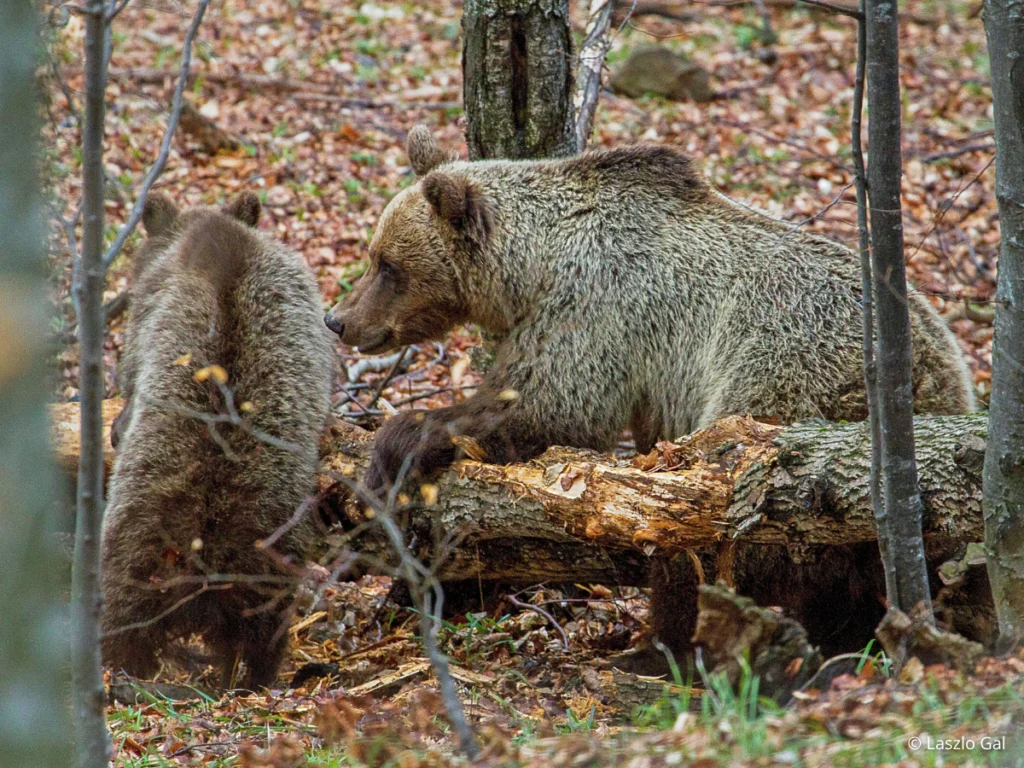
WWF, local authorities, and a local organization implemented a prevention-based project: bear-proof bins, more frequent waste collection, informing residents, monitoring, and a trained intervention team.
The results presented by WWF are significant. The number of reported damages dropped from 41 in 2021 to zero starting in 2023. RO-Alert messages decreased from over 230 in 2021 to about eight in 2025. In 2024 and 2025, no bears were removed.
Orieta Hulea estimates that the project in Băile Tușnad cost a few tens of thousands of euros, at most 50,000 euros, over several years.
The organization is now also discussing with the Zărnești City Hall the possibility of applying similar measures.
- Brașov: how public money can encourage more nature-friendly agriculture
A third example comes from Brașov and shows that protecting nature does not only mean restoring habitats or saving wild animals. The way public money is spent also matters.
The municipality changed the food procurement criteria for schools. Instead of prioritizing the lowest price, criteria regarding product quality, local origin, and short supply chains were introduced.
Such an approach can encourage local producers and more sustainable farming practices, while also reducing the distances over which food is transported. It is a way for authorities to use public procurement to support beneficial changes for both people and the environment.
According to the WWF report, over 22,200 children benefited from the program in the 2021–2022 school year, and the experience from Brașov subsequently contributed to modifying the standard documentation for public procurements at the national level.
Why solutions that work remain exceptions
When asked why such projects are not applied more often, Orieta Hulea says that moving from local initiatives to national policies is difficult. “Sometimes it is hard to make changes in public policies because there are sometimes other interests there, and when things reach Parliament, they can take a different turn,” explains the WWF director.
An example is managing conflicts between people and bears. Law 190/2026 sets for the year 2026 a prevention level of 859 bears that can be culled and an intervention level of 110 specimens. The provisions also apply in 2027.
Hulea criticizes the fact that the state set quotas for bear culling but did not develop a comparable funding system for prevention measures. “We still do not have a law that says investments should be made in these prevention measures and that they should be financially supported through different programs,” states the WWF director.
In the case of ecosystem restoration, she still sees an opportunity in the European legislation on nature restoration.
Romania must prepare a national restoration plan, and WWF and other organizations have already identified degraded areas that could be restored. The problem remains funding and the capacity to transform pilot projects into large-scale programs.
Biodiversity is not a luxury. It is a form of prevention
The Living Planet report shows how large the imbalance is between money invested in activities that harm nature and those allocated to protecting it.
Globally, in 2023, approximately 7.3 trillion dollars financed activities harmful to nature, while investments in protecting and restoring it were about 220 billion dollars.
In Romania, the problem is even more difficult, considers Orieta Hulea. “The Ministry of Environment’s budget has always been very small, and from the Environmental Fund, too few funds have actually gone toward biodiversity conservation, almost none. So funding nature in Romania is a big problem. Funding protected areas, for example, is a big problem,” she says.
The WWF director believes that protecting biodiversity should become a mandatory criterion in all major public investments, from agriculture and transport to energy. This would mean that authorities analyze not only the immediate costs of a project but also its effects on nature and the expenses it could generate in the long term.
But how can nature be protected in a time when the state is trying to reduce expenses and companies and households are already affected by high costs?
The WWF director’s answer is that we must also consider the costs we will bear if we do nothing. “If we think that restoring and protecting nature costs, we must also think about how much it costs if we lose it, and then that cost might be much higher: the cost of not doing something could be much higher than the cost of doing something,” explains Orieta Hulea.
In her opinion, protecting nature should not be seen as an expense the state can give up on when the budget is under pressure. “It can be said that we are in a period of austerity. Expenses are rising, but biodiversity is not really a luxury. It is actually a form of prevention,” emphasizes the WWF-Romania director.
The savings made today by reducing investments in nature could turn into much higher expenses in the coming years.
However, the time for changes is short. By 2030, European biodiversity targets foresee protecting at least 30% of the terrestrial and marine area of the European Union, of which at least one-third, equivalent to 10% of the total, should benefit from strict protection.
The WWF director acknowledges that the necessary transformations in agriculture, energy, and finance are extensive and that in some areas, changes have only just begun.
Do we still have reasons to be optimistic? “I think we have to be optimistic because that is the best attitude and try for each of us to do our part: we, at the individual level, at the community level, at the level of political decision-makers. There, things happen more slowly,” concludes Orieta Hulea.