

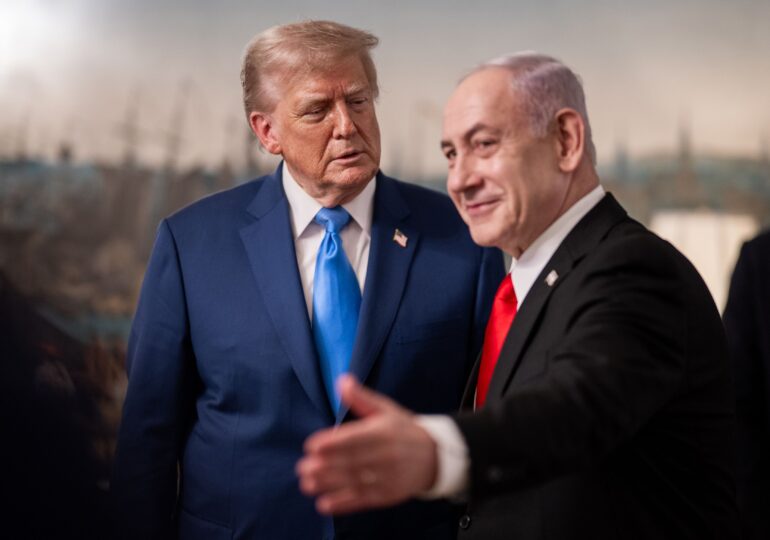
Donald Rumsfeld, former Secretary of Defense in President George W. Bush’s administration, when the US attacked Iraq and Afghanistan, said that „war is much easier to start than to stop.”
Exactly in this situation is Donald Trump today, a quarter of a century after these words were spoken. He has started a war that he now doesn’t know how to stop.
It’s as if American leaders haven’t learned anything from past experiences, but the situation is even more complicated. Before going to war in 2001, following the Al-Qaeda terrorist attacks that hit the World Trade Center towers, causing the death of over 3,000 people, George W. Bush formed a „coalition of the willing” that initially included 48 countries, including Romania.
Twenty-five years later, Donald Trump has joined Israel in attacking Iran, aiming to block the fundamentalist regime in Tehran from obtaining nuclear weapons, without seeking political and military support from NATO member states.
The doctrine promoted intensively by the current American president is that the US no longer needs anyone to achieve its strategic objectives. It would be such a powerful country that it has the freedom to make any decision it wants, and others must submit to it.
"There will be no agreement with Iran other than unconditional surrender. Their navy is gone. Their anti-aircraft weapons are gone. They no longer have air forces; they no longer have defense. They are now calling us to negotiate, but we told them it's too late. When we're done, the Iranian people will have to take back their government and make sure that whoever leads Iran will never threaten America or its neighbors again," announced Donald Trump on March 6.

Feud with Europe Continues
As evidenced by the military conflict in Iran, the situation is much more complicated, and the lack of international political support has led to a lack of military support, which has angered Trump and also caused difficulties in carrying out operations.
The American president criticized Pedro Sánchez, the Prime Minister of Spain, for not allowing the use of military bases on its territory by American forces. US bombers, on their way to Iran, needed refueling. American tanker aircraft needed approval to stay in Spain and take off from there to assist US aircraft.
The situation was resolved through the intervention of Italy and Greece, but plans were altered.
Additionally, Donald Trump also criticized Keir Starmer, for not aligning with the US from the beginning in the attack on Iran.
The declared strong stance of the American administration, despite the rapid military success achieved in Iran, received a harsh lesson in the fact that Donald Trump has no support for his actions either domestically or internationally.
The Fundamentalist Regime in Tehran Persists
The crisis in oil, as well as the destabilization of the Persian Gulf region, with Arab states targeted by Iranian rockets and drones, has put great pressure on the global economy.
The survival of the fundamentalist regime in Tehran and the appointment of Mojtaba, the son of Ali Khamenei, the former Iranian religious leader, as ayatollah, represent a failure of the US-Israel alliance, although some experts believe that the Islamic republic will not survive until the end of 2026.
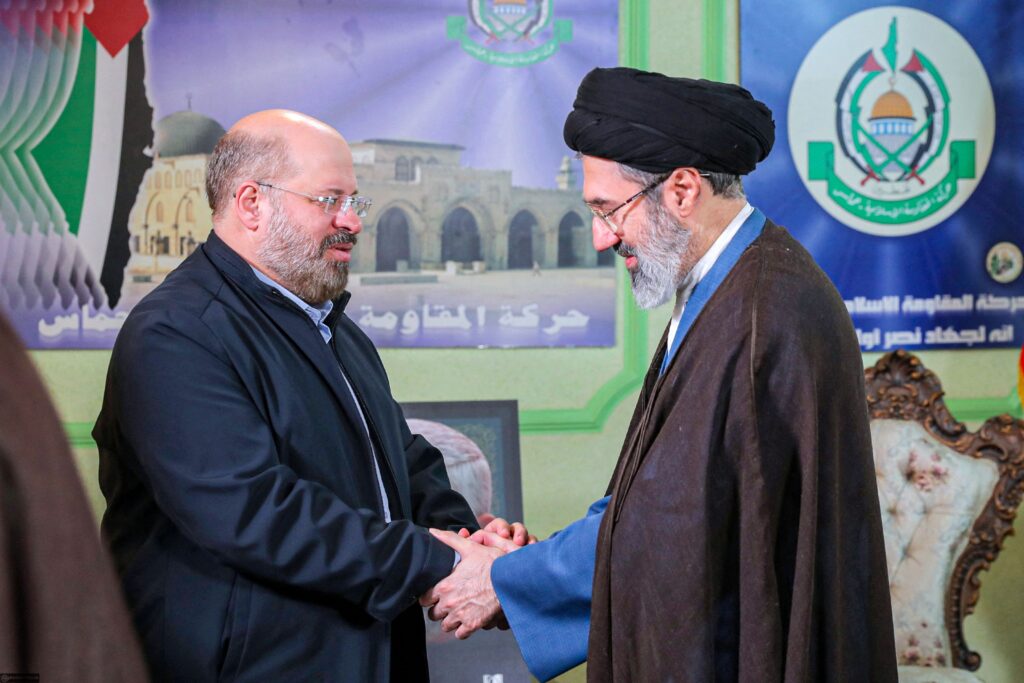
"There is no scenario in which the Islamic Republic will survive 2026 with its power intact. The ideology and identity of the regime take priority over survival. Khamenei has rejected stabilization offers because the system is based on opposition to the West. The Islamic Republic is dying; it may temporarily suppress protests, but it cannot restore its authority or cohesion," wrote Michael Doran, a senior analyst at the Hudson Institute, in January 2026, during massive street protests, violently suppressed by the Islamic Revolutionary Guard.
Despite the military victory of the US and Israel, the current situation indicates that they have not prepared the next steps after neutralizing the Iranian forces, or that the preparation did not take into account certain events and elements, such as the blockade of the Strait of Hormuz, followed by the explosive rise in fuel prices.
Military Intervention Cannot Solve a Political Problem
A momentary military success can turn into a catastrophe, as happened in Vietnam and Afghanistan, where combat power and technological superiority could not replace strategic thinking.
There are increasing examples in recent decades showing that military intervention cannot solve a political problem. Therefore, principles, international relations, and a system of laws and treaties are crucial to maintaining peace, respecting rights and individual freedoms, and ensuring peaceful interaction between states.
Vladimir Putin attacked Ukraine, leading Russia into a war that has lasted over four years, achieving nothing, causing a disaster both internally and an international security crisis.
Donald Trump and Benjamin Netanyahu acted justly to stop the Iranian nuclear program. The access of the dictatorial regime in Tehran to atomic weapons would have caused a huge international crisis, posing a direct threat to the existence of Israel and the Arab countries in the Gulf region.
But that doesn't mean restoring balance in the region is easy. While Netanyahu has a detailed strategy with clear objectives to achieve, the same cannot be said for Donald Trump.
The issue with the Jerusalem government is that its goals are primarily focused on Israel's security and less on international stability.
The moment of truth is near. We are trying to liberate Iran. Ultimately, it's up to you... I believe the day is not far off when Israel and a free Iran will shake hands for security and peace, for progress and prosperity. But right now, we are still in the midst of a tough campaign. We will not stop hitting the dictators in Iran without compromise.
Benjamin Netanyahu, Prime Minister of Israel, address to the nation, March 7, 2026
While the American administration, from the perspective of the greatest military and economic power, cannot avoid such responsibility.
The good news is that Iran has been left without military influence, and Russia has lost an ally and the main arms supplier. The bad news is that fuel prices have skyrocketed, the regime in Tehran has not collapsed, and the military conflict will not end in the coming days, probably weeks.
No one, not even Donald Trump, believes that the current American administration has the diplomatic means to solve such a complicated problem as the one in the Persian Gulf.