
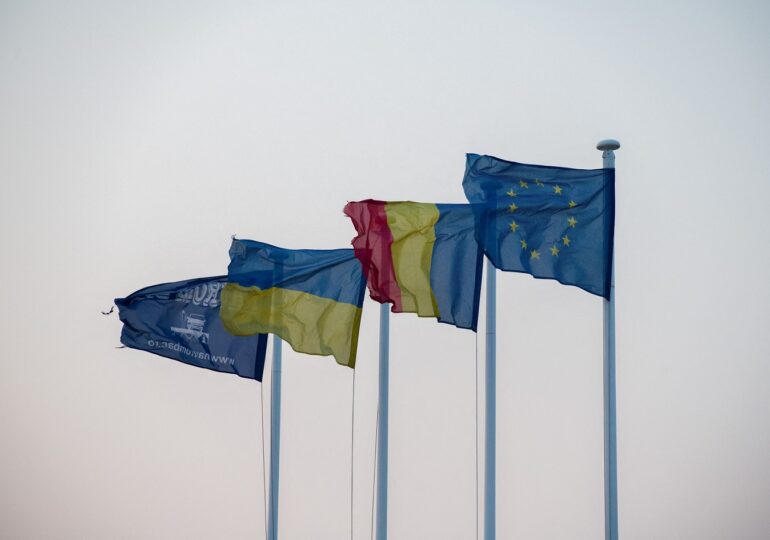
Eight EU member states located on the eastern flank will request dedicated allocations from the EU budget for defense at a summit organized on Tuesday in Helsinki, attended by President Nicușor Dan, arguing that the military and hybrid pressure exerted by Russia can no longer be managed solely from national budgets.
According to European officials cited by Politico, the leaders of Finland, Sweden, Estonia, Latvia, Lithuania, Poland, Romania, and Bulgaria will argue that the security of „frontline countries” should be treated as a common responsibility of the Union. „Strengthening the eastern flank of Europe must become a common responsibility for Europe,” said Estonian Prime Minister Kristen Michal.
The summit, an initiative led by Finnish Prime Minister Petteri Orpo, takes place against the backdrop of growing concerns about Russia's actions in recent months: Russian military aircraft incursions into Estonian airspace, drones reaching deep into Polish and Romanian territories, repeated blockages of Lithuanian air traffic from Belarus, and veiled warnings from Moscow to Finland after joining NATO. "Russia is a threat to Europe... much in the future," Orpo said in an interview with Helsingin Sanomat.
Access to European funds is at the center of discussions in Helsinki. Frontline states are asking the European Commission to propose "new financial opportunities for border countries and solidarity-based instruments."
In the multiannual budget project 2028–2034, the Commission intends to increase defense spending fivefold, up to 131 billion euros, and some of these funds could be directed towards the eastern flank.
Additionally, the possibility of launching a new financial instrument similar to the SAFE program, worth 150 billion euros, aimed at financing military acquisitions, is being discussed. European Commission President Ursula von der Leyen recently confirmed that there are requests for a "second SAFE," after the first one was oversubscribed.
The discussions are taking place in a key week for the EU, ahead of the European Council deciding whether to unlock 210 billion euros from frozen Russian assets to support Ukraine. At the same time, differences in vision among member states are becoming increasingly visible: while some Western European capitals strongly criticize Washington, Eastern flank countries warn that anti-American rhetoric risks weakening the US commitment to NATO's collective defense, considered essential in the face of the Russian threat.