
American President Donald Trump seems to have found, finally, a way out of the conflict with Iran, after months of military escalation and threats. But the price could be high for Washington.
In an analysis published by CNN and signed by Stephen Collinson, a journalist specializing in American politics and White House activities, the deal struck by Trump with Iran is presented as a tactical victory in the short term, which could, however, have significant strategic consequences for the United States.
According to the author, even Trump's own explanations suggest that the main reason he accepted the compromise was not geopolitical, but economic.
Trump: I didn't want an economic catastrophe
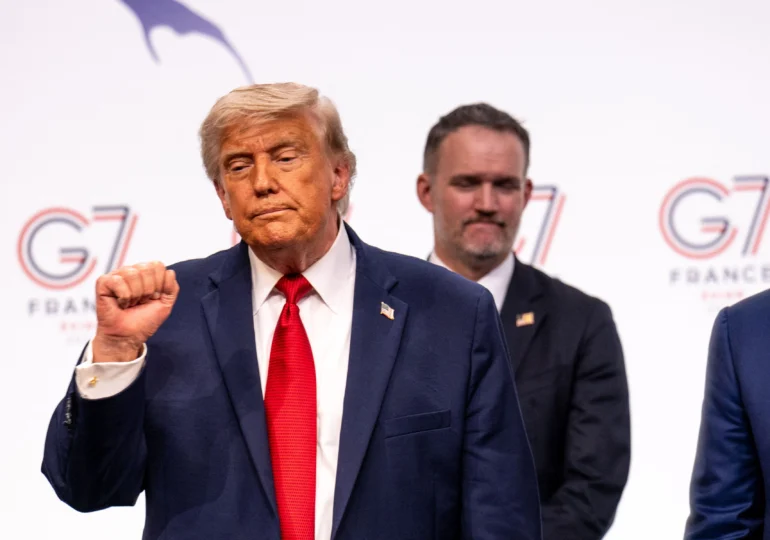
While in France at the G7 summit, Trump dismissed criticisms regarding the terms of the agreement and argued that prolonging the war would risk severely impacting the economy. "I didn't want to see an economic catastrophe. If this conflict continued, that could have happened," stated the White House leader.
Stephen Collinson notes that the statement is relevant because it comes after Trump had previously claimed that he does not consider the economic impact when negotiating with Iran.
The analysis points out that the American president often seeks immediate political and economic gains, even if they may conflict with long-term strategic objectives.
The Stock Market and Oil, the Factors that Convinced Him
Trump acknowledged that he closely monitored the financial markets' reaction to the conflict's developments.
After the G7 summit, he recounted how he noticed stock markets surging strongly every time he spoke about the possibility of peace, and declining when information suggesting the continuation of war emerged.
The conflict with Iran has led to fuel price increases and fueled inflationary pressures in the US, with economic effects appearing to worsen.
Given that polls indicated a support level just over 30%, the war risked exacerbating concerns about the cost of living, one of the most pressing issues for the American electorate.
In this context, CNN argues that the agreement with Iran can also be seen as an attempt to limit the political and economic costs of the conflict.
CNN: The Agreement Could Weaken the US Position in Negotiations with Iran
The harshest criticisms target the content of the memorandum of understanding signed by both parties.
Collinson argues that the document seems to leave the US with far fewer pressure tools on Tehran. According to the analysis, Iran receives significant benefits right from the start, including the easing of sanctions, while Washington does not receive sufficient guarantees in return.
In the author's view at CNN, the agreement risks weakening the American position ahead of the 60-day negotiations that are supposed to determine the future of the Iranian nuclear program.
Furthermore, the author suggests that Trump could be undermining his own reputation as a negotiator, an image that has accompanied him since his television celebrity days and which he has heavily utilized in his political career.
Iran Could Emerge Strengthened
According to Collinson, Trump's explanations risk confirming Iran's strategic calculation, which suggests that the economic and political costs of the conflict will become unbearable for the United States.
If Iranian leaders conclude that the economic pressure on the US was decisive in obtaining the agreement, then Tehran's ability to threaten oil traffic through the Strait of Hormuz becomes an even stronger strategic tool.
Trump warned on Wednesday that he would bomb Iran again if it does not uphold its obligations.
However, CNN notes that after weeks of airstrikes that have not resulted in either regime change or a favorable agreement for Washington, the Iranian leadership may deduce that the US will not risk another surge in oil prices and a financial market collapse to enforce its demands.
Moreover, the threats of new bombings seem to contradict the first clause of the memorandum, which stipulates the renunciation of the use or threat of force.
Republicans Accuse Trump of Excessive Concessions
Criticism is not only coming from Democrats. Several Republicans believe that the president paid too high a price to halt the conflict.
Former Vice President Mike Pence stated that the agreement reminded him of a policy of "appeasement," and a Republican senator went as far as to say that Ronald Reagan would be "turning in his grave" if he saw the terms of the agreement.
In the critics' view, Washington is thus signaling to its adversaries that it can be forced to make concessions if economic and political pressure becomes significant enough.
Trump Leaves the Door Open for Iran
Another aspect noted by CNN is the change in tone by the American president.
After initially demanding the "unconditional surrender" of Iran at the beginning of the conflict, Trump now suggests that it is natural for Tehran to desire a missile program, just like other states in the region.
Additionally, he stated that the 60-day negotiation period does not represent a "strict deadline."
In a symbolic gesture, Trump personally signed a copy of the memorandum at the Palace of Versailles and sent a photo of the document to Iranian authorities.
For Stephen Collinson, the episode reinforces the impression that the American president sometimes attributes as much importance to the image of an agreement as to its actual content.
And the big question, concludes the CNN analysis, is whether the memorandum will indeed pave the way for difficult and substantial negotiations or if it will allow Trump to declare victory and withdraw from a conflict that has become increasingly politically and economically costly.
G.P.