

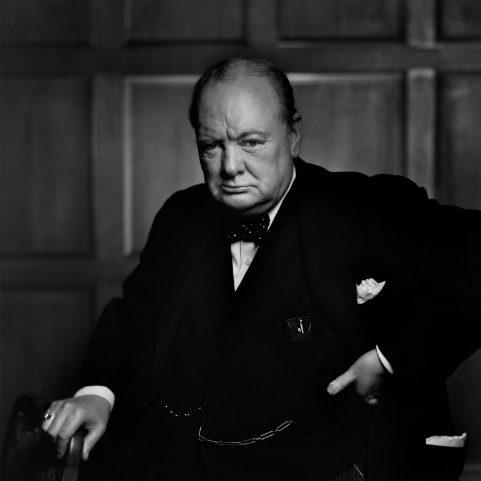
When Donald Trump criticized British Prime Minister Keir Starmer for not sufficiently supporting American and Israeli operations against Iran, he did so with a historical reference: „We’re not dealing with Winston Churchill,” he said.
The suggestion, writes The Conversation, was clear: Churchill would have stood shoulder to shoulder with Washington in a confrontation with Tehran. However, the remark raises an obvious question: what would Churchill have said about a war with Iran?

The response, the publication writes, is not as simple as Trump’s comparison suggests. Analyzing Churchill’s actions and statements over time reveals a mix of tough rhetoric, strategic prudence, and a constant concern for maintaining unity between Britain and the United States.
Far from having a simple instinct for confrontation, Churchill usually saw war and diplomacy as inseparable.
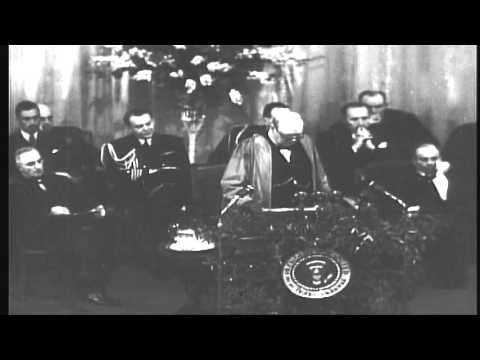
An example is the famous 1946 speech in Fulton, Missouri, where he warned that an "iron curtain" had descended over Europe. The speech – officially titled The Sinews of Peace – was not just a call for confrontation with the Soviet Union.
Churchill simultaneously emphasized the need for understanding between adversaries and the importance of strengthening the United Nations. His central message was that peace can best be preserved if Western powers demonstrate their unity and strength to deter aggression.
Iran was already entangled in the geopolitical crisis surrounding that speech. At the time, Soviet troops had not withdrawn from northern Iran, despite agreements during the war. The episode was part of the early tensions that would lead to the Cold War. Churchill viewed Iran through the lens of rivalry between the great powers, explains The Conversation.
This perspective had deeper roots. During World War II, Churchill traveled to Tehran in 1943 to meet with Franklin D. Roosevelt and Joseph Stalin at the first conference of the "Big Three" Allied leaders.
The meeting took place in the Iranian capital because the country had become a crucial logistical corridor for Allied supplies to reach the Soviet Union.
For Churchill, the conference was a sobering experience. Roosevelt increasingly sought to cultivate Stalin's goodwill, sometimes at the expense of Great Britain.
Later, Churchill bitterly observed that he stood "between the great bear and the American bison," while Britain resembled the "small British donkey." The remark reflected a growing awareness that Britain was no longer one of the dominant world powers.
This realization reinforced a central element of his post-war strategy: cultivating a lasting alliance with the United States in an attempt to anchor Britain's future security in the American-led international order.
The Irony of Invoking Churchill
Churchill's thinking about Iran did not stop at Cold War diplomacy, the publication further writes.
In 1953, during his second term as prime minister, Britain and the U.S. supported a secret operation that removed Iranian Prime Minister Mohammad Mosaddegh from power and reinstated the authority of Shah Mohammad Reza Pahlavi.
The coup was mainly organized by the CIA, under the leadership of Kermit Roosevelt Jr., but Churchill enthusiastically supported the plan. When Roosevelt later described the operation at Downing Street, Churchill reportedly said he would have gladly served under his command on such a mission.
This episode shows that Churchill could support firm actions when he believed Western interests were threatened. However, it also reveals a historical irony.
The overthrow of Mosaddegh became one of the main grievances cited by leaders of the Iranian revolution. After the 1979 revolution, the Islamic Republic constantly invoked foreign intervention – especially the Anglo-American coup – to legitimize its regime and present itself as the defender of Iran's sovereignty against foreign domination.
In other words, the legacy of Western interventions in Iran became one of the strongest political weapons of the Tehran regime.
Churchill knew well that wars and interventions can have unforeseen consequences. Reflecting on his experiences as a young officer in the Boer War, he later wrote that once the signal for conflict is given, statesmen lose control over events.
War becomes subject to "the caprices of fortune, the ugly surprises, and the horribly wrong calculations." It was not the opinion of a pacifist but the observation of a man who had seen how quickly political decisions can unleash forces no government can control.
What Would Churchill Do?
How would these instincts translate into the current crisis? Churchill would almost certainly have viewed the Iranian regime with great suspicion, the cited publication writes.
His Cold War mentality made him see international politics in terms of ideological confrontation and strategic balance. He would probably have argued that weakness in the face of aggressive regimes invites new challenges.
At the same time, Churchill rarely believed that military action alone can resolve geopolitical disputes. His preferred approach was a combination of firmness and diplomacy: negotiating from a position of strength while maintaining communication channels with adversaries.
Above all, Churchill believed that Britain's influence depended on maintaining a close alignment with the United States. But in his view, this relationship should shape American power, not just follow it. The "special relationship" had to be a partnership, not a blank check.
Thus, Trump's invocation of Churchill is based on a simplified image of the wartime leader, seen as an instinctive supporter of military action. However, history shows a much more complex figure: a strategist who believed in strength but also in diplomacy, alliances, and careful management of rivalries between great powers.
If Churchill were alive today, The Conversation writes, he would probably urge Western governments to show firmness. But he would also recognize that Iran's political system has been shaped by the memory of past foreign interventions – and any new conflict risks strengthening the very forces it seeks to weaken.
Churchill once observed that war, once unleashed, rarely follows the orderly paths imagined by those who start it. His warning may be as relevant today as many of his other famous phrases, concludes the publication.