

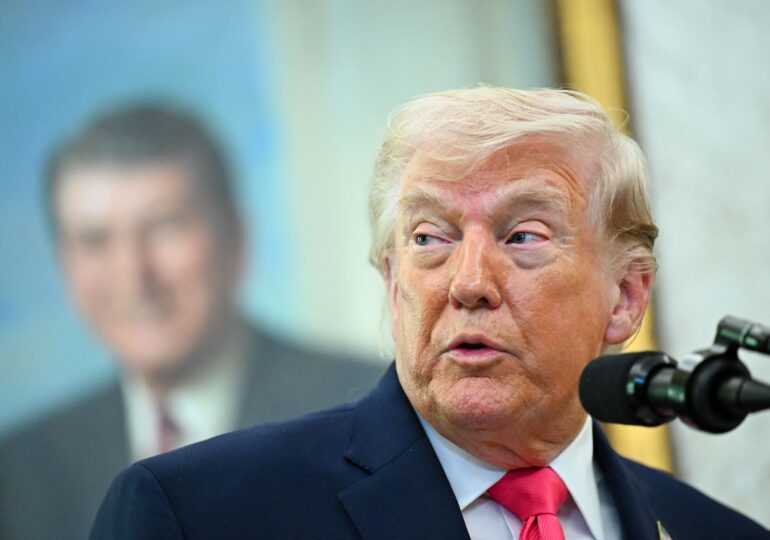
Regarding the vision of war, there is a great similarity between Donald Trump and Vladimir Putin. Both erroneously believe that a political regime can be removed through military force.
Both the Russian leader and the US leader have initiated military conflicts that have led to a series of unexpected consequences that are now endangering their authority.
Putin invaded Ukraine in February 2022, convinced that within two weeks, Kremlin soldiers would parade through Kiev, projecting an image of an unstoppable military force to the world. We all know what became of Putin's campaign in Ukraine.
Trump attacked Iran hoping that the massive military force, the most powerful army in the world, would "obliterate," as the US president put it, the fundamentalist regime in Tehran. But after nearly 5 weeks, Donald Trump found himself in a spider's web from which he cannot escape, threatening to trigger a global economic crisis.
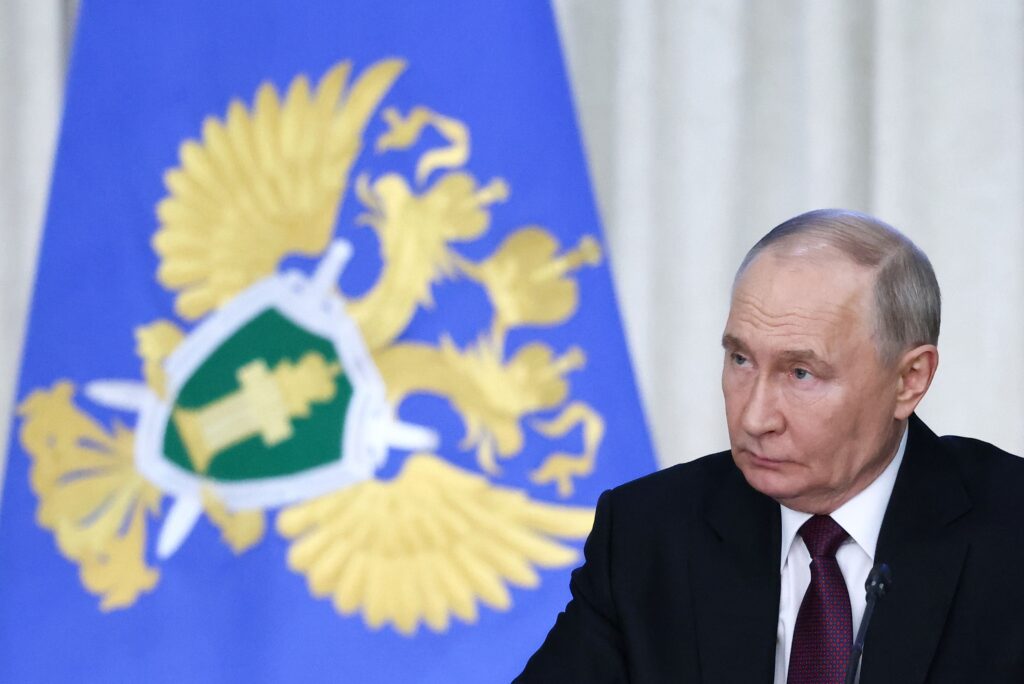
The similarities end here. Each of the two leaders had different motivations for starting or entering into war, but at least two ideas clearly emerge from their failures:
- The nature of military conflict has fundamentally changed, and the disproportion of military force is no longer sufficient to claim victory if there are no political consequences;
- Military power, in itself, no longer has the capacity to change political regimes;
These observations are evident both in Russia, a dictatorship, and in the US, a democracy: the fact that a military conflict has negative consequences on political leaders.
Entered the Waters of the Strait of Hormuz
Two days ago, on March 24, Reuters-Ipsos published the latest opinion poll regarding support for Donald Trump. He has reached the lowest popularity rating of his second term, with only 36% of the American electorate continuing to approve of the president's decisions and actions.
It must be emphasized that support below 40% signifies entry into a critical and turbulent zone, heralding political defeats for the White House leader, whoever that may be.
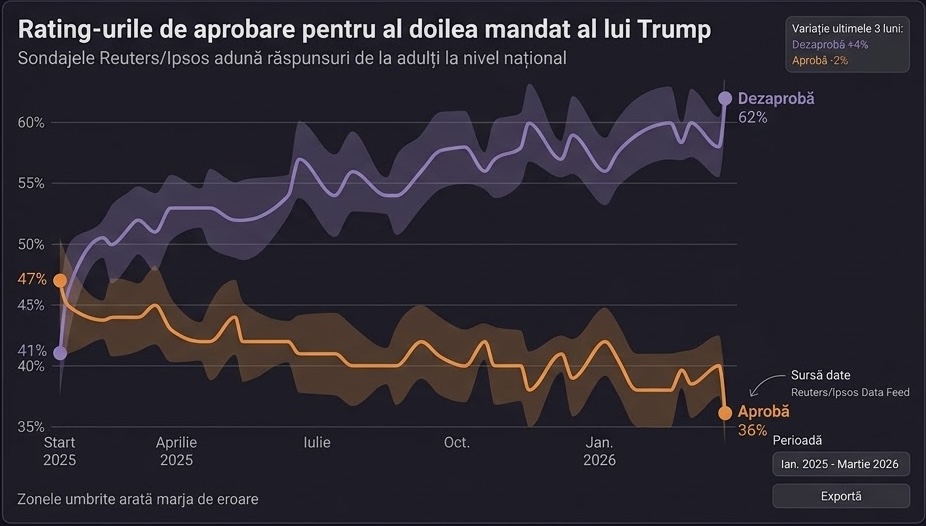
Even more shocking is the fact that in the Reuters-Ipsos study, it is observed that Donald Trump suddenly lost 4 percentage points in the days following the outbreak of the war in Iran.
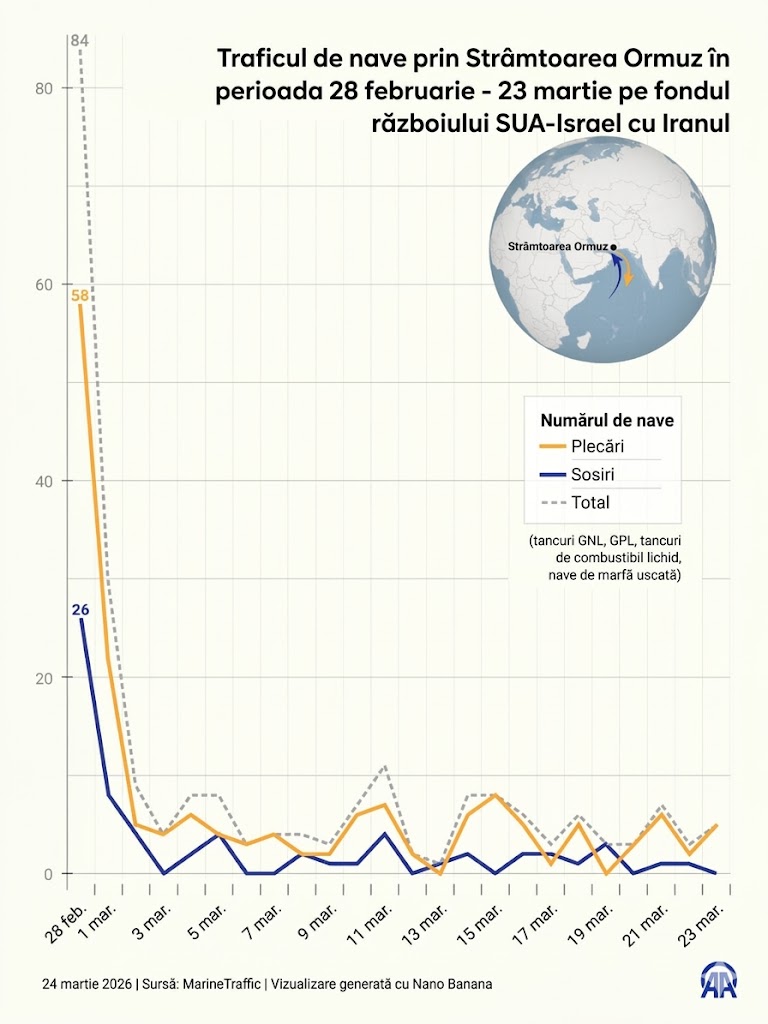
An unintended consequence that American strategists gave little consideration to before launching the attack on Iran was the devastating economic effect that the blockade of the Strait of Hormuz in the Persian Gulf would have.
Through that stretch of water, with a width of only 39 kilometers (24 miles), around 20% of global oil consumption passes. The blockage of naval traffic rapidly drove up energy prices internationally, putting immense pressure on the economies of states worldwide.
Even though military strategists anticipated such an effect, they were focused on achieving military objectives, not predicting and addressing the economic crises caused by war.
Here, the expertise of the American government and the vision of Donald Trump were needed. Neither of them felt prepared regarding the evolution, severity, and depth of the economic crisis caused by the blockade of the Strait of Hormuz.
Swift and Devastating
The rhetoric of the US president ranged from surprise to baseless promises, to steps taken back, confirming once again the nickname TACO (Trump's Always Chicken Out), meaning he always runs away when faced with difficulty.
"Neither Trump nor his advisers, according to recent information, anticipated that Iran would attack maritime transport and close the Strait of Hormuz," wrote journalist Jamelle Bouie for the New York Times.
"They also do not seem to have anticipated severe and sustained reprisals against American allies in the Gulf states. They did not anticipate an energy crisis and potential disruptions to the global economy, nor did they anticipate that America's European allies would largely reject their call for support," she added, highlighting a series of flaws in Donald Trump's reasoning.
As time passes, it becomes increasingly clear that the American president believed that the attack on Iran would be similar to the one on Venezuela, swift and devastating. Of course, on a different scale.
The War in Iran Wreaks Havoc in US Politics
Trump was convinced that the regime in Tehran would not survive the precise strikes carried out by Israel, which eliminated several top Iranian leaders in the early days of the war.
Holding this belief, it was difficult for him to consider the possibility of guerrilla resistance from segments of the Iranian army and the Islamic Revolutionary Guard Corps. Thus, a possible development of events was no longer taken into account.
It seems that both the president and the White House expected symbolic resistance, followed by the collapse of the Iranian regime, the installation of a pro-American government—or at least one we could tolerate—and a return to the previous situation: essentially, a repeat of the president's first intervention this year, in Venezuela.
Jamelle Bouie, New York Times journalist
This once again shows how difficult it is even for the most powerful person on the planet to read the immediate future.
The war in Iran, even if negotiations are reached and the Strait of Hormuz is reopened in the coming days, has wreaked havoc on Donald Trump's authority.
It will become increasingly difficult for him to find a path to victory for his party in the midterm elections in November, when the political battle for control of Congress will take place, with major consequences for the last two years of Donald Trump's term.