
In one way or another, the war in Iran will end. And when that happens, a rare window for bold collective actions will open.
Regardless of the outcome of the conflict, it has already offered a lesson that the world cannot afford to ignore: a single regime has decided to take control of a 33-kilometer navigable corridor. As a result, we are facing the most severe energy crisis the world has ever seen, writes Amos Hochstein, former Deputy Assistant Secretary and Senior Advisor for Energy and Investment to President Biden, and Special Presidential Coordinator for Global Infrastructure and Energy Security, in an analysis published in The Atlantic.
The almost complete closure of the Strait of Hormuz has removed between 9 and 10 million barrels of oil from global markets daily, but this is just the beginning of the economic losses.
The current crisis is more severe than the Arab oil embargo of 1973 and broader than the gas supply interruption from Russia following the invasion of Ukraine in 2022. Approximately 20% of the world's daily supply of liquefied natural gas has disappeared.
Five million barrels of refined products per day - the diesel used to transport goods, the aviation fuel that keeps planes in the air - are missing. The fertilizers on which farmers rely to feed billions of people, the helium used in making semiconductors and operating MRI machines in hospitals, and the petrochemical raw materials that underpin modern production are also in short supply.
The oil derivatives that constitute everyday materials are vanishing.
The only long-term solution
The global energy supply vulnerability to Iranian control cannot be remedied by any military operation, diplomatic armistice, or reduction of strategic reserves.
The only long-term solution is new infrastructure - a massive, internationally coordinated investment in energy corridors that completely bypass the Strait of Hormuz, emphasizes the expert.
Only two major pipeline systems are currently capable of transporting energy from the Gulf to global markets without passing through Hormuz, and they are operating near maximum capacity. Both transport oil, but not the refined products the world is running out of. And a substantial part of the Gulf, which holds some of the world's most significant hydrocarbon reserves, has no bypass route.
If the United States - and the world - want to avoid a repeat of the current crisis, they will need to contribute to doubling the capacity of the two existing pipelines, develop infrastructure for refined products alongside them, and build a new corridor for producers who have none.
Saudi Arabia's oil pipeline is today the most important piece of energy infrastructure on the planet.
The 1,296 km pipeline, which runs from its eastern oil fields to the Yanbu port on the Red Sea, was built during the Iran-Iraq war precisely to avoid an Iranian embargo and is operating as expected, Hochstein recalls.
The issue is that this singular pipeline, even if operating at full capacity, cannot meet demand. Additional mainlines, extensive pumping stations, and increased port capacity at Yanbu are needed.
Furthermore, the world is not just lacking oil now - it is in desperate need of petroleum products. Oil pipelines do not transport diesel, aviation fuel, or liquefied petroleum gas that hundreds of millions of people use to cook their food.
These products will require their dedicated infrastructure, built alongside the extended oil pipeline. This means separate lines, separate terminals, separate investments.
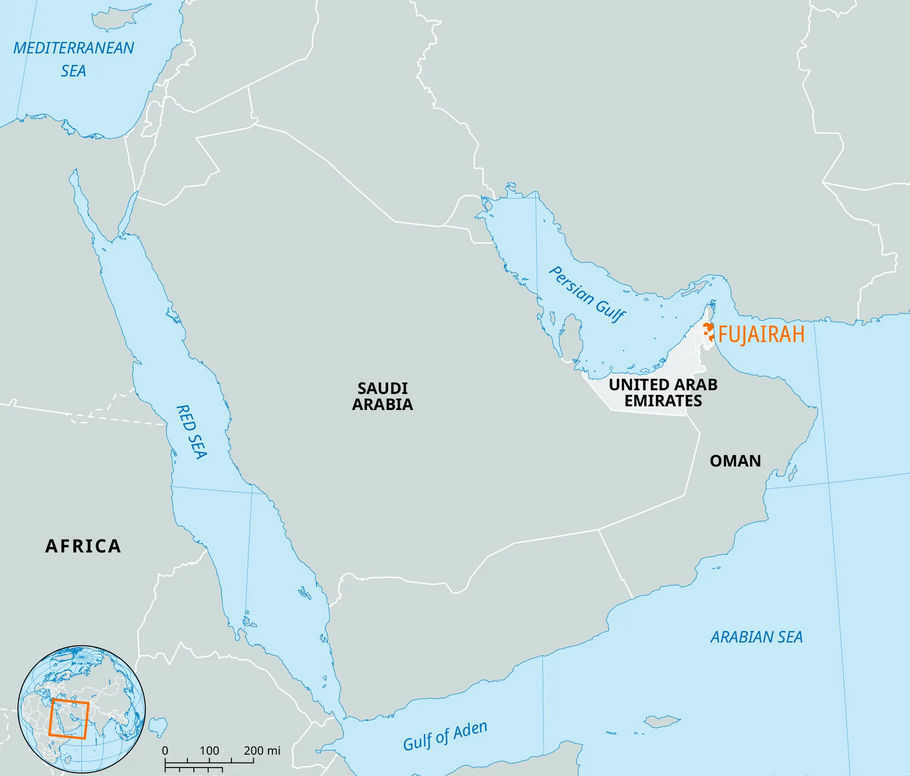
The Abu Dhabi Crude Oil Pipeline (ADCOP) of the United Arab Emirates connects internal oil fields to the Fujairah port in the Gulf of Oman, completely bypassing the Strait of Hormuz. The vision behind the project, operational since 2012, has proven its utility every day of this crisis.
However, with a capacity of approximately 1.7 million barrels per day, around 40% of the UAE's production lacks a backup option. Fujairah already has the geographical advantages and port infrastructure necessary to become the most important energy hub in the world outside the strait. But first, the pipeline's capacity should be doubled, along with adding new lines for refined products.
The greatest challenge
The third infrastructure challenge is the most urgent and least discussed.
The oil fields in southern Kuwait and Iraq, which hold enormous reserves crucial for global supply, have no access to any bypass route. They are completely exposed, and almost every barrel they produce must pass through Hormuz.
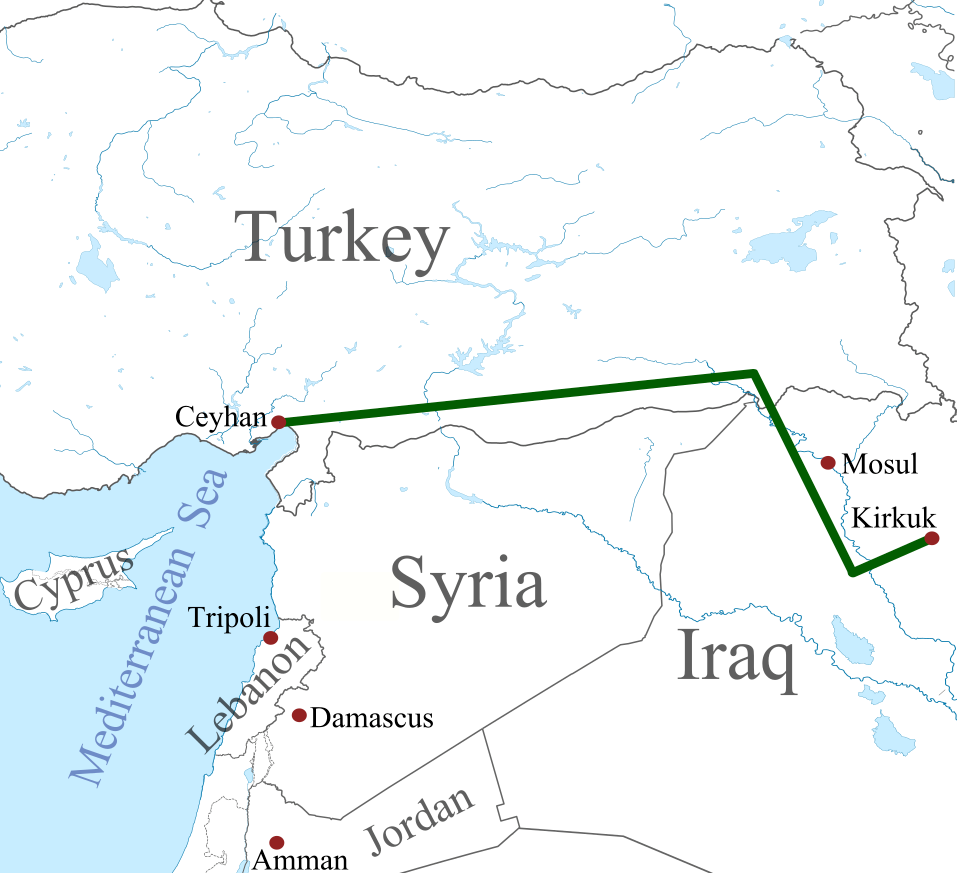
The solution is to build a modern, high-capacity corridor for transporting oil, natural gas, and products from southern Iraq and Kuwait northward, through Iraqi Kurdistan, to the Ceyhan export terminal on Turkey's Mediterranean coast.
A version of this route - the Kirkuk-Ceyhan pipeline - already exists but is aging, its capacity is far below what is needed, and its administration is politically fractured, the expert points out.
Amos Hochstein writes that both the Obama and Biden administrations spent years investing diplomatic efforts to promote this concept, shuttling between Baghdad, Erbil, and Ankara, but with little progress.
Today's crisis presents an opportunity to resolve the political differences that have blocked such efforts in more peaceful times, he points out.
In his view, the project is technically feasible but requires the political will, international funding, and American diplomatic leadership needed to bring Turkey, the Iraqi central government, the Kurdistan Regional Government, and Kuwait to the negotiating table.
America needs to get to work
The current energy crisis is a problem for the entire world, so finding a solution cannot be left solely to the Gulf states.
Saudi Arabia and the United Arab Emirates have already demonstrated extraordinary foresight - Petroline and ADCOP exist because their governments made long-term investments against risks that markets would never finance.
European, Asian, and American states that rely on energy from the Gulf have an interest in ensuring that similar forward-looking investments are made today, the expert writes.
According to him, it is specifically in the United States' interest to take the lead in such efforts rather than leave a void that other actors - especially China - might try to fill.
The US can help bring together the Gulf states, energy-consuming countries, multilateral development banks, sovereign investment funds, and private capital. The goal would be to make a strategic investment in common global infrastructure - the same logic that drove the Marshall Plan, which was not driven by charity but by the recognition that a stable and prosperous world benefits America.
By working through the US International Development Finance Corporation, in coordination with the World Bank, the US could help anchor a broader coalition. When America puts money on the table and sets the terms, others follow suit, Hochstein emphasizes.
And if these plans seem utopian, the expert refers to what happened when Russia invaded Ukraine in February 2022. A long-predicted energy crisis did not become a catastrophe due to a decade of little-noticed work:
- The Southern Gas Corridor brought Caspian gas through Georgia and Turkey to southern Europe;
- LNG terminals built in Poland, Lithuania, and Greece increased imports;
- Pipeline flows were reversed to move gas in new directions.
The infrastructure built before the crisis made a difference when the shock hit the market.
The US has already recognized the utility of building infrastructure in the region, contributing to the launch of the India-Middle East-Europe Economic Corridor (IMEC) to bypass chokepoints and connect rail, energy, fiber optic, and hydrogen pipelines from India through the Gulf to Europe. Building the capacity to bypass Hormuz could be considered the most urgent energy component of IMEC.
An incontestable truth: we cannot live without oil
Alright, but what about the opposition from environmentalists who argue that this direction will slow down the transition to clean energy?
Hochstein believes that such an objection misinterprets reality. In the past 20 years, the world has added more renewable energy and electric transportation capacity than almost everything previously predicted - and yet, fossil fuels still account for about 80% of the global energy mix, the same share as in 1980.
The demand for energy is increasing faster than renewable sources can cover, he emphasizes.
More importantly, oil is not just a fuel. It is a raw material for plastics, pharmaceuticals, fertilizers, and synthetic materials that electricity cannot replace.
Natural gas is the backbone of the petrochemical industry and fertilizers. Airlines do not operate on wind energy. MRI machines in hospitals do not run on solar panels.
In these conditions, accelerating the transition is not only necessary, it is vital and worth pursuing, and current supply chains must be secured simultaneously. Simply put, they are different priorities that do not compete with each other, argues the expert.
Sooner or later, the war in the Strait of Hormuz will end, opening a rare window for bold collective actions. The question will not only be what infrastructure will be built, but also under whose conditions and through which alliances.
The United States knows how to build the infrastructure of a more resilient world and has contributed to this before: in the Caspian region, in the decade of European efforts for energy security that preceded and then survived Russia's invasion, in IMEC, and in the Lobito Corridor in Central Africa. And now they also know, clearer than ever, how much it costs not to do this, concludes Amos Hochstein.
T.D.