
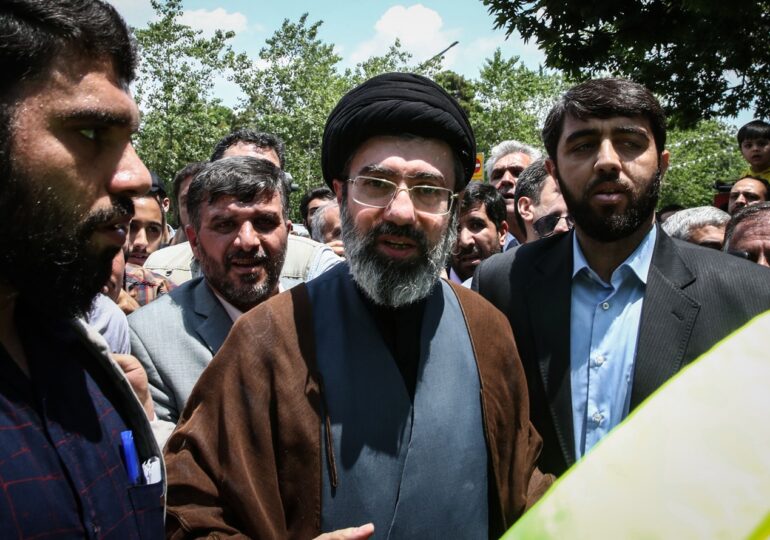
US and Israeli officials learned on Monday of an interesting development as President Trump’s ultimatum approached: Supreme Leader Mojtaba Khamenei ordered his negotiators, for the first time since the beginning of the war, to move towards an agreement, according to an Israeli official, a regional official, and a third informed source.
- US-Iran Armistice: What’s in Iran’s 10-point plan
- US-Iran Armistice. A day on the brink ended with TACO and serious constitutional questions
Axios presents the behind-the-scenes of the US-Iran armistice:
Overview: While Trump publicly threatened total annihilation, behind the scenes there were signs of diplomatic progress - although even sources close to Trump did not know what outcome to expect until the announcement of an armistice.
- American forces in the Middle East and Pentagon officials spent those final hours preparing for a massive bombing campaign on Iranian infrastructure and trying to figure out which way Trump was leaning. "We had no idea what was going to happen. It was chaos," a defense official said.
- Regional allies were preparing for unprecedented Iranian reprisals. Inside Iran, some civilians were leaving their homes to avoid the impact of the attacks.
- This account of diplomatic actions that prevented escalation, for now, is based on conversations with 11 sources knowledgeable about the discussions.
Context: Monday morning, as Trump interacted with the crowd at an Easter ceremony at the White House, Steve Witkoff was "very angry" talking on the phone.
- The American envoy told the mediators that the 10-point counterproposal received from Iran was "a disaster, a catastrophe," according to a direct source.
- A "chaotic" day followed with changes, Pakistani mediators conveying new versions between Witkoff and Iranian Foreign Minister Abbas Araghchi, and the Foreign Ministers of Egypt and Turkey trying to bridge the differences.
- By Monday evening, the mediators had obtained US approval for an updated two-week armistice proposal. The final decision rested with Khamenei - who, according to sources, was actively involved on Monday and Tuesday.
Intriguing element: The involvement of the new Supreme Leader was discreet and arduous. Confronted with an active assassination threat from Israel, Khamenei mainly communicated through messengers carrying notes.
- Two sources described Khamenei's agreement to negotiations as a "major breakthrough."
- A regional source said Araghchi played a central role in both managing the negotiations and persuading the Revolutionary Guard commanders to accept an agreement.
- China also advised Iran to seek a way out of the conflict.
- Ultimately, all major decisions on Monday and Tuesday went through Khamenei. "Without his green light, there would have been no agreement," the source said.
How it unfolded: By Tuesday morning, it was clear that progress was being made, but that didn't stop Trump from issuing the darkest threat: "An entire civilization will die tonight."
- Some American media outlets reported that Iran was breaking off negotiations in response. Sources involved said it wasn't true.
- Vice President Vance was on the phone from Hungary, mainly with the Pakistani side.
- Meanwhile, Israeli Prime Minister Benjamin Netanyahu was in frequent contact with Trump and his team - although the Israelis were becoming increasingly concerned about losing control of the process.
Around lunchtime (US East Coast time), Tuesday, there was a general understanding that the parties were heading towards a two-week armistice.
- Three hours later, Pakistani Prime Minister Shehbaz Sharif published the terms on X and asked both parties to accept.
- Trump immediately began receiving calls and messages from harder-line allies urging him to reject the proposal.
- The confusion about Trump's intentions was so great that several people who had spoken to him just an hour or two before believed he would reject the offer - until he accepted it.
Just before publishing his response, Trump spoke with Netanyahu to secure his commitment to respect the armistice.
- He then spoke with Pakistani Marshal Asim Munir to finalize the agreement.
- American forces were ordered to withdraw 15 minutes after Trump's message.
- Araghchi later confirmed that Iran would respect the armistice and reopen the Strait of Hormuz for vessels operating "in coordination with Iranian armed forces."
What to watch for: It remains to be seen to what extent Iran will allow the resumption of maritime transport or how firmly Netanyahu will uphold the armistice.
- A senior Israeli official stated that Netanyahu received assurances that the US would insist in peace negotiations for Iran to give up nuclear material, cease enrichment, and abandon the ballistic missile threat.
- Vance may lead the US delegation to the planned negotiations on Friday in Pakistan — the most important mission of his political career.
- There are still major differences between the US and Iran's visions, leaving the real possibility of war resuming.
Next steps: Defense Secretary Pete Hegseth and spokesperson Karoline Leavitt are expected to hold press conferences on Wednesday, criticizing those who challenged Trump's threats of annihilating Iran.
- They will argue that these threats made the agreement possible.
- The Iranian regime, which has claimed the opposite, may wonder if Trump's threats have truly ended.