
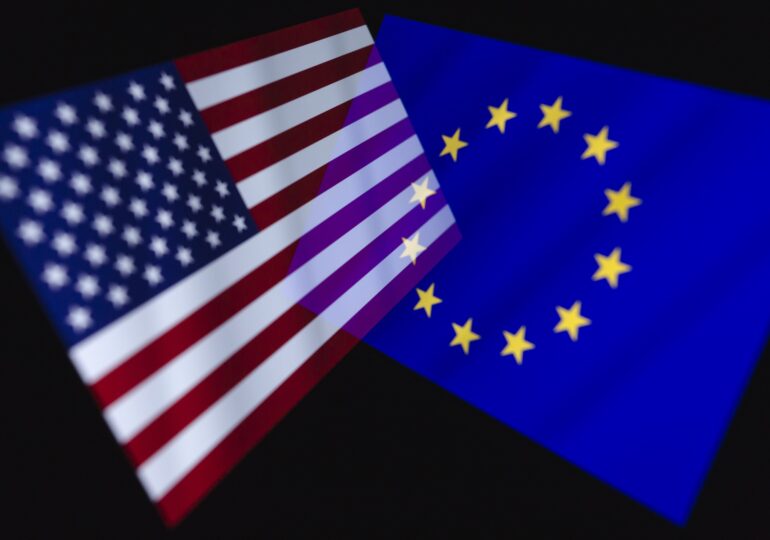
Donald Trump is a despot, and the USA is a democracy. These things can be true simultaneously, but not indefinitely. There is now an impasse in the struggle between a president who would like to be a king and a constitution drafted in rejection of monarchy.
But it is a fight to the death. Tyranny will either break the spirit of the republic or be stifled by it, comments editorialist Rafael Behr in an analysis for The Guardian.
As the supreme power in the world, the outcome of this confrontation has epic consequences for countries like the UK, which depend on Washington for security.
Trump's vengeful attitude towards Keir Starmer and other European leaders for their hesitation to join in bombings against Iran shows how impossible a partial alignment with a leader demanding total submission is. The only authority the American president recognizes is his own person.
When asked earlier this year if there was anything that could limit his global actions, he replied, "My own morality, my own mind."
To follow such a man means to set the law aside and submit to his will. This is the choice the Republican Party made in domestic politics and the only offer available to foreign allies.
The European response has been confused, alternating between concessions and hesitant actions. Flattery has been used to persuade Trump to renew NATO commitments to mutual assistance and to prevent a total betrayal of Ukraine. Defense budgets have been revised to demonstrate that Europe can pay its share in the alliance and thus deter Trump from withdrawing.
There is a strategic logic: preparing for the nightmare scenario - Europe left to defend itself against an aggressive Russia - makes that outcome less likely.
Higher military spending discourages Moscow and at the same time soothes Trump's ego. But fear and denial also play a role. Europe's adaptation to the new transatlantic reality has been delayed by the hope that the old friendship is not lost forever.
"Trumpdemia" is more complex
There is a psychological need to believe that the chaos caused by Trump, though extreme, is an exceptional episode - a singular event, like the Covid pandemic: painful and costly, but not a permanent change in the world order. The president is mortal. His powers can be limited if the Democrats win the midterm elections. Ceasefires can be negotiated, waterways reopened, supply chains rebuilt.
But "Trumpdemia" is more complex. The USA has been fully exposed over the course of one term, culminating in the attempted coup on January 6, 2021. That crisis did not create enough immunity in the political system to prevent a second term, already more virulent in attacks on fundamental human probity and decency.
There is no guarantee that Trump's successor will restore constitutional norms, assuming there is anyone who actually wants to try. Former US allies would be grateful for a more balanced president, but they cannot be sure that reason would last beyond one electoral cycle. Trust has vanished.
American conservatism is deeply marked by paranoid and apocalyptic thinking, which sees European traditions of liberal democracy as a sign of civilization's decline and the "erasure" of white, Christian culture through Muslim immigration. Any appeal to international institutions and multilateralism is interpreted as a pathetic lament of geopolitical weakness.
The mistake of European leaders
European leaders have known this rhetoric for years. Their mistake was to believe they could maintain a special channel with the USA, reserved for historical allies, and that Trump's extreme language and deference to dictators do not always define American foreign policy.
When he threatened to occupy Greenland - an aggression against Danish sovereignty that would have dissolved NATO as a functional alliance - they realized they were dealing with someone who treats partners as prey and only yields to resistance.
United European pressure, combined with market anxieties about a potential transatlantic trade war, forced Trump to step back.
That crisis was Starmer's first public confrontation with the White House, describing Trump's threats against Greenland as "totally wrong" and insisting he "will not yield" to American pressures. But even then, the British Prime Minister maintained strategic equidistance between Europe and the USA, without expressing any preference.
The Iran crisis shattered this illusion. The choice Starmer argued should not be made was imposed on him by Trump's demand for unconditional support in an illegal war. By refusing and drawing the White House's fury, the Prime Minister steered Britain's foreign policy closer to the continent. Economic and geographical factors, such as proximity to the single market, accentuate this trend.
Europe's reaction to the Iran war
The new need for solidarity does not eliminate all obstacles to closer cooperation. Brexit has left a legal maze for reintegration. In the EU, there are always conflicting priorities among the 27 member states, with different sizes, economies, and historical experiences. There is always tension between national electorate demands - for example, for spending outside defense or for cheaper gas than that from Russia - and the benefits of collective coordination.
Europe did not react uniformly to the Iran war. Friedrich Merz, the German Chancellor, barely spoke during his visit to the White House, watching as Trump criticized Starmer and Pedro Sánchez, the Spanish Prime Minister. In contrast, Micheál Martin, the Irish Prime Minister, responded with dignity, defending his British counterpart as "an honest and serious person."
No democratic leader has fully mastered the "art of whispering to Trump" because the president does not respect subtly expressed power. The EU is still trying to convey a unified message. The UK lost a decade spinning myths about the pure sovereignty of Brexit when its interests would have been better served by strengthening the European voice.
Continental solidarity is not an antidote to the chaos of a "Trumpdemia," but it is a necessary condition for resilience.
Europeans cannot vote when Americans decide whether to reject a tyrant and restore their constitution. The only democracies they can protect are their own, and this must be done together, always hoping that one day they will have an ally across the Atlantic.