
„It’s the economy, stupid!” The slogan that became famous in Bill Clinton’s 1992 presidential campaign immediately comes to mind when analyzing the instability that seems to have become a characteristic of political life in the United Kingdom.
The United Kingdom is heading towards its sixth prime minister in about seven years, as leader after leader proves unable to handle a weak economy, which has impacted incomes and living standards, eroding the electorate’s patience, writes CNN in an analysis.
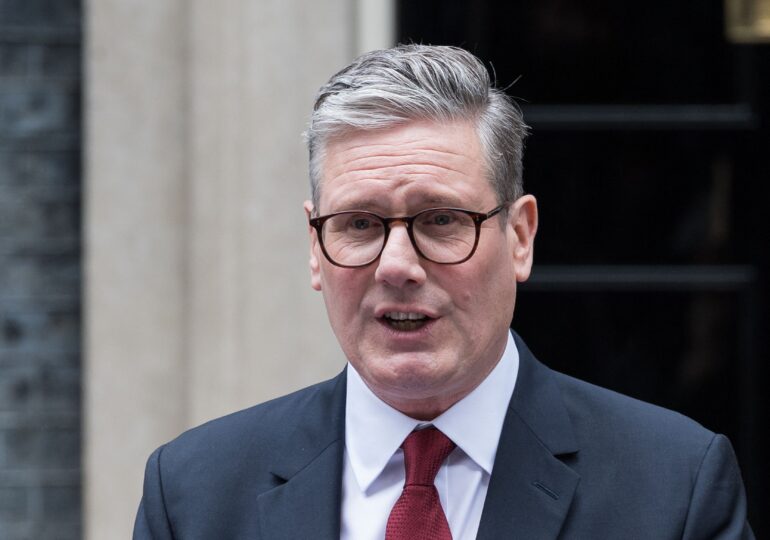
The current Prime Minister and leader of the Labour Party, Keir Starmer, who is stepping down after just two years in office, finds himself in select company. His four predecessors - Rishi Sunak, Liz Truss, Boris Johnson, and Theresa May - have faced many of the same difficult challenges and had equally short mandates.
Truss's tenure lasted less than two months, after the bond market unequivocally signaled her to step down following a tax reduction plan without clear funding sources, which nearly caused a collapse in the British financial markets.
Setting aside the bond market vigilantes, Clinton's campaign slogan perfectly encapsulates the fact that voters' experience with the economy - primarily felt through what they can or cannot afford to buy - is almost always the determining factor in their satisfaction with political leaders.
In the UK, politicians are paying a high price for the widespread feeling that life is becoming increasingly difficult and expensive.
Wages have struggled to keep pace with rising consumer prices, meaning people do not feel that their standard of living has significantly improved. Since the Labour Party took power in 2024, the average weekly wage, adjusted for inflation and excluding bonuses, has increased by less than 1%, reaching £494 ($651), according to the UK's Office for National Statistics.
Meanwhile, tax levels have reached unseen highs in decades.
"It all comes down to the economy," said Raoul Ruparel, UK Chief Economist at the Boston Consulting Group (BCG). The country's poor economic performance "is part of a broader sentiment that perhaps things are not improving," he told CNN.
A general climate of pessimism
Starmer and the four leaders who preceded him correctly identified the chronic issue of low economic growth in the UK and made resolving it their top priority.
However, achieving robust economic growth has proven challenging. Successive governments have had fewer resources to address an ever-expanding list of related problems, from deteriorating infrastructure to a chronic housing shortage.
"If you have a growing economy, then you have more flexibility to deliver results in other areas, to invest and spend more, to cut taxes. The economy underpins everything," explained Ruparel.
According to consultancy firm Capital Economics, the UK's GDP growth has averaged around 1% per year since Theresa May took office in July 2016. GDP per capita, which adjusts for population changes and is generally considered a better indicator of living standards, has seen similarly modest progress.
Economic pessimism contributed to the Labour Party's decisive victory in the 2024 general elections, held under the promise of "change." Britons were desperate for an alternative after 14 years of Conservative rule - a period marked by the shocks of the pandemic and the war in Ukraine, as well as Brexit and the public spending cuts ("austerity") adopted after the global financial crisis.
However, significant changes were slow to materialize, affecting perceptions of Starmer's mandate and leading to significant losses for the Labour Party in the May local elections, effectively sealing their political fate.
"Polls consistently showed that the cost of living pressure is the top concern for people across the country, so this was undoubtedly one of the main concerns for many voters," said Ben Harrison, director of the Work Foundation research center at Lancaster University, to CNN after Labour's losses in the local elections.
A new leader, same problems
Just as Starmer inherited a lackluster economy, his successor will take over the same situation. However, perhaps this new leader will benefit from more time to address challenges that could not be solved overnight.
"Achieving economic growth is not easy in the short term," said Ruparel from BCG. "Building new infrastructure, reducing energy prices, all of these things take time."
Ruth Gregory, Deputy Chief UK Economist at Capital Economics, stated that the government "has had some good ideas and introduced policies that could provide a lasting boost to the British economy," such as investment growth plans and stimulating home construction.
"However, due to a series of missteps and what appears to be flawed implementation, the positive effect is likely to be negligible," she told CNN.
The International Monetary Fund estimates that the UK's economy will only grow by 0.8% this year, according to a forecast released in April. This is half a percentage point lower than the January estimate, due to the impact of the conflict with Iran on energy prices, highlighting the scale of the challenges ahead.
"The UK's economic challenges will not disappear with a change of prime minister," warned Rain Newton-Smith, Chief Executive of the Confederation of British Industry (CBI), a business lobby organization.
"The economy will not recover on its own while politicians are preoccupied with their internal struggles. And the cost of living cannot be reduced without addressing the costs businesses face," she added in a statement.
"The country now needs stability," Newton-Smith said. The next prime minister "must act swiftly to restore confidence among businesses and investors, protect the standard of living, and present a credible and achievable plan for economic growth."