
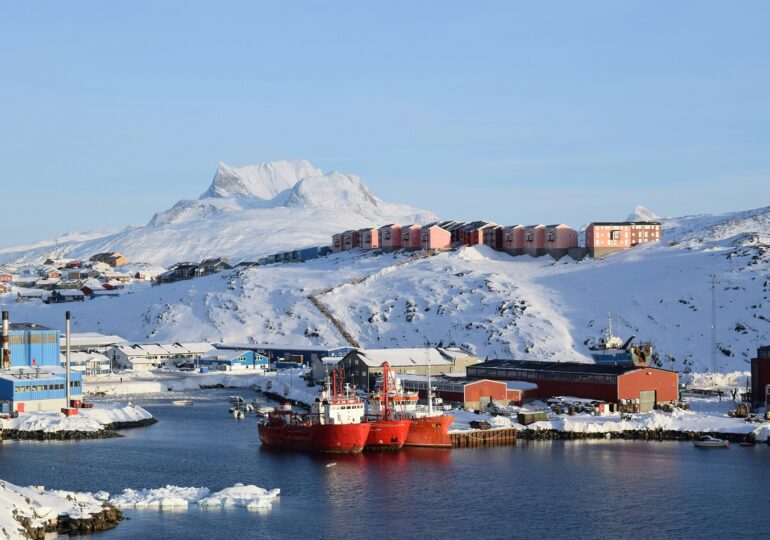
Officials, diplomats, and experts within NATO are outlining potential strategies to deter American President Donald Trump, who is fervently desiring Greenland.
If before European governments did not realize that Trump’s threats to occupy Greenland were serious, now they understand who they are dealing with. Political decision-makers no longer ignore the president’s exaggerated rhetoric and desperately seek a plan to stop him, writes Politico.
"We must be prepared for a direct confrontation with Trump. He is in an aggressive state, and we must be prepared," a EU diplomat informed about the ongoing discussions told the publication.
American Secretary of State Marco Rubio stated on Wednesday that they intend to discuss next week with Danish officials an American acquisition of Greenland. The White House stated that Trump's preference would be to obtain the territory through negotiation and also that acquiring the island is under consideration - but a military takeover is possible.
As diplomatic efforts have intensified in Europe, French Foreign Minister Jean-Noël Barrot stated that he and his counterparts from Germany and Poland have discussed a common European response to Trump's threats.
"Greenland is not for sale and cannot be taken... so the threats must stop," Barrot told reporters.
"Everyone is very surprised and doesn't know what we actually have in our toolbox. No one really knows what to do because the Americans can do whatever they want. But we need answers to these questions immediately. We cannot wait three, five, or seven years," said a former Danish parliamentarian.
Officials, diplomats, and experts from within NATO spoke to Politico about how Europe could deter the US president from going so far and what his options are if he succeeds. They were granted anonymity to speak freely.
Option 1: Finding a compromise
Trump says Greenland is vital to US security interests and accuses Copenhagen of not doing enough to protect it from increased Chinese and Russian military activity in the Arctic.
A negotiated settlement that will allow Trump to exit discussions with something he can present as a victory and that will allow Denmark and Greenland to save face is likely the quickest way out of trouble.
A former senior NATO official suggested that the alliance could mediate between Greenland, Denmark, and the US, as it has done with alliance members Turkey and Greece in their disputes.
US Ambassador to NATO Matthew Whitaker stated on Wednesday that Trump and his advisers do not believe Greenland is adequately secured. "As the ice melts and as the routes in the Arctic and the Far North open up... Greenland becomes a very serious security risk for the United States continent."
NATO allies are also considering new proposals to Trump that could strengthen Greenland's security, despite a widely held view that any direct threat from Russian and Chinese ships to the territory is exaggerated.
Three NATO diplomats have other proposals that the alliance could consider:
- accelerating defense spending in the Arctic region;
- organizing more military exercises in the region;
- deploying troops to secure Greenland and reassure the US, if necessary.
The alliance should also be open to establishing an "Arctic Sentry" system - moving its military assets to the region - a project similar to the Eastern Sentry and Baltic Sentry initiatives, two diplomats said.
"Anything that can be done" to strengthen the alliance's presence near Greenland and meet Trump's demands "should be maximized," believes a NATO diplomat.
Trump also says he wants Greenland for its vast mineral deposits and potential oil and gas reserves. But there is a reason why Greenland has remained largely untapped: extracting resources from its harsh terrain is difficult and very costly, making them less competitive than Chinese imports.
Danish envoys say they have been trying for years to advocate for investments in Greenland, but their European counterparts have not been receptive - although a EU diplomat mentioned that there are signs of a changing attitude.
Option 2: Giving Greenland a pile of money
The Trump administration has left its mark in supporting Greenland's independence movement. The idea they are counting on is that if the Arctic territory leaves the Kingdom of Denmark and signs an agreement with the US, it will be flooded with American money.
Although Trump has repeatedly refused to rule out the use of military force to take over Greenland, he has also insisted that he wants this to happen willingly.
The EU and Denmark are trying to convince the Greenlanders that they can offer them a better deal.
Brussels plans to double its spending for Greenland starting in 2028, as part of long-term budget plans developed after Trump began claiming the Danish-held territory.
According to a European Commission draft published in September and subject to further negotiations among member countries, the EU would nearly double its spending for Greenland to 530 million euros over a seven-year period starting in 2028.
This is in addition to the money Denmark sends to Greenland as part of its agreement with the autonomous territory.
Greenland would also be eligible to request an additional 44 million euros in EU funding for associated remote territories of European countries, according to the same document.
Danish and European support currently focuses mainly on social assistance, healthcare, education, and the territory's green transition. Under the new spending plans, this focus would expand to developing the island's capacity to extract mineral resources.
"We have a lot of people living below the poverty line, Greenland's infrastructure is behind, and our resources are mainly taken without much profit to Greenland, but mostly for Danish companies," said Kuno Fencker, a pro-independence opposition member of the Greenlandic parliament.
An attractive offer from Denmark and the EU could be enough to keep the Greenlanders away from America.
Option 3: Retaliations with "commercial bazooka"
Since Trump's first term, "many efforts have been made to try to analyze how to ensure European security, Nordic security, Arctic security, without active US involvement," said Thomas Crosbie, an American military expert at the Royal Danish Defence College, which provides training and education to Danish defense forces.
"It's difficult, but possible. But I don't know if anyone has seriously considered ensuring European security against America. It's just madness," Crosbie said.
The EU has a powerful political tool at its disposal, which it could use to deter Trump: the Anti-Coercion Instrument, a "commercial bazooka" created after the first Trump administration, which allows the EU to retaliate against trade discrimination.
The EU has threatened to use the "bazooka" after Trump imposed tariffs on the bloc, but backed down in July after the two sides reached an agreement.
Considering that the US still imposes tariffs on the EU, Brussels could resume the offensive.
"We have exports to the United States just over 600 billion euros, and for about a third of these goods, we have a market share of over 50%, and it's absolutely clear that this is also the power in our hands," said Bernd Lange, the Chair of the European Parliament's trade committee.
But Trump should understand that the EU is serious, given that all his tough statements have proven to be futile last time.
Option 4: Boots on the ground
If the US decides to conquer Greenland by military force, Europeans wouldn't be able to do much to prevent this.
"You can't preemptively attack the Americans before they claim Greenland, as this would take place before an act of war," Crosbie said. "But as for responding to the first move... If the Americans have a very small group of people, you could try to arrest them because it would be an illegal act."
If the US intervenes harshly, then it's a different story.
Legally, Denmark may be required to respond militarily. According to a standing order from 1952, troops should "immediately start fighting without waiting for or requesting orders" in the "event of an attack on Danish territory."
European countries should consider the possibility of deploying troops in Greenland - if Denmark requests it - to increase the potential cost of American military action, said a EU diplomat, reiterating suggestions that Berlin and Paris could send forces to deter any incursion.
Although these forces are unlikely to withstand an American invasion, they would act as a deterrent.
"There could be a trap effect where there are certain groups of people physically standing in the way, like a Tiananmen Square situation, which could force the (American) military to use violence or back off," Crosbie said.
But this strategy comes with a high cost, he warned. "It is completely uncharted territory, but it is very possible that we could lose lives in trying to reject the American claim on Greenland."
T.D.