
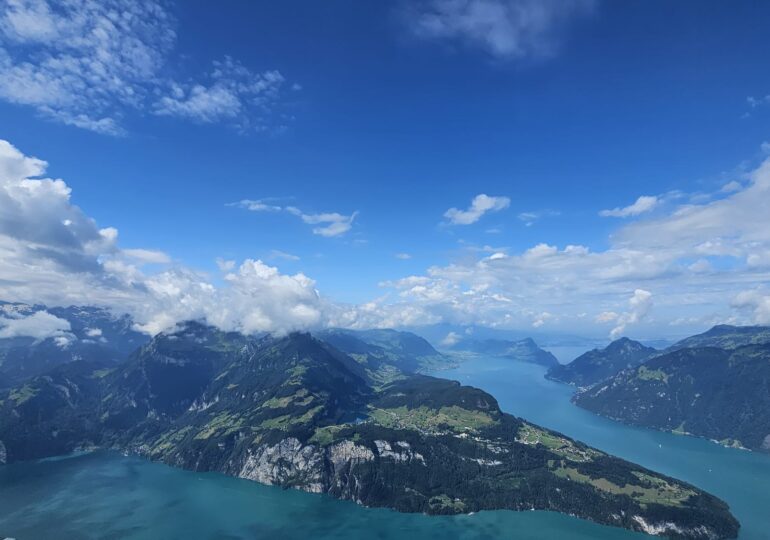
Switzerland is the most expensive country for restaurants and hotels among 37 European countries, according to the latest Eurostat data.
North Macedonia is the cheapest destination, with prices 50% below the EU average.
Europe hosts many of the world's most iconic tourist destinations, from the views of Lisbon's hills to the Eiffel Tower in France. The cost of a night's stay on the continent can be quite high, meaning that tourists need to be careful when looking for deals, as noted by Euronews.
The Eurostat price level index for restaurants and hotels can be useful for those looking to compare costs between countries.
The EU average is set at 100. If restaurants and hotels cost an average of 100 euros in the EU, the index shows how much the same basket would cost in each country. A score above 100 means that a destination is more expensive than the EU average, while a score below 100 means it is cheaper.
This is a value of the index, not a monetary sum, meaning it serves only as a reference point.
A standard basket of services costs 171 euros in Switzerland, 71% more than the EU average. North Macedonia is the cheapest country, with prices of 50 euros. Among EU countries, Denmark is the most expensive for restaurants and hotels. A standard basket costs 148 euros there, 48% above the EU average.
Bulgaria is the cheapest country in the EU, with a total basket of 53 euros.
Nordic countries are generally more expensive for restaurants and hotels. Western European countries also rank above average. Ireland, the Netherlands, Belgium, Germany, and France all fall at or above the EU reference level of 100 euros.
In contrast, Eastern Europe and the Balkans are well below the EU average of 100 euros.
Romania stands at an index of 69, being 31% cheaper than the EU average.
In Southern Europe, Portugal, Spain, and Greece are significantly cheaper than the EU average. Italy stands out as an exception. In other countries with a coastline on the Mediterranean Sea, Croatia is close to the 100 euro reference threshold. Cyprus and Malta are slightly cheaper but still more expensive than many comparable countries.
To explain these cost differences, labor costs must be taken into account, said Kristóf Gyódi from the University of Warsaw.
"Since the hospitality sector is one with a high degree of labor intensity, the dispersion of wage levels between countries directly translates into variable service prices," he explained.
Other factors also contribute, including variations in energy and utility costs, VAT and other taxes, as well as commercial property prices.
The European Hospitality Association (HOTREC) emphasized that operators face very different cost structures from one country to another. "Labor represents the largest part of hospitality costs, so countries with higher wages and stricter social security systems naturally rank higher in price comparisons," a spokesperson said.
In addition to energy and VAT, HOTREC also highlighted food inflation, supply chain pressures, and regulatory requirements. These can represent a significant financial burden, especially for small and medium-sized enterprises.
The Eurostat price level index does not measure affordability, as it does not take income levels into account. People with higher disposable incomes can still afford more restaurant and hotel services in their countries, even if prices are higher.
When traveling, these differences matter. People from higher-income countries often can enjoy lower prices when visiting other parts of Europe, such as travelers from Nordic countries going to Eastern Europe or certain parts of Southern Europe.
"Ultimately, what matters for travelers is the quality-price ratio. When prices rise faster than purchasing power, people tend to shorten their stays, travel off-season, or choose destinations perceived as more accessible," HOTREC stated.
Gyódi added that price differences influence tourist flows, but other factors are also important. Distance, ease of travel, and location-specific attractions are also decisive factors.