
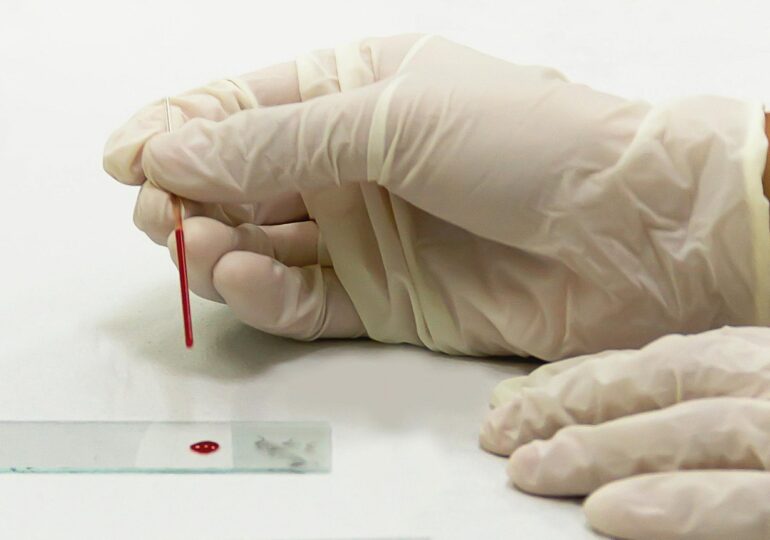
Only one in six million people has the Rh null blood type. Researchers are now trying to create it in the laboratory to save lives.
Blood transfusions have transformed modern medicine. If we ever have the misfortune of being injured or needing major surgery, donated blood from others can save our lives.
But not everyone can benefit from this remarkable procedure. Individuals with rare blood types struggle to find donated blood that matches theirs.
About one of the rarest blood types - Rh null - it is known to be possessed by only 50 people worldwide. In the event of an accident requiring a transfusion, the chances of these individuals receiving blood are slim. For this reason, those with Rh null are encouraged to freeze their own blood for long-term storage.
Despite its rarity, this blood group is highly valued. In the medical and research community, it has been dubbed "golden blood" due to its utility.
Scientists are now seeking ways to overcome the immunity issues that currently restrict the use of donated blood, as reported by BBC.
A Very Precious Blood Type
Each person's blood type is classified based on the presence or absence of specific markers on the surface of red blood cells. These markers, known as antigens, consist of proteins or sugars that protrude from the cell surface and can be detected by the body's immune system.
"If you receive a blood transfusion from a donor with different antigens than your own blood, your body will produce antibodies against that blood and attack it. If you receive that blood again, your life could be in danger," explained Ash Toye, a professor of cellular biology at the University of Bristol.
The Rh null blood group does not have all the 50 antigens in the Rh system. This means that Rh null blood is compatible with all Rh blood types, but individuals with Rh null cannot receive blood from most donors.
In emergency situations where a patient's blood type is unknown, type O Rh null blood can be administered with a low risk of immune reaction. Therefore, scientists worldwide are seeking ways to replicate this special type of blood.
Genetic Editing, a Chance to Obtain "Golden Blood"
In a 2018 study, Toye and his colleagues at the University of Bristol recreated Rh null blood in the laboratory. To do this, they extracted a cell line - a population of cells cultivated in a laboratory - of immature red blood cells.
The team then used the Crispr-Cas9 genetic editing technique to delete the genes encoding the antigens of the five blood group systems collectively responsible for most transfusion incompatibilities. "We established that by removing five, we would create an ultra-compatible cell, as we eliminated five of the most problematic blood groups," said Toye.
The resulting blood cells would be compatible with all major common blood groups, as well as with rare types like Rh null and the Bombay phenotype, present in one out of four million people. Individuals with this blood type cannot receive blood types O, A, B, or AB.
However, the use of genetic editing techniques remains controversial and strictly regulated in many parts of the world, meaning it may take some time before this ultra-compatible blood type becomes clinically available. It would also need to undergo numerous rounds of clinical studies and testing before approval.
Rare Blood Banks in the Laboratory
Meanwhile, Toye has co-founded a spin-off company, Scarlet Therapeutics, which collects blood donations from individuals with rare blood types, including Rh null. The team hopes to use this type of blood to create cell lines that can be cultivated in the laboratory to produce red blood cells indefinitely. This lab-grown blood could then be frozen and stored for emergency situations where individuals with these blood types need it.
Toye hopes to create rare blood banks without using genetic editing, although this technique could play a role in the future.
Other researchers are also trying to produce Rh null blood in the laboratory.
Other Approaches, Same Limits
In 2021, immunologist Gregory Denomme and his colleagues at the Versiti Blood Research Institute in Milwaukee, USA, used Crispr-Cas9 genetic editing technology to create personalized rare blood groups, including Rh null, from human induced pluripotent stem cells (hiPSC). These stem cells have properties similar to embryonic stem cells and have the potential to become any cell in the human body under the right conditions.
Other scientists are using a different type of stem cell that is already programmed to become blood cells but have not yet established a specific type.
For example, researchers at the Laval University in Quebec, Canada, recently extracted blood stem cells from donors with type A positive blood. They then used Crispr-Cas9 technology to delete the genes encoding the A and Rh antigens, producing immature O Rh null red blood cells. And researchers in Barcelona have recently harvested stem cells from an Rh null blood donor and used Crispr-Cas9 to convert their blood from group A to group O, making it more universal.
However, despite these impressive efforts, creating artificial blood cultured in the laboratory on a scale that people could use is still far from realization. One challenge is getting stem cells to grow into mature red blood cells. In the body, red blood cells are produced from stem cells in the bone marrow, which send complex signals to guide their development. This is difficult to reproduce in the lab.
"There is the additional problem that when creating an Rh null blood group or any other null blood group, the growth and maturation of red blood cells can be disrupted. Producing specific blood group genes could lead to the breakdown of the cell membrane or the loss of red blood cell production efficiency in cell culture," said Denomme.
For now, Toye is a co-author of RESTORE, the world's first clinical study testing the safety of administering lab-grown red blood cells to healthy volunteers, derived from stem cells taken from donor blood. The blood in the study has not been genetically modified in any way, but it took 10 years of research to reach the stage where scientists were ready to test it on people.
"Currently, drawing blood from someone's arm is much more efficient and cost-effective, so we will need blood donors in the near future. But for individuals with rare blood types, where there are very few other donors, if we could create more blood for them, it would be truly important," says Toye.
T.D,