
In recent years, the conventional geopolitical wisdom was that the world order was heading towards three centers of power: the United States, China, and Russia. This vision assumed that power mainly derived from economic size and military capability.
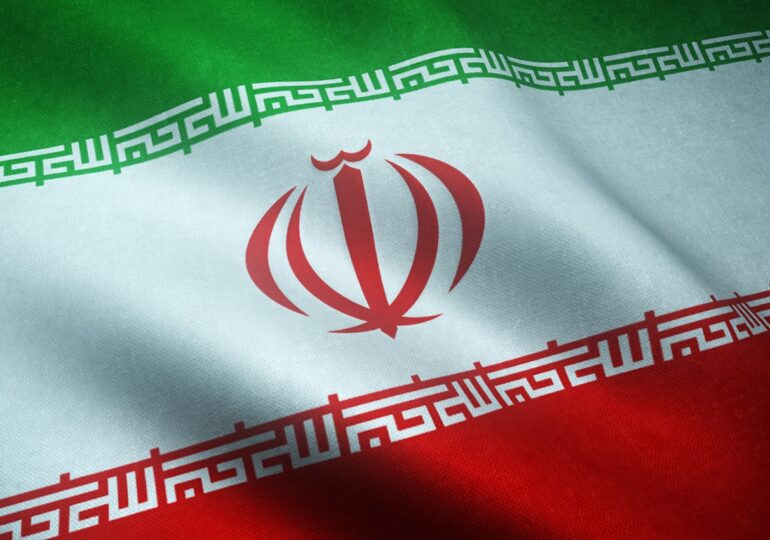
This assumption is no longer valid. A fourth global power center is rapidly emerging – Iran – which does not rival these three nations economically or militarily. Instead, its new power stems from controlling the most critical chokepoint in the global economy, the Strait of Hormuz, as The New York Times writes in an analysis.
The strait has long been an international navigable route through which ships from all countries could pass. However, the joint military campaign that the United States and Israel have launched against Iran this year has prompted Iran to enforce a selective military blockade of the strait.
Approximately one-fifth of the world's supply of oil and liquefied natural gas passes through this strait. There are no real alternatives for these supply routes in the short term. If Iran's control over the strait persists for months or years, as is possible, it will drastically reshape the global order to the detriment of the United States.
Many analysts believe that Iran's control over the Strait of Hormuz is only temporary. There is a widespread expectation that the naval forces of the United States and its allies will soon stabilize the situation and that oil flows will return to normal patterns.
This expectation is wrong. It assumes that, to continue controlling the strait, Iran must physically close it. But, as we have already seen, you can control the strait without closing it.
Today, the strait remains open to tankers. However, traffic has decreased by over 90% since the beginning of the war, not because Iran has sunk every ship that entered, but because, faced with a credible threat of attack, insurers have withdrawn or significantly increased the cost of war risk insurance. The striking of a cargo ship a few days ago was more than enough to make the risk unacceptable.
The US Issue
Modern economies not only need oil. They also need the oil to be delivered on time, in large quantities, and with predictable risk. When this reliability disappears, insurance markets shrink, transport costs rise, and governments begin to view energy access as a complex strategic challenge, not just a market transaction.
The problem for the United States is one of asymmetry. Protecting every oil transport passing through the Strait of Hormuz against potential attacks - mines, drones, missile strikes - is an ongoing operation. It requires a continuous military presence. Iran only needs to occasionally strike an oil tanker to question the reliability of global oil transport.
French President Emmanuel Macron said this on Thursday when he stated that it is "unrealistic" to reopen the Strait of Hormuz by force and that "this can only be achieved in cooperation with Iran." In practice, he acknowledged that the flow of oil cannot be guaranteed without Iran's agreement.
For decades, the Persian Gulf operated under a simple arrangement: oil producers exported, markets set prices, and the United States ensured the route. This system allowed rivalry without instability. Now, it is unraveling.
The Gulf states heavily rely on energy exports for budget revenues. When insurance costs rise and transport becomes uncertain, the fiscal impact is immediate. Governments adapt. Shipments are redirected. Contracts are renegotiated.
A New Regional Order
If the uncertainty persists, the Gulf arrangement will inevitably change, giving way to a new regional order - one where Gulf states increasingly adapt to the actor that can most directly influence the reliability of their exports. This actor is now Iran.
The global consequences will be most pronounced in Asia. Japan, South Korea, and India heavily depend on energy from the Gulf. China, although more diversified, also relies on the region for a significant portion of its energy imports. These dependencies are embedded in infrastructure - refineries, transport routes, and storage systems that cannot be quickly reconfigured.
If energy supply disruptions persist, the effects will be far-reaching. Higher insurance and transport costs will raise prices. Trade balances will deteriorate. Currencies will depreciate. Inflation will rise. Energy dependence will begin to shape policies. Governments will prioritize energy access. Diplomatic options will narrow.
Actions that risk further instability will become harder to sustain. A world like in the 1970s, where oil shocks lead to years of stagflation, will not be a distant memory, but a looming reality. Once again, Iran will win.
China relies on Gulf energy to support growth. Russia benefits from higher and more volatile energy prices. Iran gains influence due to its position at the chokepoint of Hormuz.
Each of these three nations has incentives that run counter to the economic stability of the United States and its allies. These states do not need to formally coordinate. The structure of the system pushes them in the same direction. Thus, a new order emerges - not through a formal alliance (at least not initially), but through mutually reinforcing converging interests over time.
Other Dark Scenarios
Other possible scenarios in the emerging new world order are even darker. Imagine Iran controlling approximately 20% of global oil, Russia about 11%, and China capable of absorbing a large part of this supply.
These would form a cartel to deprive the West of 30% of global oil. No sophisticated analysis is needed to understand the catastrophic consequences: a sharp decline in the power of the United States and Europe and a global shift towards China, Russia, and Iran.
The United States faces a difficult choice: either engage in a long-term effort to reaffirm control over the Strait of Hormuz or accept a new global energy order where American control is no longer guaranteed.
If it chooses acceptance, the outcome is clear: the international system will reorganize, and Iran will become the fourth global power center.
However, if the United States chooses to reaffirm military control, it will face a prolonged conflict, which it could lose.
A war with Iran is not a military conflict from which the United States can simply withdraw, returning to the previous situation. Iran would certainly demand a high price in a new arrangement with the United States - but this price would likely be lower than the alternative. This is a transformational war, and if these changes continue even for a few years, the global order will irreversibly shift.