


A new INSCOP Research survey shows that young people between 18 and 29 years old are the most open to the idea of the European Union taking on more responsibilities in the field of security and defense.
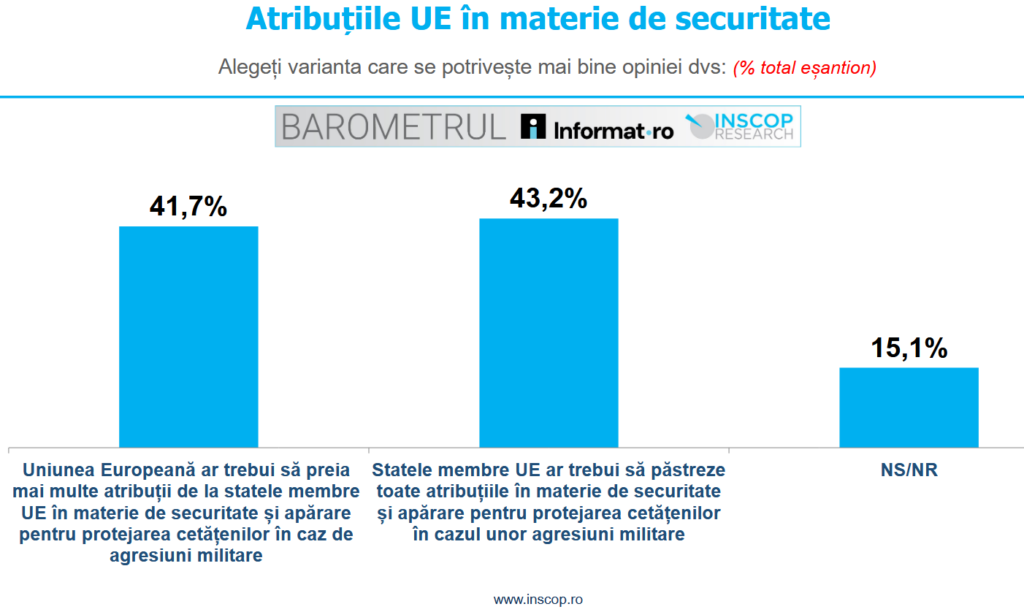
Across the entire population, Romanians are almost evenly split: 41.7% support transferring some competencies to the EU, while 43.2% prefer security to remain exclusively at the national level.
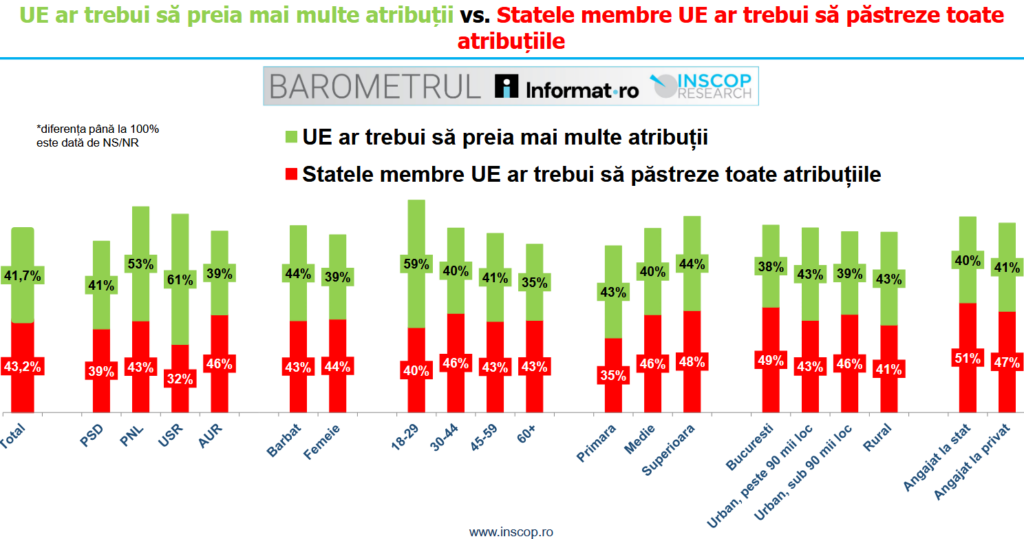
However, when viewed by age groups, the difference is clear:
- 59% of young people aged 18-29 support a larger role for the EU in defense;
- ~40% of adults aged 30-59 agree;
- only 35% of individuals over 60 years old support this idea.
Experts explain this openness among young people through a different socialization process compared to older generations.
For them, Romania's membership in the EU is a self-evident reality, with freedom of movement, European educational programs, and opportunities for study or work within the community space. Transferring responsibilities to the EU is not perceived as a loss of sovereignty but as an investment in security.
- Unprecedented appeal from UK and German military chiefs: We must warn you. Our security has never been so uncertain!
On the other hand, older individuals remain hesitant, seeing security as an essential attribute of the nation-state, and delegating competencies to a supranational structure can be interpreted as a loss of control or vulnerability.
This generational difference not only reflects divergent opinions but also two distinct ways of understanding security: one anchored in the logic of the nation-state and the other oriented towards European cooperation and collective protection.
The division based on political preferences shows that AUR and PSD voters have the greatest reservations about a European army, but they are also the most likely to not know how to respond to this question or simply have no preference.
The survey was conducted between January 12 and 15, 2026, on a sample of 1,100 individuals representative of the Romanian population aged 18 and over, with a maximum error of ±3%.