

When I was a child, this was years before the appearance of computers, video games, and the internet, I played with small plastic soldiers that I collected.
I built forts out of playing cards, transformed furniture items, sometimes even plates and kitchenware, into natural obstacles in front of enemy armies that I deployed on the room’s carpet.
I imagined all sorts of action scenarios, battles, attacks, and defenses. Many times, I wished my colorful plastic figurines would come to life and move on their own, and I would watch like a demiurge a battle between my soldiers.
Much later, video games solved the problem, and today children and teenagers get lost among the thousands of apps where they are little gods deciding the fate of their digital armies.
The image of the card forts I built remained in my memory marked by my childhood effort to raise a structure that would withstand the breeze caused by the opening of the door when my mother called me for dinner or told me I had to do my homework, using only the firm thinness of waxed paper rectangles.
After almost half a century since those attempts, today's Romania gives me an almost unshakable feeling of fragility similar to that construction from my distant childhood.
No more hope
Ravaged by the pandemic, on the brink of war, without allies and without a project, Romania seems poised to collapse at the first firm push of a door that stirs the air around.
The crisis in which Romania is struggling, starting with the annulled elections of 2024, I tried to present as suggestively as possible by referring to an image from childhood. I arrived at it following the statements and warnings made by people much more pragmatic and knowledgeable than me in everything related to the functioning of the state.
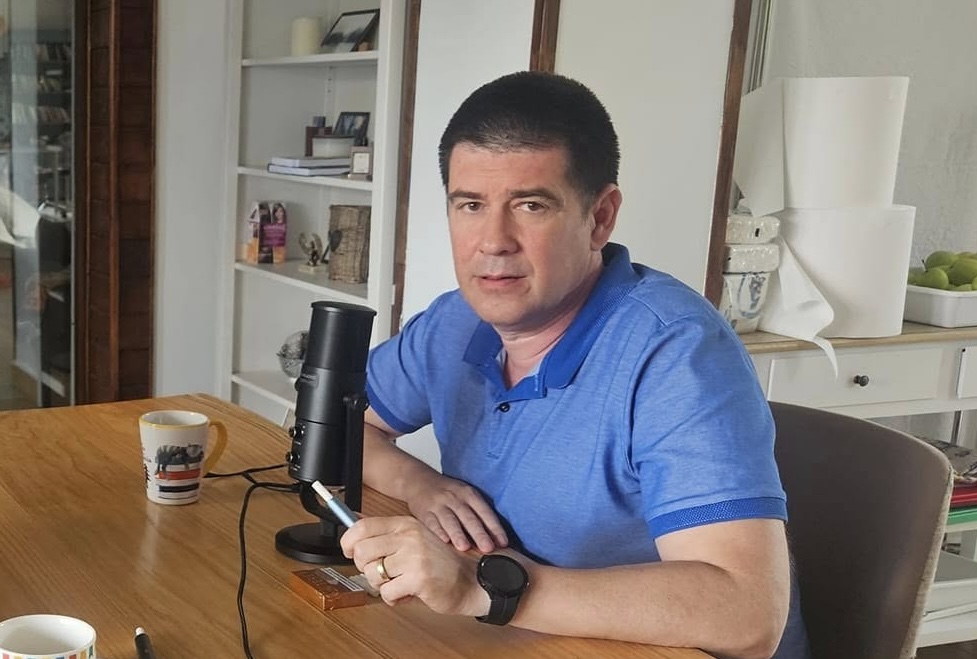
"... we have an exasperated population, lined up behind a populist-extremist force that does not exert pressure for reforms, on the contrary..." - Cristian Hrituc
Photo: Facebook/ Cristian Hrituc
"The events of the past few days show us that there is no longer any balance between the powers of the Romanian state," wrote Cristian Hrituc, former presidential adviser during Traian Băsescu's mandates, on his Facebook page.
"The balance of power is totally tilted to one side, and, unfortunately, that side is the side that desires to maintain the status quo and preserve privileges. As things stand now, there is no more hope for restoring balances through political means or democratic mechanisms," he added.
Overwhelmed by the job's complexity
The positions presented above are just a few of those expressed with great concern by those who notice a generalized deadlock in society, an extreme fragility of the Romanian state, and the lack of reaction from those elected to solve these problems.
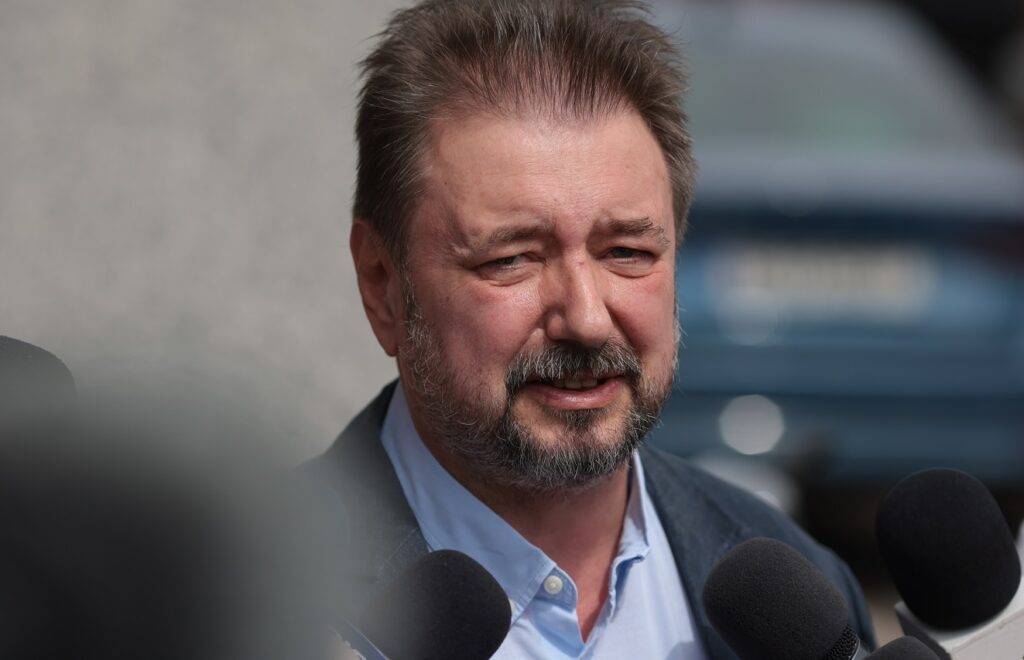
"Romania cannot afford to become a pariah of the European Union at this moment, especially considering that our security depends on Western allies..." - Cristian Pîrvulescu
Photo: George Călin/ Inquam Photos
Nicușor Dan was voted by 6.1 million Romanians, but with each passing day, the main message he conveys, of course unintentionally, is that he feels overwhelmed by the complexity of the job he landed in.
The lack of decisiveness, the slowness in decision-making, distrust in those around him, the inability to build solid political support in Parliament pushes him day by day into a gilded prison whose guards are Grindeanu, Olguța Vasilescu, Lia Savonea, and George Simion.
All the good intentions of the president are politically exploited by his adversaries and destroyed through a quick and consistent reaction.
What was the purpose of the meeting with the magistrates at Cotroceni Palace? What decisions were made? Where is the promised referendum on the system?
From the way Judge Lia Savonea and the four CCR judges she allied with act, the president's attempt to support a reform of the justice system has failed miserably, strengthening the power of corrupt magistrates.
On the other hand, Prime Minister Ilie Bolojan fell into the trap skillfully laid by Sorin Grindeanu and the entire USR barons. They supported him to raise taxes and address urgent deficit issues, and now, when it's time to carry out the reform of local and central administration, Bolojan finds himself alone, hunted by people from his own party.
There were dozens of authoritative voices at the beginning of his mandate who said that any tax increase must go hand in hand with institutional reform, but the prime minister was not prepared for such an approach, preferring a staged one, which proved catastrophic in terms of the trust relationship between authority and citizen.
Different political agendas, hard to understand
But the biggest failure is the relationship between Nicușor Dan and Ilie Bolojan. People came to vote and expressed themselves for a political tandem seen as reformist, incorruptible, and efficient.
In the electoral campaign, both the current president and the current prime minister promoted this image, supported by the majority of public opinion to pull Romania out of the most extensive and profound political crisis since 1990, culminating in the annulment of the presidential elections in November 2024.
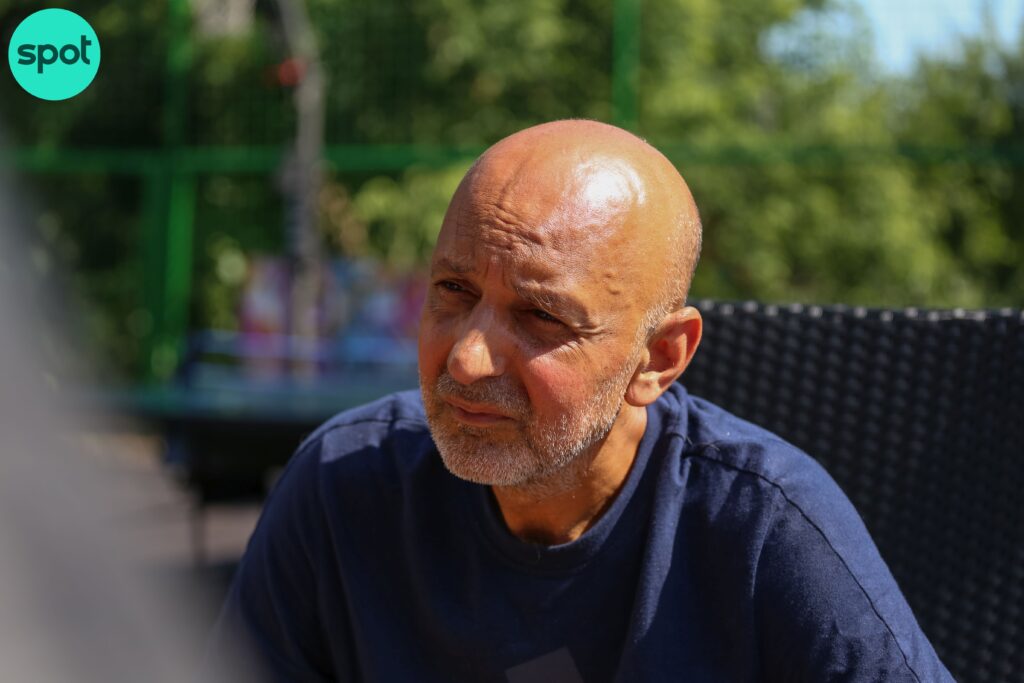
"Common sense in our politics is perceived as a lack of... And we have in politics creatures with an infectiously brazen attitude, who, together with their trumpets from television... will do anything so that the system of sinecures... remains unchanged..." - Valeriu Nicolae
Photo: Alexandru Nistor/ spotmedia.ro
The two, by their behavior, seem to have met for the first time yesterday, each coming from a different country, speaking different languages. There are no messages, strategies, and common coordination, each of the two having different political agendas, without anyone understanding the objectives anymore.
"President Nicușor Dan is making efforts to rise above the tendency to think in the short term. His position and situation oblige him, being an independent without a party behind him and needing to engage with a society that is, to a large extent, hostile or at least suspicious," stated Professor Cristian Pârvulescu in an interview for spotmedia.ro.
"We have passed the critical moment, but the fracture remains. Suspicions regarding the electoral process and how state institutions function are still present and fueled by political actors…," the political scientist added.
It is very difficult to shake off the image that the Cotroceni Palace houses a president struggling to keep a coalition alive, while political leaders consider this effort a weakness and exploit it to destroy his credibility.
It is shocking to see that the ministers of the party founded by the current president are the most attacked, criticized, and demonized, although they have taken on important responsibilities in the government, supported by a large part of public opinion.
It is difficult to explain how Nicușor Dan plans to survive politically in conditions where he fails even to improve his relationship with USR, to turn it into a presidential party, increasing its influence.
In my opinion, if the President of Romania does not quickly break free from constraints and manage to truly become the political leader with the greatest power and influence, through decisions and taking risks, he will soon be neutralized by the informal alliance between PNL, UDMR, and PSD, and suspension will be just a step away.