


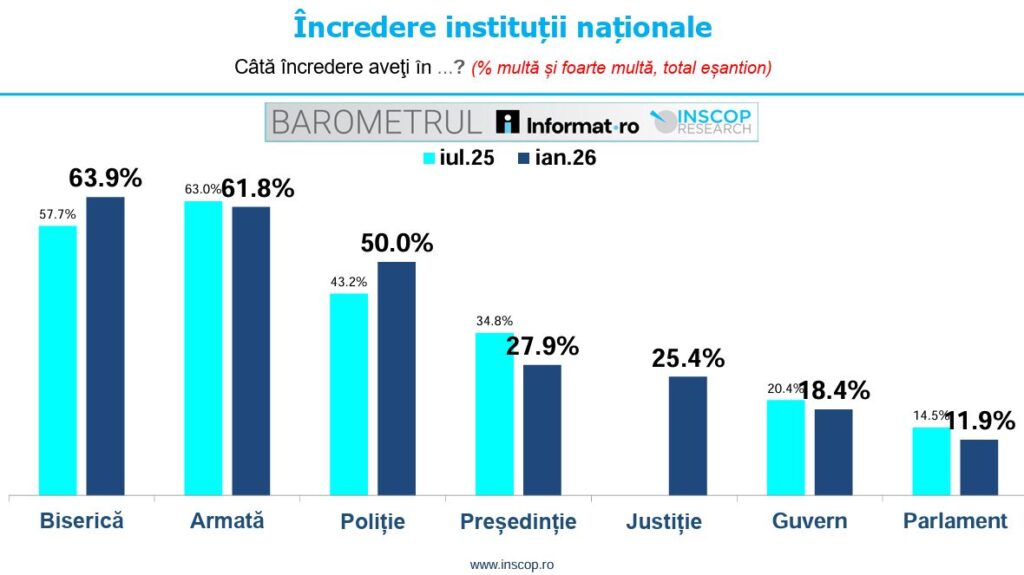
The Church and the Army remain the institutions in which Romanians have the highest trust, while political institutions continue to lose ground. Just over a quarter of respondents declare that they trust the Presidency, with Parliament having the lowest credibility rating.
The data comes from Barometrul Informat.ro – INSCOP Research, conducted on a representative sample of 1,100 people, between January 12-15, 2026.
The Church and the Army, pillars of stability
The Church is the institution in which Romanians have the highest trust: 63.9% of respondents say they have "quite a lot" or "a lot" of trust in this institution, up from 57.7% in July 2025.
In second place is the Army, with 61.8%, a level close to that of last summer (63%).
INSCOP Research Director, Remus Ștefureac, explains this pattern by the fact that Romanians tend to invest trust in institutions perceived as outside of the political game. "The Church and the Army remain symbolic landmarks of stability and identity, a sign that the population seeks anchors of continuity outside of the actual political game," he says.
Police gain ground, but political institutions remain adrift
In third place in the ranking is the Police, with a trust level of 50%, a significant increase from 43.2% in July 2025.
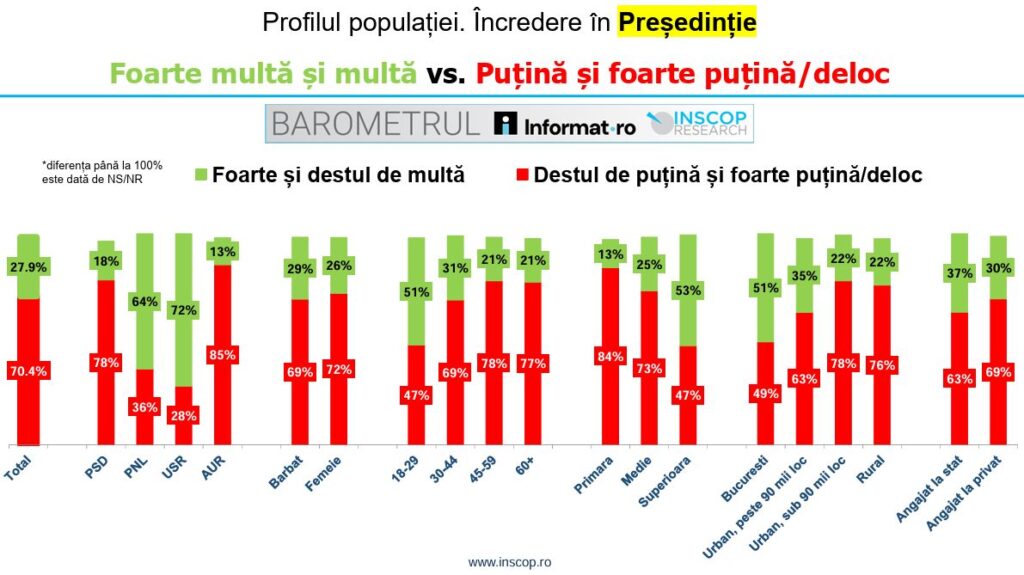
The Presidency is credited with only 27.9% trust, a sharp decrease from 34.8% last summer.
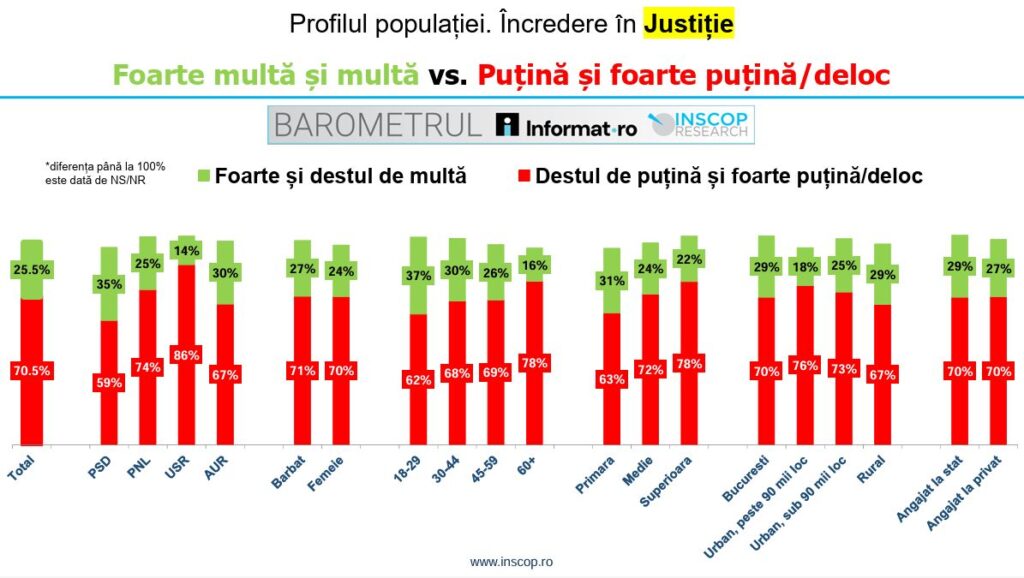
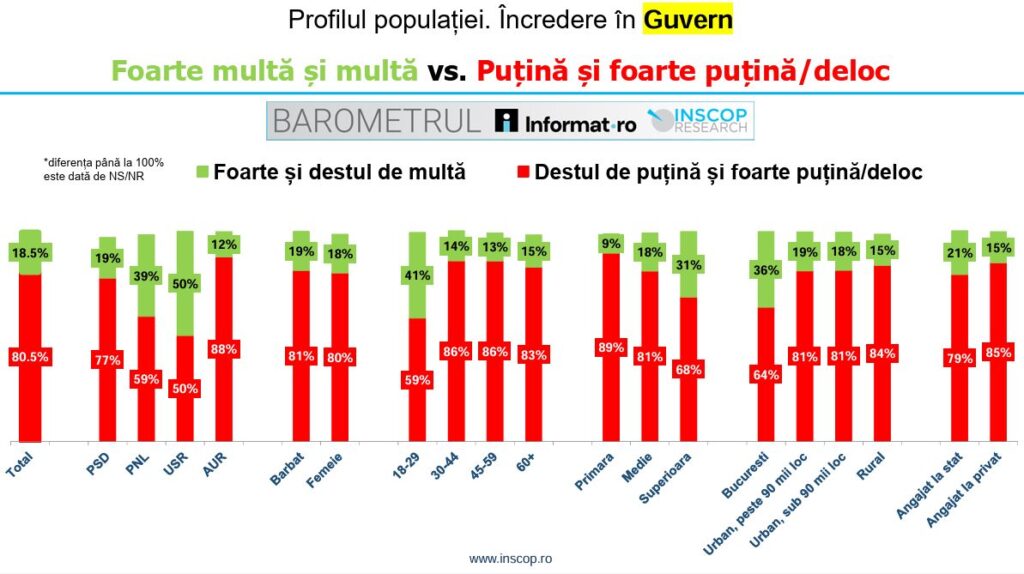
Justice reaches 25.4%, the Government at 18.4%, and Parliament closes the ranking: only 11.9% of Romanians stated that they trust this institution.
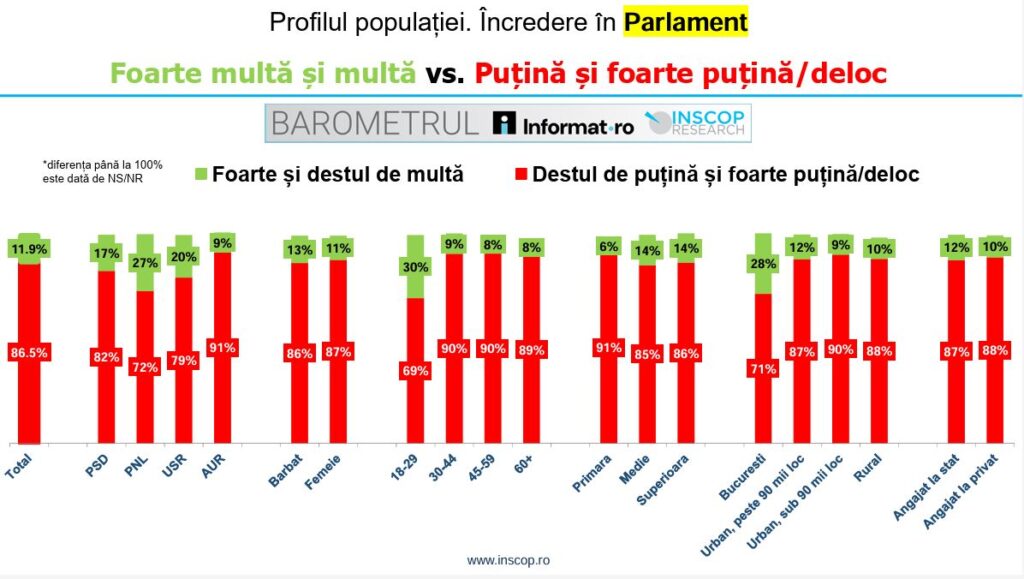
Clear differences between age, education, and political preferences
The data shows well-defined social and electoral cleavages. Trust in the Church is higher among PSD and AUR voters, people over 60 years old, those with primary education, and rural residents. The Army is appreciated especially by PSD and PNL voters, seniors, and the rural population.
The Police enjoys more trust among young people under 30, state employees, and PSD and PNL voters.
The Presidency is supported mainly by PNL and USR voters, young people, those with higher education, and residents of Bucharest and major cities.
A structural credibility deficit, not a momentary dissatisfaction
Remus Ștefureac warns that distrust in political institutions is not a conjunctural one, but a structural one. "Political institutions are trapped in a structural credibility deficit. We are not just talking about momentary dissatisfactions, but about a chronic lack of trust in representative institutions", says the INSCOP Research director.
According to him, the gap between citizens and the classic mechanisms of representative democracy fuels populism, anti-system discourse, and radical forms of political representation, in a context where trust is shifting more towards institutions perceived as "non-political."
The survey was conducted between January 12-15, 2026, using the CATI method (telephone interviews), on a sample of 1,100 people, representative of the non-institutionalized population of Romania, aged over 18. The maximum allowable error is ±3%, at a confidence level of 95%.