
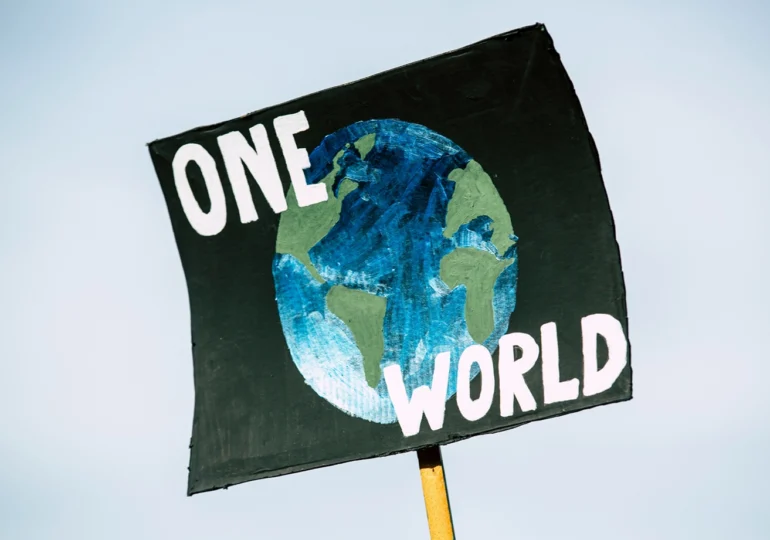
We should not be surprised that the center of gravity of the world is shifting. This is in line with the growth of poorer economies and their proximity to developed countries. Rising powers are naturally reshaping the global landscape into a multipolar one. With this shift, geopolitical pressures intensify, and the system is now under pressure. But as powers struggle among themselves, the entire world becomes insecure.
Shortly after Pierre-Olivier Gourinchas took over as the Chief Economist of the International Monetary Fund in 2022, Russian tanks entered Ukraine. The Russian invasion was to pose a challenge he had not fully anticipated: managing the economic consequences of wars.
Since then, the global economy has had to deal with a series of conflicts - some economic in nature, such as the wave of tariffs imposed by President Trump, and others real, such as the Middle East war involving the United States, Israel, and Iran.
Too often, these shocks are viewed as isolated disruptions. Yet they are interconnected symptoms of a deeper fragmentation reshaping the global economy. This fragmentation, both geopolitical and geoeconomic, risks ushering in what could become a new era of warfare. An era defined not necessarily by constant military confrontation, but by a persistent undercurrent of strategic economic rivalry and constraint, as well as increasing economic insecurity. And, of course, by an increased risk of actual armed conflicts, writes Gourinchas in an article published by The New York Times.
The engine of this transformation is a shift in the world's center of gravity. For decades, the global economic order has been relatively stable, led by the United States and supported by a broad commitment of nations to economic integration.
The IMF, with its 191 member countries, is evidence of this cohesion. That system has favored a remarkable expansion of trade, investment, and living standards. International trade, which is approaching $35 trillion annually, has grown about 20 times since 1960, and the share of the world's population living in extreme poverty has decreased from about 43% in 1990 to 10% today, the expert notes.
A Dangerous Loop
We should not be surprised that the center of gravity of the world is shifting. This is in line with the growth of poorer economies and their proximity to developed countries. Rising powers are naturally reshaping the global landscape into a multipolar one. China is the prime example, but many other advanced and emerging economies in Asia, Latin America, and Eastern Europe have benefited from this expansion over the past 60 years.
With this shift, geopolitical pressures intensify, and the system is now under pressure. This is the paradox. Economic integration has brought substantial gains and created mutual interests that act as a force for peace.
However, integration creates interdependence and, with it, vulnerabilities. It exposes countries to supply disruptions and to points of commercial or financial blockage in energy, critical minerals, or advanced computer chips. And where there are blockages, there is a leverage that can be exploited, as recently demonstrated by Iran.
The result is a dangerous loop. As countries try to insulate themselves from perceived risks, they risk further fragmenting the global economy. This, in turn, encourages further efforts at isolation - through tariffs, industrial policy, financial regulations, export controls, or increased military spending.
There have been such dynamics before, Pierre-Olivier Gourinchas reminds us. The world economy was highly integrated at the beginning of the 20th century, at the peak of trade expansion, capital flows, and immigration led by the British. What followed was a period of intense deglobalization, coinciding with the rise of nationalism and militarization - and with two world wars. To assume that today's economic integration is guaranteed would be a mistake, he believes.
New Fault Lines
The global economy has proven remarkably resilient so far. In response to the war in Iran, energy markets adjusted, and financial markets remained calm. Countries like China, Japan, Korea, and the United States mitigated disruptions by tapping into oil reserves or changing energy sources.
Despite escalating trade tensions, global trade did not decrease but consolidated in 2025. Instead, countries and firms adjusted their trade routes and supply chains. Shocks that could have once triggered systemic collapses were instead absorbed.
However, resilience should not be confused with lack of vulnerability. Risks accumulate beneath the surface. Financial systems built on deep integration - especially around the U.S. dollar - may prove harder to sustain in a fragmented world.
As countries seek to reduce their trade dependence on each other or on the United States, new fault lines may emerge, especially as rapid technological changes generate unprecedented vulnerabilities related to cryptocurrencies, critical minerals, and artificial intelligence.
Those Who Bear the Brunt Rarely Forget the Losses
The deep causes of fragmentation are internal in nature. In many countries, especially in wealthy ones, a large number of citizens believe that globalization has not worked in their favor. Inequalities in income, opportunities, and economic security have fueled discontent. Those who bear the brunt of losses rarely forget.
These political tensions are as important as any geopolitical rivalry and can amplify them in turn.
The question is whether the multipolar world of the future will take the form of opposing blocs - whose contours have not yet crystallized, as evidenced by the disagreements among members at the most recent NATO summit - or of a system based more on cooperation, common rules, and continuous integration. Without a change in direction, we risk sliding towards division, the expert points out.
Increasingly, the world's major powers seek strategic advantages, identify critical control points, adopt inward-oriented policies, and increase military spending, all in the name of resilience and sovereignty. While they may seem rational at an individual level, these actions make the world, as a whole, less secure, less prosperous, and less stable.
Size Matters
Economics is not everything. However, addressing economic issues could be the starting point for remedying more recent geopolitical rifts.
It all begins with recognizing risks. In a world marked by genuine strategic competition and coercive measures, it would be naive to pretend that no change is needed. However, fragmentation does not have to be our destiny. The challenge is not whether to strengthen our resilience but how to do so.
An essential economic lesson in international trade is that size matters. Countries can act to regain their economic weight by joining cooperation groups based on common rules and mutual trust, aimed at increasing resilience without sacrificing openness. At the same time, domestic policies must generate stable and balanced growth nationally. Strengthening social protection and ensuring fair opportunities are essential for both internal and global cohesion.
Evidence suggests that economic coercion tools - such as sanctions, tariffs, and export controls - rarely lead to strategic gains. Often, they accelerate fragmentation and provoke retaliations. Ultimately, such an approach is counterproductive. These tools should be used with moderation, according to Gourinchas.
A New Era of Warfare
Ultimately, international institutions cannot retreat in the face of these challenges; on the contrary, cooperation must adapt and deepen. Common issues - such as artificial intelligence, financial stability, climate change, and migration - cannot be managed by countries acting in isolation. A multipolar world requires increased coordination, not diminished.
The IMF continues to play a crucial role. The institution helps countries build stronger economies and, with current lending commitments exceeding $123 billion, provides financial support in times of crisis, as well as a platform where cooperation remains possible even when international relations become tense.
Institutions like the IMF arose from the ashes of the Second World War - one of the most tragic periods in our modern history - with the mandate to promote global economic cooperation and thus contribute to growth and common prosperity.
This ideal remains as relevant today. A new era of warfare is possible, but it is not inevitable, concludes the expert.
T.D.