

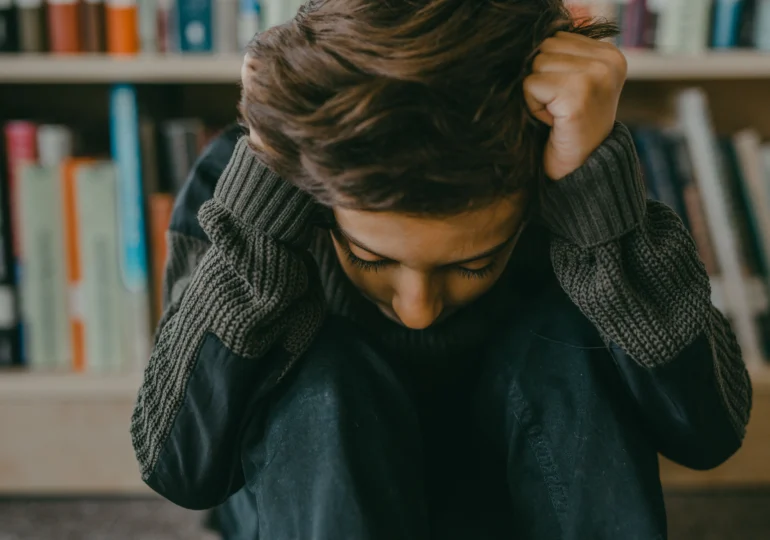
In just a few days, Romania has faced two serious incidents of violence in schools. A 13-year-old 7th-grade student came to school on Monday, October 19, wearing a military helmet, a balaclava, and a knife. He intended to attack a 6th-grade student, whom he considered „Indian” because of his darker skin tone. He was stopped by a 28-year-old math teacher, whom he hit multiple times. According to prosecutors, the attack was premeditated.
Three days later, a 9th-grade student from the „Armand Călinescu” Technical College in Pitești came to school with a machete and attacked two classmates. He wanted to retaliate for the jokes they made about him.
Authorities reacted promptly. The new Minister of Education, Sorin Costreie, stated that he is considering checking backpacks at the entrance and installing metal detectors. He also proposed doubling the penalties for assaults against teachers. The government announced an integrated plan for school safety.
We wanted to find out what happens beyond the school gate. What the school doesn't see and where the chain breaks. We spoke with Andreea Goliță, a psychologist and former school counselor who has worked on several anti-bullying projects, from kindergartens to industrial high schools.
- The student who attacked his classmates with a machete was detained. He may have been a bullying victim. Reactions from Cotroceni and the Government
- The knife attack in Bistrița: Six students and a teacher received protection orders
"Prevention, for us, means to identify the deed"
For Andreea Goliță, the underlying problem is that the system reacts only after something has happened. "Currently, prevention boils down to identifying deeds already committed: the teacher sees the aggression and sends the child to the school counselor. But the counselor doesn't have a magic wand," she says.
And teachers, the psychologist adds, are not prepared to recognize a suffering child. They are more prepared to recognize a child who breaks the rules.
Solutions, in short
- Solution 1: Crisis cell in every school
- Solution 2: Teachers trained for relationships, not just subjects
- Solution 3: Counselor focused on prevention, not just emergency interventions
- Solution 4: Parent, obligatory partner of the school
- Solution 5: Gradual sanctions and redefining conduct grades

A crisis cell in every school
The first measure she proposes is a clear procedure for when conventional methods no longer work with a student.
"The educator should not be turned into a behavioral psychologist. But when they notice that conventional methods are not working, there should be clear procedures. For example, a crisis cell at the school level, with the principal, the school counselor, and the teachers, where difficult cases are discussed and measures are established," says Andreea Goliță.
From her experience, procedures often exist on paper, but no one knows how to apply them. She was a school counselor in Brăila in 2014 and says that "teachers didn't know who to turn to in a specific situation." In an anti-bullying project in kindergartens, she saw teachers who signed regulations without knowing who was responsible. Some service teachers were afraid to let the children out in the yard. "Fear was instilled in teachers without practical conflict management tools being provided," says Andreea Goliță.
Teachers need to learn how to manage conflicts
The second solution involves the training of teachers. Andreea Goliță says that periodic pedagogy courses and professional retraining, adapted to today's generations and the digital age, should be reintroduced.
"Today's generations are raised more autonomously, they know their voice matters, which is good, but teachers are overwhelmed. They lack the skills to step down from the pedestal and joke with students without losing their authority," points out the psychologist.
Goliță proposes models borrowed from the corporate environment, where communication training tailored to personality types is conducted. A teacher should be able to recognize if a child has an anxious attachment, if they are more emotional, cognitive, or rebellious. "Provocative behaviors are not necessarily a problem in themselves but a manifestation of a typology. With the right communication skills, the teacher can help the child respect the rules," says Andreea Goliță.
The psychologist also emphasizes simulations. Teachers should be trained on specific scenarios, similar to emergency situation exercises: what to do when a student becomes verbally aggressive, when a teacher is intimidated, or when a conflict escalates during class.
The school counselor, a prevention resource, not a firefighter
The school counselor should work in prevention, not be called only for emergencies, says Andreea Goliță. In reality, they are buried in bureaucracy and only reach a case after violence has occurred, "a moment when their possibilities for action are extremely limited."
There is also a training issue. The law requires counselors to have only a master's degree in school counseling. A training in psychotherapy lasts four years and is expensive, so many do not have it. The proposed solution: the ministry or inspectorates should reimburse these trainings and expand the legal attributions of counselors.
In addition, schools do not have specialized sets of psychological tests, standardized tools through which certain emotional difficulties, behavioral issues, or mental disorders can be evaluated. Clinical assessments require specific skills and cannot be automatically performed by any school counselor. They mainly use counseling and educational evaluation tools, such as questionnaires for school and career guidance. For a child with worrying behaviors, a multidisciplinary team with a clinical psychologist and psychiatrist is needed.
The parent, obliged to be a partner
Perhaps the most sensitive point is the relationship with the family. "A child who resorts to extreme violent acts rarely comes from a balanced family," says the psychologist. And if a parent refuses to collaborate or denies the problem, the school remains powerless today.
"School is mandatory, but there should also be rules that compel the parent to collaborate when the child shows major difficulties," says Andreea Goliță, who goes further and proposes sanctions that involve the material or legal responsibility of parents.
A good example comes from Primary School No. 179 in Bucharest, with which she collaborated. Through a project with European funds for children with special educational needs, the school did not limit itself to training teachers. It hired companions for children, set up a sensory garden where a child who cannot cope in class can go, and organized meetings between all parents and specialists, including speech therapists. The goal was for parents to understand that impulsive behavior does not automatically mean bullying or violence.
Gradual sanctions and a different conduct grade
Andreea Goliță believes that schools need clear, gradually applied sanctions that have real consequences for students with serious deviations.
In her opinion, disciplinary measures should not be limited to punishing the child but should aim to change behavior, involving parents and specialists.
The psychologist points out that moving or expelling a student does not necessarily solve the problem that led to violent behavior. Therefore, sanctions should be accompanied by educational and psychological interventions.
Even conduct grades do not help much. Andreea Goliță recounts that a school inspector told her that the main anti-bullying tool is lowering the conduct grade. "It's just a punishment tool that doesn't prevent anything."
Goliță proposes that the conduct grade should not only be a sanction for disciplinary violations but should also reflect how the student learns to collaborate with others, respect the rules, and manage their emotions. The assessment should be based on clear criteria and scores, so that the child's progress, not just their mistakes, matters.
Metal detectors can stop an attack, but not the causes of violence
After the Bistrița attack, the new Minister of Education proposed introducing metal detectors and checking students' backpacks as measures to prevent violence in schools.
Andreea Goliță does not dismiss security measures. "Control has its role, just as traffic lights provide a safety framework in traffic. However, control only temporarily blocks the manifestation of a behavior without solving the cause. If a child has an extremely low tolerance to frustration, physical control does not guarantee that they will not erupt violently at another time," says the psychologist, adding that the two must go hand in hand. A safety infrastructure reduces teachers' anxiety and can make them more open in their relationship with students.
What should be done in the next six months
Asked what the Ministry of Education should do in the short term, Andreea Goliță proposes a multi-faceted approach simultaneously:
- Immediate safety: security filters where needed and clear control procedures.
- Applicable sanctions: including parental responsibility, to become active partners.
- Teacher training: practical programs on student personality types, warning signs, and conflict management.
- A new role for the school counselor: expanded duties and training in psychotherapy and clinical psychology funded by the state.
- Practiced crisis scenarios: simulations for situations where a conflict escalates.
For Andreea Goliță, the essential change is for schools not to wait for an incident to occur before intervening. Teachers need to know how to recognize warning signs and who to ask for help, counselors need time and tools for prevention, and parents need to be involved before children's problems worsen.
"People are starting to realize that a systemic intervention is needed," says the psychologist. Otherwise, the school risks remaining in a cycle of sanctions and security measures taken after each new incident, without sufficiently addressing the causes of violence.