

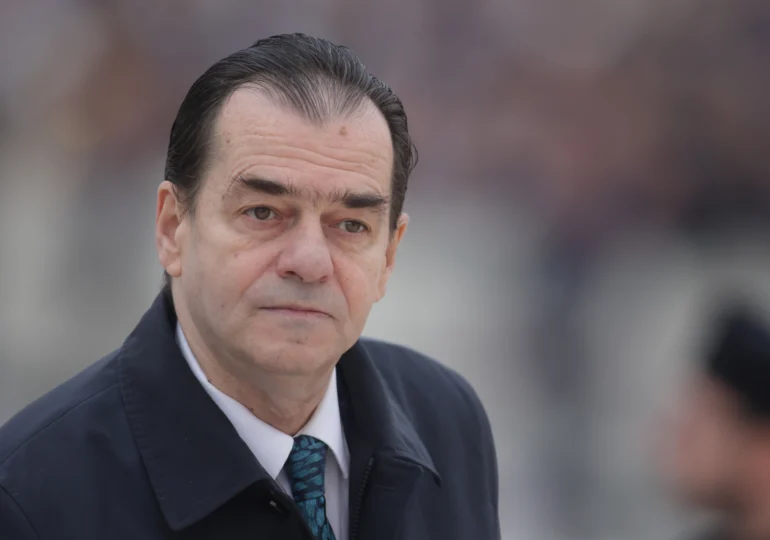
A reaction from the SRI (Romanian Intelligence Service), published exactly on the day when the new PSD government was voted in Parliament, reignites the debate about the crisis of the secret services and the lack of civilian control over them.
After Russia's strong attack at the end of 2024, when the entire electoral process in Romania was compromised, many called for a reform of the secret services.
The current President of Romania promised this reform during the electoral campaign and a detailed report on the huge security breach in November 2024. Nothing happened.
On October 20, shortly after the vote in Parliament for a new government, following a half-year political crisis, the SRI released a critical reaction to Ludovic Orban, former Prime Minister, former leader of the PNL, and former presidential advisor, who accused the SRI of political involvement.
It should be noted that since its establishment, the SRI has been accused of being the successor of Nicolae Ceaușescu's former Securitate and of being deeply involved in influencing and shaping the political life in Romania.
There is a whole literature on this topic, press investigations, and testimonies from politicians, historians, writers, and journalists.
What was unprecedented in this reaction is the official stance taken by the SRI regarding the political statements of a Romanian citizen, a fact unheard of until now.
"Following the statements made by Mr. Ludovic Orban on public television on October 20, the SRI considers regrettable and irresponsible the repeated launching of unfounded accusations in the public space, attributing political involvement to the institution without any evidence," the SRI announced in their statement.
The Conflict Surrounding the Cybersecurity Law
Ludovic Orban has criticized the SRI since the 2000s, and in an interview with SpotMedia.ro after this clash with Romania's main secret service, he said that he had never received any reaction from the agency before.
"The SRI has never reacted, not even when we destroyed the cybersecurity law in 2014, when they were seeking to have access to all digital communications without a warrant," Ludovic Orban declared exclusively to SpotMedia.ro.
"In 2014, between the presidential elections won by Iohannis and the moment he was to take the oath, the SRI wanted to pass the Cybersecurity Law. At that time, I was the group leader in the Chamber of Deputies. The law passed almost unanimously, I think there was only one abstention in the Senate, and the Chamber of Deputies had the final say.
"And, against the will of Iohannis and the co-presidents Alina Gorghiu and Vasile Blaga, we challenged the Cybersecurity Law at the Constitutional Court. The law imposed the obligation for anyone, from a WhatsApp group to telecommunications companies, to provide any recording requested by intelligence officers, without any warrant from a judge," Ludovic Orban recounted.
At the Constitutional Court, the law was rejected, and the SRI's powers were not expanded.
The Failure Has a Double Responsibility
"The political success or failure of political parties or individuals, because of or due to the SRI, is a constant theme in public rhetoric, which can signify the lack of accountability for political or institutional decisions and their consequences," the SRI statement further specifies.
"The repetitive nature in the public space of suburban language towards the Service and its leadership triggers this reaction…," explained the intelligence agency's representatives.
But the institution's position is based on a fragile foundation, that of chronic mistrust of the population in the SRI, stemming from the shadows of the events of December 1989, continuing with the context in which the SRI was established, the interethnic conflict in Târgu Mureș in March 1990, and the ties of the first director, Virgil Măgureanu, with Moscow.
The SRI has never managed to convincingly address the perception that it is a continuation of the former Securitate, shed light on the Iliescu-Măgureanu era, and truly detach itself from Romanian political life.
It must be noted here that the service's involvement in politics is primarily imposed by the Presidents of Romania, the supreme military commanders, who use the agency to resolve their election-related issues, public support, competitors, and opponents.
SRI, Serious Mistake
In the absence of a functional and transparent civilian control, over time, the service's involvement in politics has become stronger and more evident, generating increasing distrust.
Thus, the situation has arisen where the SRI writes editorials on social networks criticizing politicians for their critiques, while for two years they have been dealing with Călin Georgescu, a traitor and agent of a hostile power to Romania, unable to neutralize his influence and cut off his funding.
"I think the SRI made a serious mistake. A deviation from the legal framework. I had a political stance, and the statement refers to my words. The SRI engaged in a controversy with a political leader. And indeed, not just any person, but a person who systematically criticized the omniscience, omnipotence, and omnipresence of the services," stated Ludovic Orban, the president of the "Forța Dreptei" party.
In a TVR show, Ludovic Orban stated, "The services assured Nicușor Dan that the PSD would be a long-term party, which would respect its agreements with the current president…".
"I believe… Yes, the unknown Mr. Ionescu (referring to General Răzvan Ionescu, SRI's deputy director - ed.) who leads in a sly manner, illegally. It's the president's fault, he leads because he's a military…," added the former Prime Minister of Romania.
These references have sparked the fury of the SRI, which maintains that, "regarding the interim leadership of the institution, it is neither secret nor outside the law. And in no way 'sly.' The identity of the person who ensures the interim is public, and the legality of exercising the function is not a matter of opinion, but in accordance with the law…".
Was Nicușor Dan Informed of the Statement?
The SRI's position has triggered criticism from other politicians as well, sparking a debate on social networks, with many expressing their bewilderment at the agency's move.
"Beyond the scandalous targeting of Ludovic Orban, one of the few politicians critical of the SRI, it is evident that the service lacks the exercise of public communication. And when I say this, I refer to the fact that the SRI has issued so few press releases in the last ten years that when they did, it became almost an event…," wrote journalist Emilia Șercan, in a post on her Facebook page.
In his discussion with SpotMedia.ro, Ludovic Orban believes that the President was not informed about the SRI's intention to issue such a statement.
"It's a military institution. Normally, they listen to the supreme commander. But in this case, they may not have asked for his approval. Or, if they did, they may not have necessarily requested it from Nicușor Dan, but from a presidential advisor," explained the former PNL leader.
Power Games Surface
The official position of the SRI is problematic because "those who excuse themselves accuse themselves," as Ludovic Orban commented on the statement, indicating a strong internal crisis within the agency, chronic due to the lack of a civilian director and the context created by Russia's hybrid attacks.
Unfortunately, Nicușor Dan has not managed to resolve the deadlock in which the main intelligence agencies in Romania find themselves, facing an unknown environment - that of hybrid warfare with Russia, for which they were not prepared and were caught off guard.
The head of state avoided appointing directors at the SRI and SIE, lacked the ability to negotiate with political parties, and had no strategy to assert his will in front of them, thus getting lost in a labyrinth of power games that erupted yesterday.