

Since the end of December 1989, when Romania once again has a free press, not always independent and often influenced, society has changed profoundly, in many waves, and not for the worse, as the apostles of the apocalypse, populists of all colors, and communism nostalgics try to portray.
My profession has changed significantly and in waves, embracing all technological revolutions, economic and political crises.
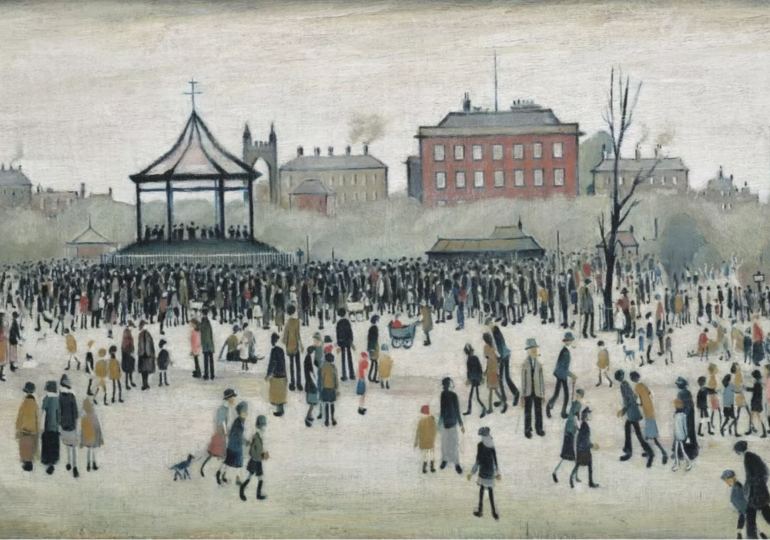
Over three decades, thousands of political leaders, sociologists, futurists, and influencers of all kinds have sung the requiem of journalism. But as Mrs. Lowry, the mother of British painter L.S. Lowry (1887-1976), who read the newspaper devoutly every day while her son asked her why, upset by a highly critical review of a painting he exhibited in the town hall of Pendlebury, Lancashire, replied curtly: „Because people need guidance.”
The quote is from the movie Mrs. Lowry & Son, a 2019 production starring the phenomenal Vanessa Redgrave and Timothy Spall. I don't know if the contradictory dialogue actually took place, but until I saw the movie, I never quite understood the complicated relationship between journalists and readers.
Those few words were, for me, relevant and, above all, clarified in my mind both the ultimate objective of those who chose this profession and the insatiable curiosity of readers.
Yes, of course, journalism has changed and continues to change, readers have changed and are changing, shaped by the evolution of the society we live in, but even today, just like 100 years ago when Mrs. Lowry devoutly read the newspaper, people have needed reporters, editors, editorialists, photojournalists, graphic designers, cartoonists, to help them understand the complexity of daily life, supporting them in making decisions in a world that is often so hard to comprehend.
Journalists have the bad habit of maximizing their impact on public opinion, and readers of minimizing the need for guidance from the media, but in my opinion, this is a problem that stems from human nature and societal relationships, not from the role of the profession and the general perception of journalistic practice.
I decided to write these lines to express my gratitude to my colleagues in the press, who work under difficult conditions, with low and uncertain salaries and pensions, and also to the audience that remains as eager for information, news, interviews, analysis articles, documentaries, investigations, and reports as always.
In the '90s, newspapers of all kinds had large circulations (number of copies), but many of us at that time considered them insufficient, believing that people don't read, and if they do, they are superficial.
Today, many claim that more reading was done back then, but in my opinion, this is a false idea. A news piece published in a corner of a newspaper would have a few hundred views. Today, there are infinitely more communication sources, and people read, follow journalistic products in significantly larger numbers.
An article published online can have hundreds of thousands of reads in a single day if it touches on a truly interesting topic, and this is not about sports or celebrities, which consistently attract the attention of many people.

The advent of the Internet and then social networks has changed both the way journalism is done and how political leaders, business elites, and state institutions have started to communicate with people.
Every political party dreams of controlling the public agenda, meaning the information that reaches people; every political leader strictly controls what they communicate today, their message being filtered through personal social media accounts.
Although those in power, at one time or another, hope and sometimes believe they can shape the public discourse in their own interest, they quickly realize that the Internet, social networks, and new media products have greatly expanded the possibilities for both the Opposition and ordinary citizens to react, take a stand, and expose the abuses and corruption of those in power.
The new, more fragmented and varied media landscape has created an even greater need for independent journalists, in whom the public can trust to present the facts, analyze them, and provide people with the necessary information to make objective decisions.
Yes, there is a lot of background noise in society. We have noisy politicians promoting conspiracy theories, all sorts of phantasms that frighten people, make them lose touch with reality, and allow themselves to be manipulated in a complicated world.
It is entirely true, but there are also those who cannot be deceived, and even more importantly, understand the democratic game, and these latter individuals somehow manage, sooner or later, to convey to others the facts, the truth, and an accurate description of reality.
At the end of November 2025, I was surprised by a message from the National Health Insurance House announcing: "2025 is the year when trust in vaccines returns strongly!" The brief report indicates the increased demand for vaccines for certain conditions, such as a 49% increase in demand for immunization against HPV virus, responsible for cervical cancer.
So, after the most odious anti-vaccine campaign, launched by Russia during the pandemic on a global scale, supported by a whole range of far-right movements, a campaign responsible for the deaths of thousands and thousands of people, under which science was marginalized, medical professions trampled, and common sense disregarded, a large part of the public began to understand the toxicity of this type of propaganda and turned to facts, reality, seeking protection for themselves and their loved ones in medical treatments recommended by specialists rather than in unfounded claims.
In my opinion, the main role of journalism is to stick close to the facts, and no matter how one chooses to present and interpret them, it must do so in the most accurate way possible, using reference arguments that are transparent and verifiable, in the general interest of the community, regardless of the immediate reaction of a portion of the public.
When a journalist abdicates this role, they turn into something else - a lobbyist, public relations agent, influencer, TV star, politician, spokesperson, anything but a journalist.
I have the utmost respect for the professions listed above; they are important and a necessity in society. The examples are given only to better outline what independent journalism means in relation to other roles that, in numerous situations, are confused, whether intentionally or not, with that of a journalist.
Today's world is neither good nor bad; it is just different from the one in which I started this profession. In the '90s, there were legionnaires, fascists, extremists. There was corruption, imperfect justice, politicians with personal objectives radically different from those presented in electoral campaigns. Something is different, however. Today, the public is much more informed and active, despite the general pessimism, and journalists have not laid down their arms, with the new generations of professionals being much better prepared, determined to do their job under any circumstances. Merry Christmas, good people! Be kind to one another.