
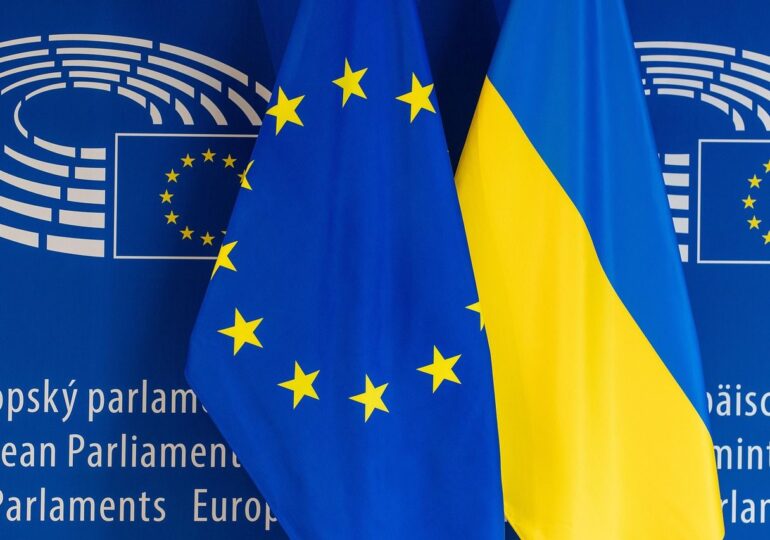
Ambassadors of the European Union countries approved on Wednesday the details of a 90 billion euro loan for Ukraine.
The initiative was agreed upon by EU leaders in December to meet Kiev’s financial needs for the period 2026-2027 and to continue the fight against Russia’s invasion, as reported by Reuters and Politico.
Ambassadors reached an agreement during a closed-door meeting in Brussels.
The text of the agreement has not been made public, but the EU Council stated in a press release that two-thirds of the funds will be spent on military aid and one-third on general budget support.
Regarding military aid, the agreement stipulates that Kiev should primarily use the loan to purchase weapons from Ukraine or the EU, but could also buy from other countries if certain conditions are met.
"Defense materials should, in principle, be purchased only from companies in the EU, Ukraine, or EEA-EFTA countries. In the event that Ukraine's military needs require the urgent delivery of a defense product that is not available in the EU, Ukraine, or an EEA-EFTA country (Norway, Iceland, Liechtenstein, and Switzerland), specific derogations will apply," stated the Council.
The agreement also requires approval from the European Parliament, which diplomats hope to obtain soon, to allow the Commission to begin loans on the markets and make an initial payment to Ukraine in early April.
Dispute
Without this loan, Ukraine risked running out of cash by April, which would have been catastrophic for its war effort and could have paralyzed its negotiation efforts within the peace talks with Russia mediated by the US.
EU lawmakers still have a few obstacles to overcome, such as reaching an agreement on the conditions Ukraine must meet to receive the payment, before Brussels can raise funds to finance the loan, supported by the EU's seven-year budget.
An important point of contention among EU countries has been how Ukraine will be able to spend the money and who will benefit from it.
France led efforts to ensure that Ukraine would allocate as much of this money as possible to EU defense companies, considering that the annual 3 billion euro bill for covering interest payments on the loan is borne by European taxpayers.
However, Germany, the Netherlands, and Scandinavian countries insisted on granting Ukraine as much flexibility as possible.
The draft agreement, consulted by Politico, will allow Ukraine to purchase essential weapons from third countries - including the US and the UK - either when equivalent products are not available in the EU or in cases of urgent need, while also strengthening EU oversight of these derogations.
The list of weapons that Kiev will be able to acquire outside the bloc includes air defense and anti-missile systems, ammunition for fighter aircraft, and long-range attack capabilities.
If the UK or other third countries, such as South Korea, which have security agreements with the EU and have assisted Ukraine, wish to participate in public procurement agreements beyond this framework, they will need to contribute financially to help cover the loan's interest payments.
The text also mentions that a contribution from non-EU countries - to be agreed upon in future negotiations with the European Commission - should be proportional to how much their defense firms could benefit from participating in this program.
Canada, which already has a participation agreement in the separate EU SAFE arms loan scheme worth 150 billion euros, will not need to pay additionally to participate in the program for Ukraine, but will need to detail the products that could be purchased by Kiev.
Next Steps
Now that ambassadors have reached an agreement, the European Parliament must examine the legal text changes made by the Council before approving the measure. If everything goes smoothly, Kiev will receive 45 billion euros from the EU in installments this year. The remaining funds will arrive in 2027.
Ukraine will repay the money only if Moscow ends its large-scale invasion and pays war reparations. If Russia refuses, the EU will consider seizing Kremlin's frozen assets in financial institutions across the union.
Although the loan will allow Ukrainian forces to continue the fight, the amount will not cover all of Kiev's financial needs, even with another round of loans worth 8 billion dollars expected from the International Monetary Fund.
According to IMF estimates, Kiev would need at least 135 billion euros to support its military and budgetary needs this year and the next.
Meanwhile, US and EU officials are working on a plan to reconstruct Ukraine, aiming to attract 800 billion dollars in public and private funds over a 10-year period.
For this to happen, the eastern front must first calm down - a distant possibility at this moment.