

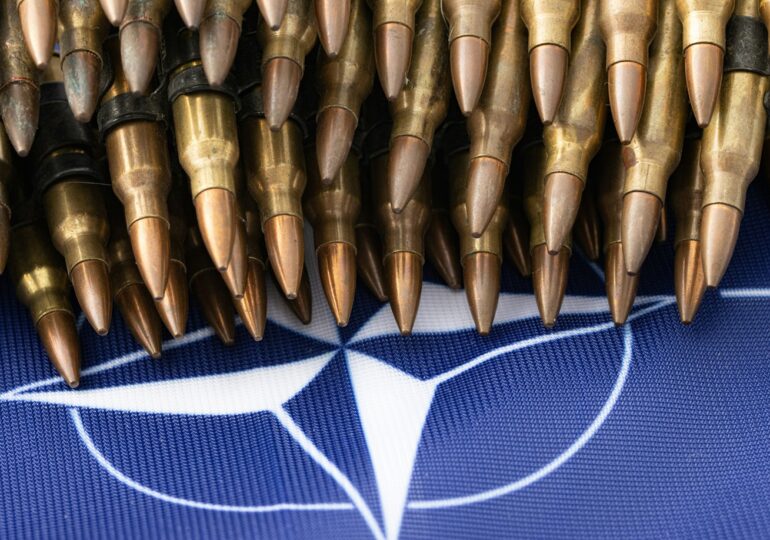
Former U.S. presidential envoy for Ukraine, retired Lt. Gen. Keith Kellogg, accuses NATO of cowardice in the context of the war in Iran and proposes the creation of a new international defense alliance.
Kellogg argued in an interview with Fox News that NATO has failed to adequately address major global security challenges and suggested that the United States should reconsider the current structure of the alliance.
"NATO is proving to be cowardly. Maybe we need a new NATO, a new defensive institution," Kellogg said.
He mentioned Article 13 of the North Atlantic Treaty, which allows member states to withdraw after a one-year notice, as a possible exit route for the United States from NATO.
5 allies for a new NATO
At the same time, the former presidential representative highlighted a possible alternative bloc that could include countries willing to take on a more active military role. He named Japan, Australia, Germany, Poland, and Ukraine among potential partners.
"Let's realign the defense alignments we have," he said, adding that Ukraine "has proven to be a good ally."
Other former officials from the Trump era have also echoed the American president's criticisms of NATO, albeit less detailed, as noted by Kyiv Post. Former Deputy National Security Advisor Victoria Coates described the alliance as "irrelevant," arguing that it has failed to address the biggest war in Europe since World War II.
Former Secretary of State Mike Pompeo also expressed concern, labeling the current NATO situation as "heartbreaking" and calling for a broader reassessment of U.S. alliances. "I think there needs to be a fundamental rethinking," Pompeo said, referring to how Washington defines and relies on its partners.
Why Trump got upset with NATO
Donald Trump stated that he seriously considers withdrawing the United States from NATO after allies did not support his military initiative regarding the reopening of the Strait of Hormuz amid the conflict with Iran.
"Oh, yeah, I would say it's beyond just being reconsidered. I've never been convinced of NATO. I've always known they're a paper tiger, and Putin knows that too, by the way," he told The Telegraph.
Trump harshly criticized the lack of involvement from European partners, stating that their refusal to send military ships to the Gulf shows that Europe is no longer a reliable partner.
Trump's statements came as the Strait of Hormuz, through which approximately 20% of the world's oil transits, has been blocked by Iran for several weeks, leading to energy price hikes and fears of a global recession.
The American president argued that allies' support for unblocking the strait should have been automatic: "Besides the fact that they weren't there, it was hard to believe. And we didn't put a lot of pressure. I just said, 'Hey,' you know, I didn't push too hard. I just think it should be automatic."
He presented NATO's refusal to engage in the Gulf as a failure of burden-sharing within the alliance, arguing that the U.S. has consistently supported allies, including Ukraine, without receiving the same support in return.
U.S. withdrawal from NATO, a complicated venture
Washington's strained relationship with NATO has reignited the debate over Article 5, which applies only when a member state is attacked, not to offensive operations like the current conflict with Iran.
American Secretary of State Marco Rubio stated that the U.S. may need to reassess if the Alliance still serves its original purpose.
"We will have to reexamine whether this alliance still serves or not that purpose or if it has now become a one-way street where America is simply able to defend Europe, but when we need our allies' help, they will deny us the right to have bases and deny us overflights," Rubio said.
Despite Trump's remarks, the U.S. withdrawal from NATO would face legal obstacles. A 2023 law requires Congress approval before any such action.
However, this does not prevent Trump from refusing (if needed) the assistance requested by a NATO country under attack, which would, in fact, equate to withdrawing from the defense alliance.
According to The Telegraph, the U.S. administration is also considering broader changes to the Alliance, including linking decision-making power to defense spending, a move that would marginalize members failing to meet funding objectives.