

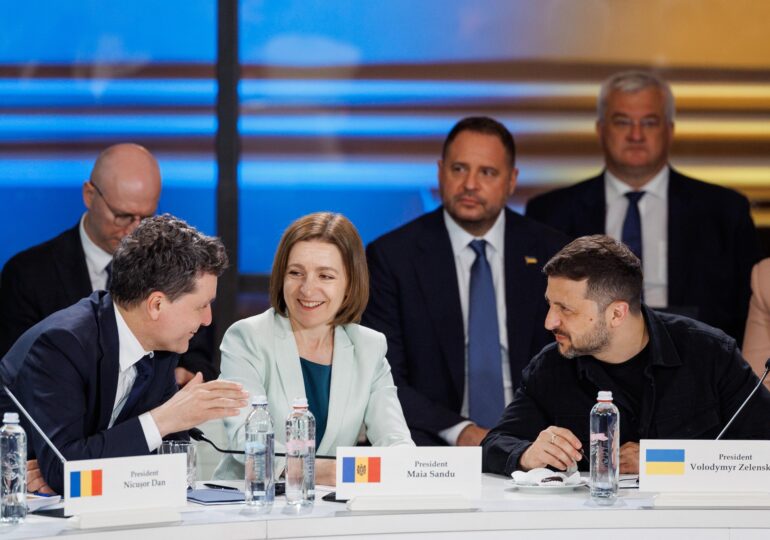
Maia Sandu publicly stated for the first time that she would support reunification with Romania if a referendum were to take place on this matter.
Maia Sandu granted an extensive interview to British journalists Rory Stewart and Alastair Campbell, conducted in Chișinău.
The Moldovan head of state discussed Russia's pressures, the vulnerabilities of her small country, and the fact that integration into the European Union remains the most realistic objective for now.
Sandu explained that her choice is determined by the geopolitical context and the increasing difficulty for a small country to maintain its sovereignty and democracy. "If we had a referendum, I would vote for reunification with Romania. Why? Because we see what is happening around us. For a small country like Moldova, it is hard to survive, especially under Russia's pressure, as a democratic and sovereign country," stated the president.
However, she emphasized that currently there is no majority in favor of reunification. "As the President of Moldova, I understand that there is no majority supporting reunification with Romania, but there is a majority supporting EU accession, and we are acting towards that goal. It is a much more realistic objective and helps us protect our sovereignty," declared Maia Sandu.
Referring to the 1980s and the national revival movements, the leader from Chișinău said: "At the end of the 1980s, there were national revival movements and, of course, discussions about reunification with Romania. However, we did not have a referendum back then, but if we look at the hundreds of thousands of people who participated in those movements and took to the streets, we can say that there would have been significant support for reunification."
Watch the full interview in English. Statements about reunification, at minute 7.

In the same interview, Maia Sandu warned about Russia's ambitions and the Kremlin's influence on democratic processes in Europe, stating that Vladimir Putin aims to control Europe and that his involvement in the internal affairs of European states is broader than currently perceived.