

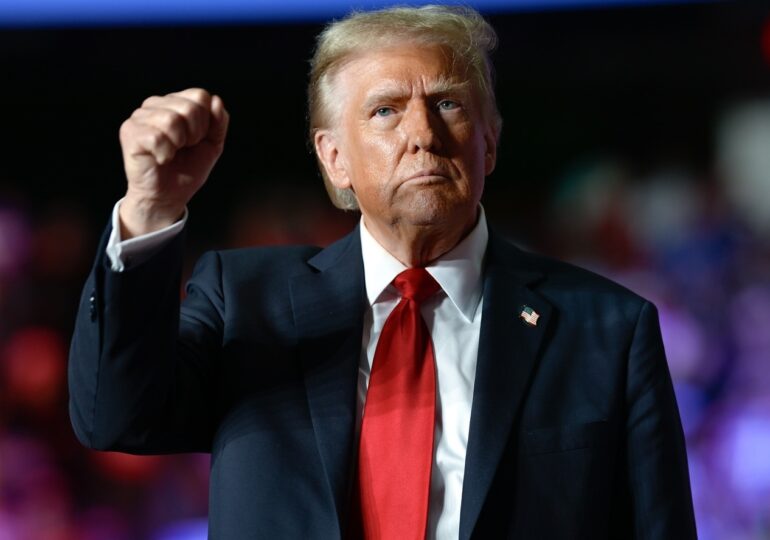
An EU leaders summit, scheduled for Thursday, will test whether the bloc will stand united or if Donald Trump can divide it.
A high-stakes disagreement among European governments regarding the use of frozen Russian assets to finance Ukraine’s reconstruction reveals a deeper division across the continent on how to manage a new world order and unprecedented pressure from the US, comments Politico.
"They want to weaken us," stated a senior EU official knowledgeable about transatlantic relations and summit preparations.
- Germany steps out of the shadows: Friedrich Merz's risky bet for Ukraine and Europe
- Finland warns: Russia will move troops to NATO border after Ukraine peace
This week's European Council must achieve two things. Leaders need tangible results, especially concerning Ukraine's financing.
But major governments also argue that the EU must defend itself when the White House tries to influence policy, and more European leaders than ever - from Viktor Orbán of Hungary to Andrej Babiš of the Czech Republic - reject Brussels' wisdom.
The EU would be "seriously affected for years" if it fails to reach an agreement on financing Ukraine, stated German Chancellor Friedrich Merz in an interview. "And we will show the world that, at such a crucial moment in our history, we are unable to be united and act to defend our own political order on this European continent," he said.
Trump administration officials have pressured European governments - which they view as the friendliest - to reject the plan to use Russian assets worth 210 billion euros to finance Ukraine, four EU officials involved in the discussions told Politico.
When EU leaders met in Brussels in October, they failed to reach an agreement on the frozen cash, as Belgium opposed.
Two months later, it is clear that the EU's issue is not truly Belgium, but Trump.
The European Commission and key capitals have been negotiating among themselves during this period, trying to persuade Belgian Prime Minister Bart De Wever - whose support is crucial as his country hosts most of the frozen Russian assets in Europe. Discussions intensified in the past week as the EU sought to provide assurances to Belgium.
However, the chances of reaching an agreement have worsened, rather than improved, even as of Tuesday, said a senior official, speaking on condition of anonymity. "I felt like crying," he said about the mood at a meeting of EU foreign ministers in Brussels preparing for the summit.
"No longer the leader of the free world"
Ukraine is in desperate need of funds as it faces a budget deficit of 71.7 billion euros next year. If the money does not start flowing by April, it will have to cut public spending, potentially affecting morale and its ability to continue defending itself nearly four years after Russia's large-scale invasion.
The Belgian government claims its opposition to using Russian assets for the loan stems from the need to protect its own taxpayers from having to foot the bill if the money ever needs to be repaid.
American influence campaigns led Italy, Bulgaria, Malta, and the Czech Republic to join the group of dissenting countries.
European officials stated that a failure would be a catastrophe for the EU's position in the world, given the message it would send. Not just for the Trump administration, a combative administration - which, in its National Security Strategy published earlier this month, declared it would support Eurosceptic forces - but also for Russian President Vladimir Putin, who questions the sovereignty of former Soviet states.
Manfred Weber, leader of the European People's Party, the largest political family in the EU, made a striking assessment on Tuesday about the deteriorating relations.
"The US is no longer clearly the leader of the free world," he told reporters in Strasbourg. The Trump administration "is distancing itself from us."
A bankrupt Ukraine would have a weaker bargaining position in peace talks, undermining its chances of achieving the sustainable peace needed to rebuild after nearly four years of extensive war.
"I don't even have a suitable word," Estonian Prime Minister Kristen Michal told Politico when asked what would happen if the EU fails to secure a loan agreement. Kyiv needs to know "that Europe supports Ukraine regardless of the situation. That it doesn't have to accept a bad deal."
According to a draft peace plan negotiated by the White House and the Kremlin, Washington wants to use some of Russia's frozen assets to finance US-led reconstruction efforts. Releasing frozen assets to Ukraine as part of a repair loan would allow Kyiv to decide where to direct the money, with France insisting on a "Europe-first" approach regarding arms spending.
Trump is also pressuring Ukrainian President Volodymyr Zelensky to cede strategically fortified and important territory in Donbas to Russia - territory currently not under Kremlin control.
Nuclear option
Tuesday's weak negotiations have increasingly brought up the nuclear option among EU officials and leaders: approving the repair loan with a qualified majority vote - in other words, disregarding objections from some countries. But some officials said this would likely throw the bloc into a real crisis.
Another alternative is for some countries to simply offer limited bilateral loans.
"It's important for Belgium to be included" in the agreement, "but let's see," Latvian Prime Minister Evika Siliņa told Politico on Tuesday.
"It's important for the EU to show its strength, as well as the ability to make a firm decision, because we have been working for a long time and promised Ukraine that we would help with financial resources - and frozen assets are indeed a good source," she said.
Siliņa added, "For Belgium, I think I don't want it to become a second Hungary."
For Ukraine, a repair loan funded by Russian assets would be the best solution for the financial black hole - IMF support for the country depends on this plan.
As talks among European officials have not yielded an agreement, leaders will have the unusual task, at Thursday's summit, of finding a solution on their own.