
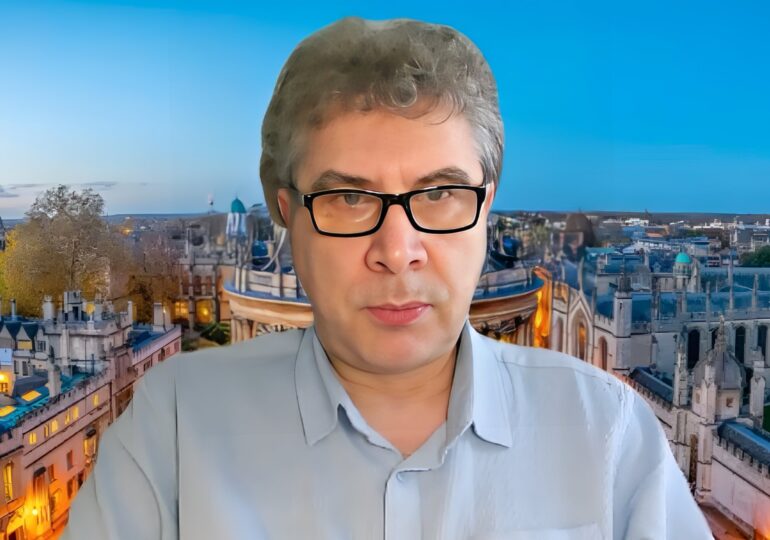
Professor Corneliu Bjola believes that the way heads of intelligence agencies are appointed through political negotiations, without the country’s president initiating a debate on the roles, mandates, and objectives of these agencies beforehand, is profoundly wrong, serving as a source of future failures with painful and costly consequences for Romania.

Relevant Quotes:
- Failure after failure in intelligence services. Regarding hybrid warfare, they ignored the issue, did not address it, and the idea they are articulating now (we had no way of knowing, it took us by surprise) is false. We must understand that it is false. The notion that Romanian services, which are ten times larger than those in Moldova, did not know or were taken by surprise is a lie…
- We have a neighboring country, the Republic of Moldova, which took the bull by the horns, had victories after victories, and did not claim to have been surprised by Russia. I occasionally read the reports that intelligence services in Chisinau make public; they are very professional, carefully look at hybrid warfare. The Republic of Moldova is the perfect example that has won and is a country that until 2020, I thought was lost, beyond recovery.
- There was a meeting in the hallway with Rubio. He gave him a cap… Give him a cap, put on him a uniform you desire – a sign of subordination. From now on, listen to what we tell you. Romania always listens to the United States, so it’s not like it had a certain opinion. And the way you are treated creates a certain exposure for the president, one that was unnecessary.
- We see very clearly, and this is something that cannot be ignored, a military disengagement of the United States in Europe. The signals are clear. Command for all three continental fronts was handed over to Europe; the US remains with the nuclear part, which is fine. This means a different strategic calculation. Guarantees for Europe are no longer the military ones we were used to.
On February 18th, the Constitutional Court decided, after two months, to validate the law assumed by the Government in front of Parliament, which provides for reducing magistrates' pensions to 70% of the average salary and increasing the retirement age by 15 years. We have seen reactions from political leaders, but also from magistrates. What impact do you think this decision will have on the justice system?
It should be welcomed as a mini-victory. Personally, I did not expect, after so many delays, for the system built around Ms. Savonea to give in and react this way. We know that when this debate began, the opposition was very fierce.
We are not just talking about opposition from magistrates; there were connections with political partners, especially PSD, but also with AUR. Recently, AUR was calling on people to protest to defend the system against this decision. It was a two-faced game.
It is a mini-victory because this issue kept the entire system blocked. For a year, all political energy revolved around this subject, which, beyond the PNRR and the 231 million euros, had a greater impact.
We were talking about a situation where the balance between the three powers — executive, judicial, and parliamentary — no longer existed. One of the powers declared itself immune to the other two, claiming it decides internal regulations. Judicial independence is a goal to avoid situations like in the '90s, but what we see now is an independence from justice itself.
I saw a cynical reaction from the CSM regarding the regulation of special pensions. The institution's statements seemed harsh, inflexible. How can they be interpreted?
Those statements left no room for discussion. Now we need to see under what conditions the victory was obtained because it was unexpected, with a score of 6 to 3.
Previously, there was talk of a single judge who could make a switch, there were delays with paternal leaves or absences from meetings, and suddenly we have this score. The question arises: how were the concessions obtained? Public suspicion is whether there were negotiations on positions that should not have been negotiated. We do not know, there are speculations, but there is concern about how this decision was reached.
How do you see the risk of magistrates' privileges being recovered in other forms?
The risk is significant. The system has an extraordinary capacity for regeneration and finding legislative loopholes. Looking at the recent history, we have seen how decisions that seemed final were later emptied of content through ordinances or internal regulations of the CSM. This caste has strengthened significantly. It is a state within a state system that has learned to use the language of democracy and judicial independence to protect its financial privileges. The issue is not just the sum of money but the signal it sends to society: that some are more equal than others before the law.
I believe we need to consider repercussions; the Savonea system is faltering, the image of inevitability of victory it built has cracked.
It is ironic how magistrates who opposed the idea that European law is above national law now turn to the Court of Justice of the European Union as a last resort.
This gesture indicates a form of desperation. This feudal system, built pyramidally, where someone at the top decides who benefits from prescription and who does not, affects the essence of Romanian democracy. We see a justice system where for some, it is a mother, and for others, a plague, where those convicted of corruption keep the money and receive apologies from the state.
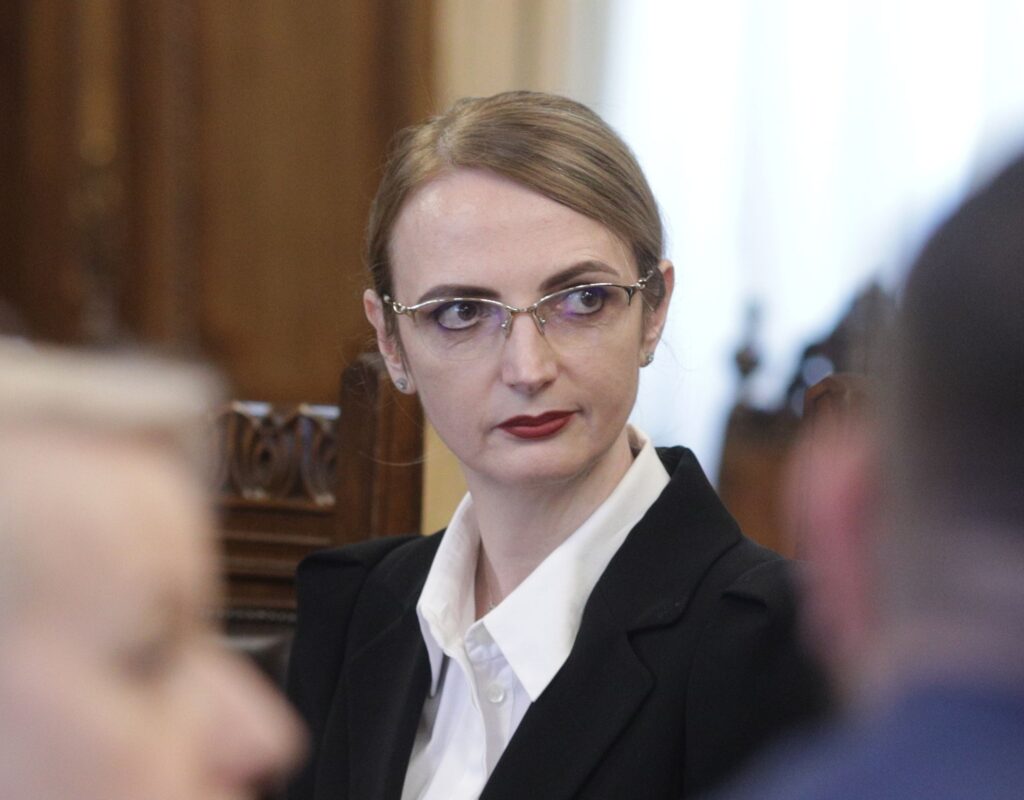
Currently, there is discussion about appointments in the prosecutor's offices and at the helm of intelligence services. Are we witnessing a continuation of the political oligarchy established during Klaus Iohannis's presidency?
The hope is that the system is beginning to restructure because otherwise chaos and collapse await us. The parties currently leading in the polls are not democratic; they are autocratic and dream of a Belarus-style regime. We need maturity from political leaders. PSD is under pressure from AUR and seems quite compromised.
The quality of current leaders is low; we have people who have spent years in the European Parliament without uttering a word. It is a big mistake to enter negotiations where people are appointed to lead intelligence services without a profound understanding of the field.
Intelligence institutions need to be fundamentally restructured. The repeated failures in hybrid warfare, where we are told we were taken by surprise, are lies.
The Republic of Moldova has achieved professional victories in this field, so the idea that Romanian services, ten times larger, did not know is unacceptable. It's either incompetence or complicity.
Do you believe the president has the necessary authority to enforce such a reform in the intelligence agencies' area?
A president has maximum authority in the first six months. As the term progresses, authority diminishes.
It is wrong to negotiate solely based on names (Popescu or Ionescu) without establishing the mandate and reform directions. If you do not spark such a debate, you end up appointing unfit individuals, as happened in Iohannis's case, whose legacy is marked by neglect, indolence, and imperial arrogance.
We need to restore the image of professionalism in institutions, modeled after MI5 or MI6, so that people feel protected, not subjects of political games.
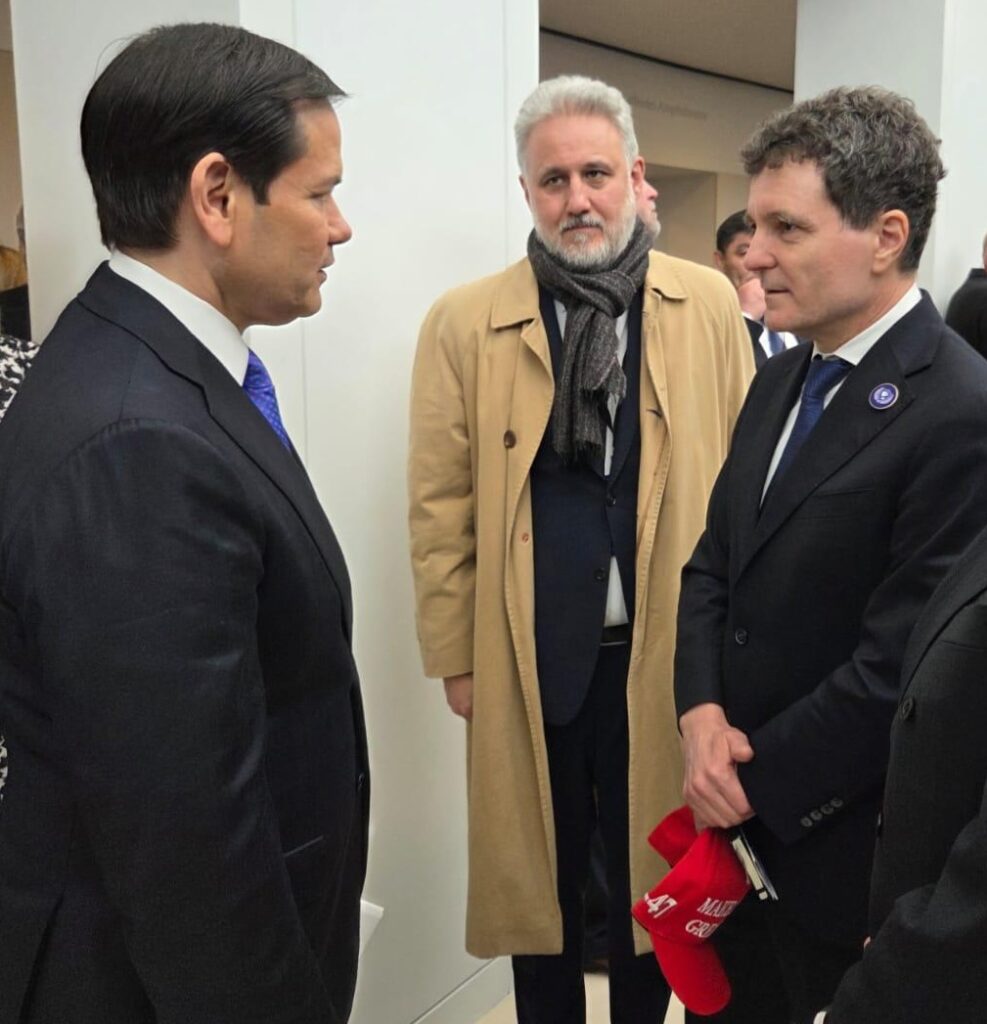
The visit from Washington by President Nicușor Dan, who attended Donald Trump's Peace Council, has generated mixed opinions. Some say it was a mistake, others that such an invitation could not be refused. What do you think?
I am somewhat reserved about the utility of the visit in the way it unfolded. President Dan did not stand out visibly in international forums before, and the expectations were high.
The issue is the Peace Council that Trump has turned into a club led by him for life, where successors can be appointed from within the family members.
This is an assault on the rules-based international system, which is vital for small and medium countries like Romania.
When you legitimize a competing system of international relations, you erode the system that defends you.
Romania's presence may have been necessary, but at a lower level. The President was exposed; he did not secure an institutional meeting, but a few seconds handshake and a brief encounter in the hallway.
Receiving that red cap from Marco Rubio was a message of subordination, a lack of respect towards the President of Romania.
Nicusor Dan sought this meeting because of the skeleton in the closet related to the annulment of the elections, seeking external validation to compensate for internal vulnerabilities.
The President of Romania was absent from Davos and Munich, where strategic directions were discussed. What is lost by this absence?
In Munich, there were 60 heads of state discussing topics such as European common nuclear deterrence and two-speed Europe. Romania is reactive. It lacks a European profile, a direction for others to follow, as Poland does. There is a clear U.S. military disengagement in Europe.
If you go to Washington hoping only to keep American troops in the country, you are out of touch. Americans are now looking for critical natural resources and economic investments. The risk is to become the periphery of peripheries, abandoned by both Europeans and Americans because we are not relevant.
The decisions you don't make now, such as the elections dossier or positioning on the European NATO pole, will be much costlier later.
There is a prominent pro-Russian line in Romanian society and a timidity of political leaders to talk about the Russian danger. Why?
Romania has been neutralized by Russia through hybrid warfare since 2020. The decision to keep everything we do for Ukraine secret was a strategic mistake; when you don't speak, someone else, namely Russia, will occupy the communication space. While France has become a guarantor for Romania and Moldova, Russian propaganda has launched the narrative France, a colonial force, to undermine this support.
Republic of Moldova is the perfect example of a state that managed to break free from the influence of oligarchs and Russians because it had the courage to explain the situation to its citizens.
Here, the communication of the President is reactive and sporadic. You should never leave the agenda in the hands of the enemy. The debate on a federal Europe, for example, is avoided, although federalism is a protection against autocracies. Our sovereigntists actually want a Belarus light, a form of Romanian dictatorship.
What is your perspective on the conflict in Ukraine? Can the neighboring country still resist and what does Vladimir Putin aim for?
The issue of territorial concessions remains a critical point that Ukrainian citizens do not accept.
Russia remains on a maximalist position, but its influence is declining. The only reason the Kremlin regime remains viable is the support from China.
Putin is preparing for a harsh internal reaction, granting the authorities the right to suspend the Internet at any time.
For Romania, the most dangerous thing is an armistice where the Black Sea is not mentioned. This would mean that Russia has total freedom of action near our borders.
We must understand that Russia will remain hostile in the long term and the only solution is sustained military empowerment, so that we are no longer seen as an easy prey.