
Over the 35 years since the fall of communism, Romania has not managed to break free from the neo-security doctrine conceived by Ion Iliescu, Silviu Brucan, and Virgil Măgureanu of suspicion towards neighbors, perpetually viewed as a threat to territorial integrity, engaging in an inefficient dance between major Western powers and a great concern not to upset the Kremlin.
„The Treaty with the Soviet Union (the one signed in April 1991 – ed.) was read then – and continues to be read now – through a single lens: that of Russophobia,” said Adrian Năstase nearly 8 years ago, quoted by Evenimentul Zilei.
„We are constantly reproached for negotiating and signing it, that it wasn’t the right time, that the USSR was already on its way out. That’s what we know now. Back then, no one was clear on what would happen. That’s why we were looking for any formulas to ensure our security, in a fluid and unpredictable external environment. Bilateral treaties were one such security measure,” stated the former prime minister, appointed by Ion Iliescu.
Adrian Năstase's statement, along with many others from that period, illustrate how vulnerable Romania was at the beginning of the '90s, and the solution devised back then for salvation.
Today's major issue in Romania is not represented by the decisions made back then, by an elite inheriting the Communist Party without democratic practice and no accountability to the citizens, which can now be judged from a historical perspective. The main issue for today's Romanian leaders is that they remain entrenched in that type of thinking and attitude, increasingly endangering the country's future.
With each passing day, the foreign policy promoted by Nicușor Dan pushes Romania into a gray area of heightened fragility, with no prospect for our country to play even a significant role in the region, despite being one of the largest in the European Union.
A Hard-to-Explain Absence
It was practically impossible for Romania not to be represented by its president in Washington as long as the Trump administration extended an official invitation.
The relationship with the US needed to be salvaged, especially since MAGA, heavily infiltrated by Kremlin influence networks, had been a major supporter of Călin Georgescu, as conveyed from Moscow.
At that time, a series of articles were published by spotmedia.ro, as well as other Romanian press sources, describing the promotion and support operation of Călin Georgescu by Moscow through pro-Russia figures in the US, led by Elon Musk.
Arguments can be found for Nicușor Dan regarding his humiliating participation in the Peace Council, Donald Trump's club aiming to dilute the influence of established international institutions. However, no arguments can be found for his absence in Kiev, where 11 heads of state and government were present, along with Ursula von der Leyen, the President of the European Commission, and Antonio Costa, the President of the European Council.
Romania was not even represented at the level of the Foreign Minister.
"Four years ago, one of the most terrible scenarios for Europe became a reality. Russia attacked Ukraine, unleashing a merciless war against a nation that refused to be defeated. Since then, Ukraine has been fighting for all of us, maintaining the security of our entire continent with admirable courage and resilience," wrote Nicușor Dan, the President of Romania, on February 24, on social media.
"Broken families, unimaginable dramas, lost lives - all of these represent sacrifices and tremendous efforts, for which we are grateful to the Ukrainian people," added the head of state in his message.
Strong Relations with European Partners
For a part of the public opinion, it was enough, for another part too much, but for those who voted for him, judging by reactions on social media, it was insufficient.
However, public perception is not the main issue for the President of Romania, who avoided attending two other important events for the country's future, the Davos Forum and the Munich Security Conference, with concerns raised by diplomatic and defense experts, increasingly puzzled by the president's decisions.
"Romania 'needs, to put it in Romanian terms, to please both the goat and the cabbage.' But I don't believe this is achieved solely through a submissive attitude towards Washington, but through building strong relationships with European partners, by showing ourselves as predictable allies to European partners, by strengthening our own capabilities," stated Oana Popescu Zamfir, political analyst, director of Global Focus, for News.ro.
"By doing so, you also have a different negotiating position with President Trump, just like Poland, Finland, or Italy, which can afford to oppose the American president while still often being loyal allies. They can do this because they, too, have internal capabilities," added the expert.
The main issue is not the trip to Washington, where the president was treated with disturbing superiority by American officials, but the lack of political action in Europe and the internal decision crisis to strengthen Romania's security posture.
The Intelligence Agencies Crisis
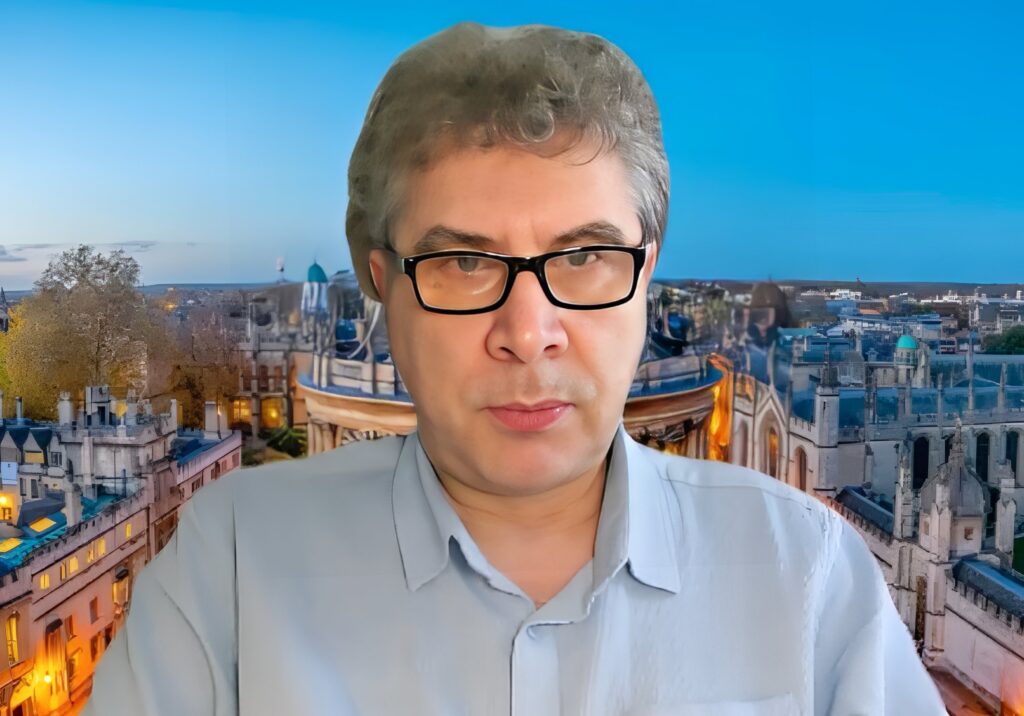
"Failures upon failures in intelligence services. Regarding hybrid warfare, they ignored the issue, didn't address it, and the idea they continue to articulate (we had no way of knowing, it caught us by surprise) is false. We must understand that it is false. The notion that Romanian services, which are ten times larger than those in Moldova, didn't know or were caught off guard is a lie...," stated Corneliu Bjola, a professor at the University of Oxford, an expert in diplomatic relations, in an interview with spotmedia.ro.
The crisis in intelligence services, although rarely discussed, represents Romania's main vulnerability, one that Nicușor Dan has not managed to resolve in the 10 months since becoming president.
The events leading to the cancellation of elections revealed that intelligence agencies failed to protect key institutions from Kremlin penetration. With the new president at the Cotroceni Palace, although he tried, he couldn't obtain a report on what happened then, couldn't find a way to appoint a director at SRI, change the one at SIE, or propose a much-needed reform of intelligence agencies following the defeat against Russia.
The MAGA Cap and Missed Opportunities
"We can clearly see, and this is not something that can be ignored, a US military disengagement in Europe. The signals are clear. The command for all three continental fronts was handed over to Europe, the US retains the nuclear part, which is just fine. This signifies a different strategic calculation. The guarantees for Europe are no longer the military ones we were accustomed to," added Professor Bjola, who believes the Romanian president must do more to become relevant in relations with major European powers.
Discontent with Nicușor Dan is not related to the trip to the US but rather to missed opportunities in Europe, which, when compared with the episode of meeting Marco Rubio in a hallway where he was gifted a MAGA cap, have been highlighted, revealing a Romania still internally plagued and controlled by neo-securism, disseminated in society in the early '90s.