

Romania is making efforts not to lose the last bit of influence it has left internationally, but internal problems, lack of courage, and Russia’s remaining connections in our country hinder the rebuilding of credibility.
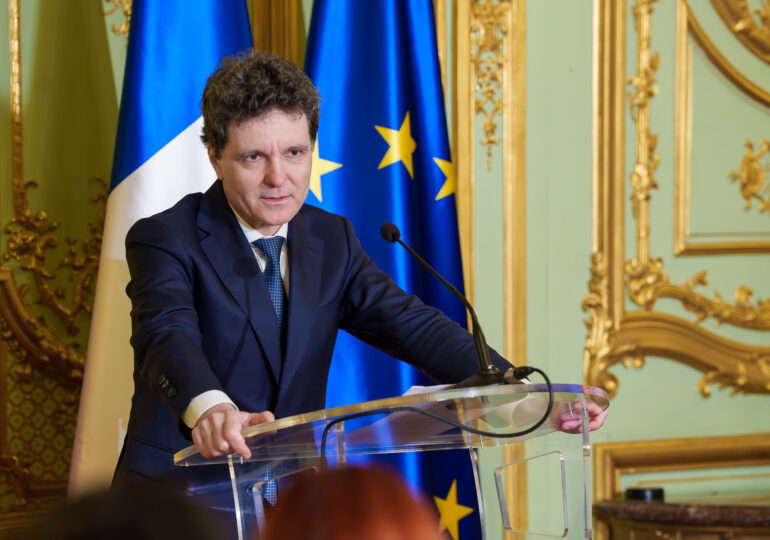
A few days ago, Nicușor Dan, the President of Romania, was in Paris at a meeting of the „Will Coalition,” the alliance of states supporting Ukraine against the Kremlin’s military aggression.
The meeting was „physical,” said the president, many of them having been held online lately.
In France, important issues were discussed, not only the Ukrainian dossier, but also the US military intervention in Venezuela and the increasingly frequent threats from Trump regarding a possible "annexation" of Greenland.
"...following work done by technical teams, Chiefs of Staff, security advisors, and so on, a military document has been defined, which is not public, detailing how these security guarantees will be exercised concretely, the responsibilities each participant in this coalition assumes, and who coordinates each of the security elements," stated Nicușor Dan, the President of Romania, in a press conference.
France and the United Kingdom will play a key role in implementing security guarantees, including sending troops to Ukraine, while the US will provide strategic and logistical support, also offering an intervention clause, meaning that in the event of future Russian aggression, they will intervene militarily and provide massive defensive support.
Additionally, Denmark, Belgium, Spain, and Lithuania have shown willingness to send troops to Ukrainian territory to maintain a possible ceasefire agreement and later a peace treaty.
The Crisis from November 2024 Continues Today
"Romania has assumed... no troops in Ukraine, but logistical support, training, preparation for Ukrainian soldiers in Romania or other European countries, in collaboration with armies from those countries, participation in joint armament programs... this is where we stand today," stated Nicușor Dan.
The above statement confirms Romania's timid actions over the past four years regarding Ukraine, even though Russia's military aggression represents the greatest threat to national security since 1990.
The lack of a strategy regarding Ukraine or the implementation of a wrong one ultimately led to the political catastrophe of November 2024 when Kremlin networks almost succeeded in taking over the presidential institution, the most important power structure in the country.
The crisis triggered then continues today, over a year later, with the new president failing to garner enough political support to neutralize Kremlin's influence networks in Romania and restore prestige at least in front of European allies.
Ukraine's Security is Romania's Security
"Romania should contribute troops, alongside the French, British, and whoever else goes, to guarantee Ukraine's security," emphasized Iulian Fota, defense policy expert, former presidential advisor, in a Facebook post.
"Kiev's security is Romania's security. We went to Iraq and Afghanistan, damn it, to secure our NATO membership, and we don't participate in Ukraine, near home, with much higher stakes," he added.
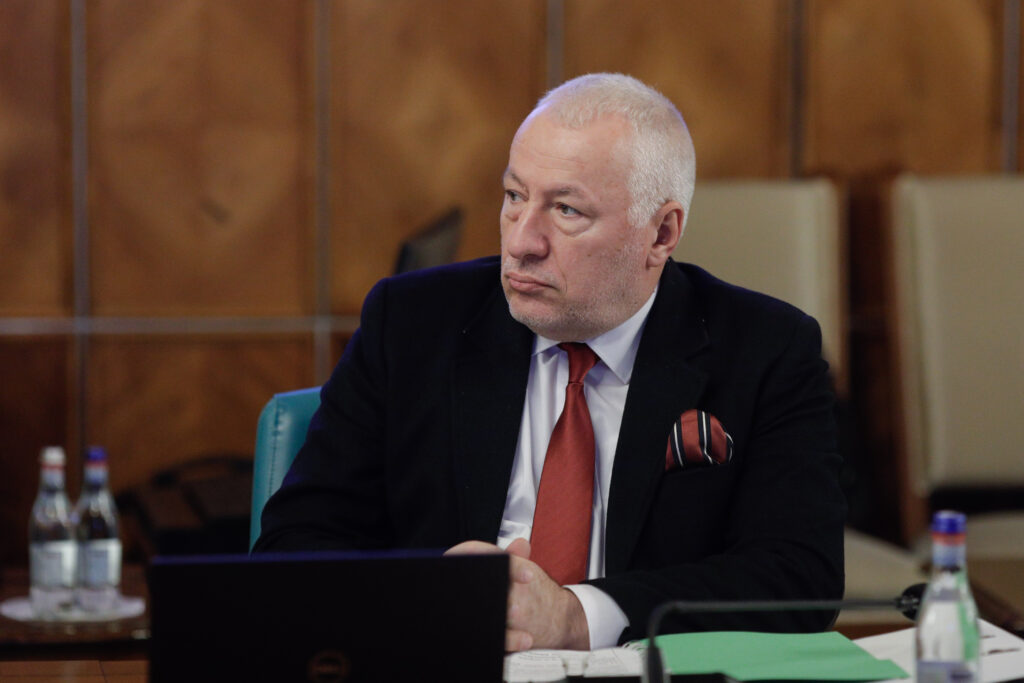
Iulian Fota's observation highlights a major institutional weakness. The existence and manifestation of this security paradox is the best evidence that, following the annulment of the presidential elections in November 2024, the Russian influence in Romania has not been successfully neutralized. It still exists and continues to manifest itself.
This is evident politically, individuals with proven and public ties to Russia are acting freely in broad daylight, without anyone questioning them.
Moreover, at the level of justice, Călin Georgescu, the Kremlin-backed candidate who blatantly violated electoral law, conspiring against the constitutional order, still enjoys significant political platform in Romania.
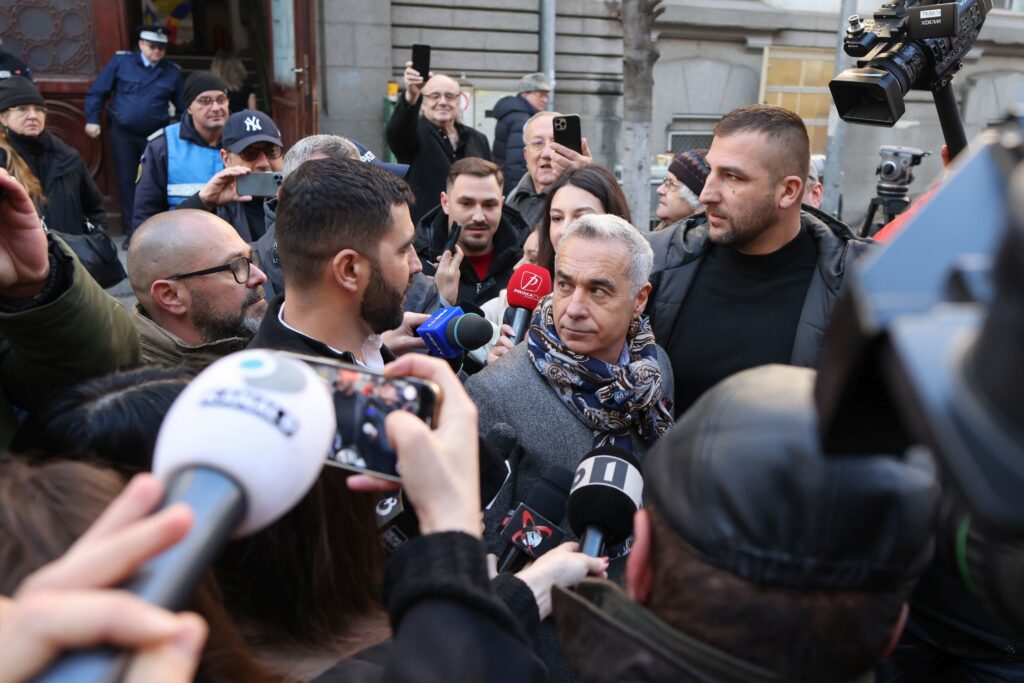
Lastly, Russia's propaganda is equally intense on social media, with authorities failing to curb campaigns with false information aimed at provoking frequent and intense social tensions.
International Quarantine
Romania's internal problems are so severe that our country continues to be in a sort of international quarantine, fueled by chronic indecision at the authority level - presidency and government.
"...we need to be there. This means defining and promoting our interests. Yet, we are absent from everywhere now. We were not in Kiev a few days ago, not in Rome at the Conference for the Reconstruction of Ukraine, not in New York at the UNGA (United Nations General Assembly) through the president," wrote Oana Popescu Zamfir, international affairs expert, former secretary of state, in a Facebook post.
"The president did not go because we had nothing to bring to the table or say? It may be a justification, but it's a completely wrong approach! If we are absent from discussion formats, we will never have an agenda to promote," added Oana Popescu Zamfir.
Both at the presidential and prime ministerial levels, there is a noticeable timidity in promoting Romania's immediate interests in national security matters.
Romania needs to build much faster, more actively, more diversely to consolidate its position within the EU and Europe... We need to cooperate concretely with France, the UK, the Polish-Baltic-Scandinavian axis, but also with Turkey, Bulgaria, Germany, and Greece, in defense, infrastructure, and resilience projects. Of course, one could say we lack the capacity, it's difficult. Yes, it's hard, but it's hard for everyone, as no one expected what we are experiencing now, and others are moving and finding resources, while we are not...
Oana Popescu Zamfir, international affairs expert
If Romania's leaders fail to convince the population that in order to receive and benefit from allies' support, we need to offer something in return, then the country will remain vulnerable, and national policy will be influenced more by Kremlin's interests and very likely Beijing's, rather than Romania's.
Most concerning is the fact that we have not yet identified the problems, what brought us to this point, where we went wrong, and what needs to be done to quickly exit a marginal and dangerous zone.