

The war between the United States and Iran has entered a phase where weapon stocks and production capacity are becoming a crucial factor, even though they will not solely determine the outcome of the conflict.
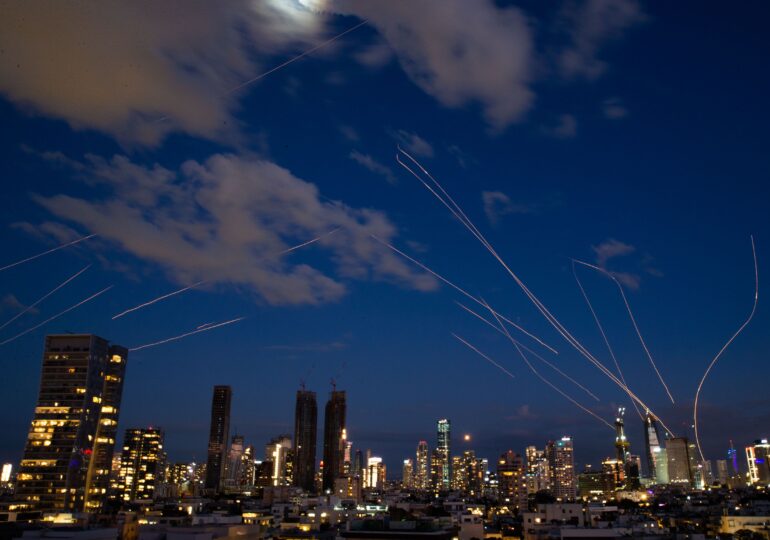
American military officials have warned in confidential discussions with members of Congress that not all drones launched by Iran can be intercepted, while military analysts say that the current pace of battles is consuming weapons faster than they can be produced.
Experts cited by The Guardian and BBC indicate that both sides are forced to carefully manage their arsenal as the conflict continues.
Not all Iranian drones can be intercepted
High-ranking military officials have informed American lawmakers in a classified briefing that the US may not be able to shoot down every Iranian drone launched against American bases and assets, according to information reported by The Guardian.
The discussion was led by the Chairman of the Joint Chiefs of Staff, General Dan Caine, who explained that Iran has deployed thousands of single-use attack drones, and while the American defense can intercept most of them, it cannot intercept all.
Therefore, the US military strategy primarily focuses on quickly destroying launch sites for drones and missiles to alleviate pressure on defense systems.
Iran has notably used Shahed drones, relatively inexpensive and designed for "kamikaze" attacks. They fly at low altitudes and slow speeds, sometimes making them harder to detect by conventional air defense systems than ballistic missiles.
Iran's Strategy: to force the US to consume interceptors
According to American officials cited by The Guardian, Iran seems to pursue a simple strategy: to compel the US to use extremely expensive interceptor missiles, such as those from the Patriot and THAAD systems.
However, the US administration argues that this strategy does not fully work, as drones are shot down through a combination of methods, not just with sophisticated interceptors.
Nevertheless, some Democratic congressmen have expressed concerns that defense against Iranian attacks is rapidly depleting interceptor stocks, especially regarding ballistic missiles.
In public statements, General Dan Caine attempted to allay these fears. "We have sufficient precision munitions for the current mission, both for offense and defense," he stated from the Pentagon.
Enormous Cost of War
The pace of operations has incurred massive costs. In the early days of the conflict, the US spent approximately 2 billion dollars per day, according to a preliminary analysis by the Pentagon, as cited by The Guardian.
Subsequently, costs decreased to around 1 billion dollars per day, and officials expect them to continue decreasing as the conflict progresses.
However, President Donald Trump has maintained that the United States can sustain the current pace of operations indefinitely. He claimed that the stockpile of "medium to medium-high precision munitions" is "practically unlimited," but acknowledged that the most sophisticated weapons "are not where we would like them to be."
Pace of War: Weapons Consumed Faster Than Produced
An analysis published by BBC shows that both parties are already using weapons at a faster rate than they can be produced, making the conflict increasingly challenging to sustain if prolonged.
The Institute for National Security Studies (INSS) in Tel Aviv estimates that the US and Israel have already conducted over 2,000 strikes, each using multiple types of ammunition. On the other side, Iran has launched 571 missiles and 1,391 drones.
For both sides, maintaining this level of operations will become increasingly difficult in the long run.
Iran Appears to Reduce Attacks
According to data cited by the BBC, Western officials have already noticed a significant decrease in the number of missiles launched by Iran. While Iran launched hundreds of missiles on the first day of the war, attacks now are in the tens.
General Dan Caine stated on Wednesday that Iran's ballistic missile launches have decreased by 86% compared to the first day of the conflict, and drone launches by 73%. This decline could either indicate Iran's struggle to maintain the pace of operations or an attempt to conserve weapon stocks.
Prior to the war, estimates suggested Iran had over 2,000 short-range ballistic missiles and tens of thousands of Shahed drones.
Aerial Supremacy for the US and Israel
At this moment, American and Israeli aviation has achieved aerial supremacy over Iran, according to US Central Command (Centcom), as cited by the BBC. Most Iranian air defense systems have been destroyed, and Iran no longer possesses a credible air force.
The new phase of the war focuses on identifying and destroying missile and drone launchers, weapon depots, and factories producing them.
However, the complete destruction of the Iranian arsenal is a challenging mission. Iran is three times the size of France, and weapons can be hidden or relocated.
US Vulnerability: Anti-Air Defense
Although the US has the largest conventional weapons stocks globally, some systems are available in limited quantities. According to expert Mark Cancian from the Center for Strategic and International Studies (CSIS), as cited by the BBC, the US has tens of thousands of JDAM bombs, relatively cheap and easy to produce.
Conversely, interceptors for Patriot systems are much more limited. Each interceptor costs over 4 million dollars, and the US produces only about 700 per year.
Cancian estimates that Washington may have around 1,600 Patriot missiles, stocks that have already begun to be depleted in the conflict.
"The US can continue the ground war for a long time, but the air defense war is more uncertain," said the expert.
A War Iran Probably Cannot Win
Despite concerns about weapon stocks, most analysts believe Iran cannot sustain long-term resistance. US Secretary of Defense Pete Hegseth directly stated, "Iran cannot outlast us."
And military analysts cited by the British press suggest this assessment is likely correct, given the incomparably larger military and industrial resources of the US.
However, if the war prolongs, costs and pressure on weapon stocks will increase for all parties involved.
In other words, the duration of the conflict will depend on how quickly weapon stocks can be replenished and Iran's capacity to maintain the pace of attacks.
Military analysts suggest the US could sustain operations for "almost unlimited" term, especially after gaining aerial supremacy and utilizing cheaper munitions. Conversely, Iran seems to already reduce the intensity of attacks, indicating pressure on their own stocks is beginning to be felt.