

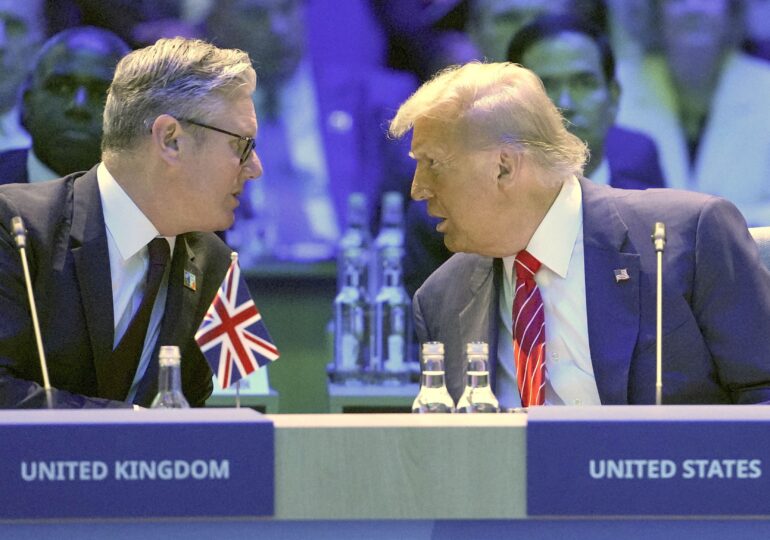
The Jeffrey Epstein files scandal is having major political repercussions on both sides of the Atlantic, but the consequences are radically different.
While British Prime Minister Keir Starmer is facing a crisis that could end his tenure, American President Donald Trump seems almost immune to the political impact of the same revelations.
The difference lies less in facts and more in the strength of institutions and the political position of the two leaders, as shown in an extensive analysis by CNN.
Why Epstein is hitting Starmer, not Trump
Starmer had no personal ties to Jeffrey Epstein, but the crisis was triggered by former Labour minister Peter Mandelson's relationship with the American financier convicted of sexual offenses. The Prime Minister was forced to admit in Parliament that he knew about this friendship when he appointed Mandelson as ambassador to Washington, a decision that has now turned against him.
According to CNN, the release of new documents suggests that Mandelson may have provided sensitive information to Epstein, impacting financial markets during the 2008 crisis.
Mandelson is now facing a criminal investigation, has resigned from the House of Lords, and has left the Labour Party. "Mandelson has betrayed our country, parliament, and party," Starmer declared in front of the lawmakers.
In an already tense British political climate, the Epstein scandal works as an amplifier of the Prime Minister's fragility, less than two years after a landslide electoral victory, notes CNN's analysis.
Active institutions in London, political deadlock in Washington
The major difference from the US is the functioning of control and accountability mechanisms in the UK. The public and political pressure was so high that King Charles III stripped his brother, Andrew, of his royal titles and removed him from public life due to his relationship with Epstein.
In the United States, there has been no equivalent of this type of political or institutional sanction. Although Trump's name appears in some Epstein files, there are no criminal charges against him. The Department of Justice announced that there will be no further criminal prosecutions, and Trump stated that "it is time for the country to move on."
CNN highlights that the President's influence over the Department of Justice and his control over the Republican Congress shield him from a real examination. Unlike Starmer, Trump does not risk losing his position through a parliamentary vote or internal revolt.
Trump and the "permanent noise" strategy
According to CNN's analysis, Trump also benefits from a political context where scandals are continuous and overlapping. The Epstein affair is just one of many controversies dominating the US public agenda - from tough immigration policies to attacks on the electoral process.
The President's strategy is to "flood the zone" with so much political noise that no single crisis becomes decisive. Additionally, Trump does not face the daily pressure of aggressive parliamentary sessions, such as the "Prime Minister's Questions," which have exacerbated Starmer's situation in London.
A scandal that continues to expand
CNN also notes that the Epstein files have global ramifications, reaching even Northern and Eastern Europe, nearly seven years after the financier's death. However, their political impact decisively depends on the vulnerability of leaders and the ability of institutions to enforce public accountability.
While Trump remains secure in office, Starmer faces a crisis that could become existential for his tenure.
CNN's analysis indicates that the effects of the Epstein files are less about the scandal itself and more about the strength of leaders and how political institutions operate in each country.